
One of the achievements of the chatbots is their facet as interface between person and machinehow they use natural language to communicate, so that They print their responses an appearance of solidity, coherence and veracity That for many users it is more than enough to conclude that what he says must be true. But who has done the exercise of verifying their answers, going to the links that AI shows as sources of information, will have found on many occasions that the source does not contain the information that is supposed to have.
This raises the doubt, in the first place, where he has taken it and, in the second, of whether he has invented it. Now we can quantify how much the Ia When sources of information Thanks to a study by the Journalism Magazine of Columbia (CJR), whose results are nothing flattering. On average, search engines with Yerran more than 60 % of the time, reaching 94 % in the worst case.
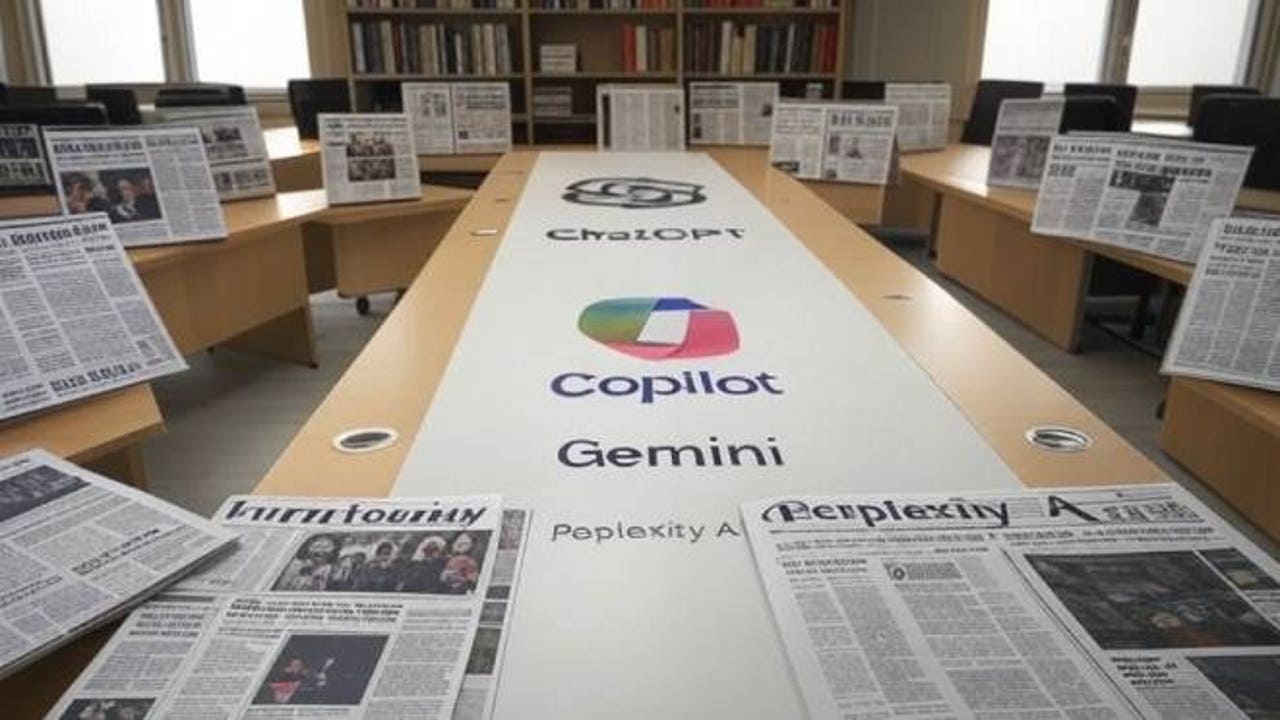
Chatbots, with the ability to search the Internet, used in the study have been Chatgpt, Perplexity, Perpleplexity Pro, Grok 2, Grok 3, Gemini, Deepseek and Copilot.
Perplexity is the best citing fuentes and Grok 3 the worst
To carry out the tests, the researchers They introduced fragments of real news articles in AI models And they were asked to identify the head of the article, the original editor, the date of publication and the URL. A total of 1,600 consultations in the 8 search tools with the analyzed.
Error rates varied significantly between the analyzed platforms. Perplexity provided incorrect information in the 37 % of proven consultations, while Chatgpt mistakenly identified him 67 % of the articles consulted. The worst error rate presented it Grok 3with a 94 %.
The study highlights a common tendency In these AI models: instead of refusing to respond when they lack reliable information, the systems generate Fabulationsincorrect or speculative responses that sound plausible. The researchers stressed that this behavior was consisting of all proven modelsnot limited to a single tool.
Pay versions make more mistakes
Surprisingly, the premium versions of these search engines with AI obtained worse results in certain aspects. Perpleplexity Pro and Grok 3’s premium service offered incorrect answers more frequently than their free versions. His tendency to avoid admitting uncertainty resulted in an error rate citing higher sources.
Some do track what they want on the Internet
CJR researchers also found evidence that some AI tools Ignore robot exclusion protocols (A file configuration robots.txt of each website in which the trackers are indicated to which part they can access anymore), that the editors use, in this context, to prevent the AI infringe their intellectual property.
For example, the free version of Perplexity correctly identified 10 fragments of national geographic items that are protected after a payment wall, Although National Geographic explicitly prohibits the tracking of its content by perplexity.
Even when these search engines with ia cited fountains, often they redirected users to syndicated versions of platform content such as Yahoo News instead of the original publication. This happened even in cases where editors had formal license agreements with AI companies.
URL are also invented
Another important problem was The invention of URL. More than half of the appointments generated by Gemini and Grok 3 They directed users to false or broken links that led to error pages. In the case of Grok 3, 154 of 200 analyzed appointments resulted in non -functional links.
All these errors suppose A problem for editorsthat they must choose between blocking the IA trackers, thus losing the attribution of the content, or allowing their access with the risk that the reuse by the chatbots does not generate traffic on their websites.
Mark HowardDirector of Operations of Time Magazine, has told CJR its concern about the need for transparency and control in the way in which the Time content appears in the results generated by Ia. However, Howard was optimistic about future improvements, stating that ‘Today is the worst time for this type of products’in reference to investments and engineering efforts aimed at improving these tools.
However, Howard also partially blamed users, suggesting that it is their responsibility to be skeptical of the accuracy of Free tools of AI: ‘If any consumer believes that these free products are 100 % precise, then the fault is yours’.