
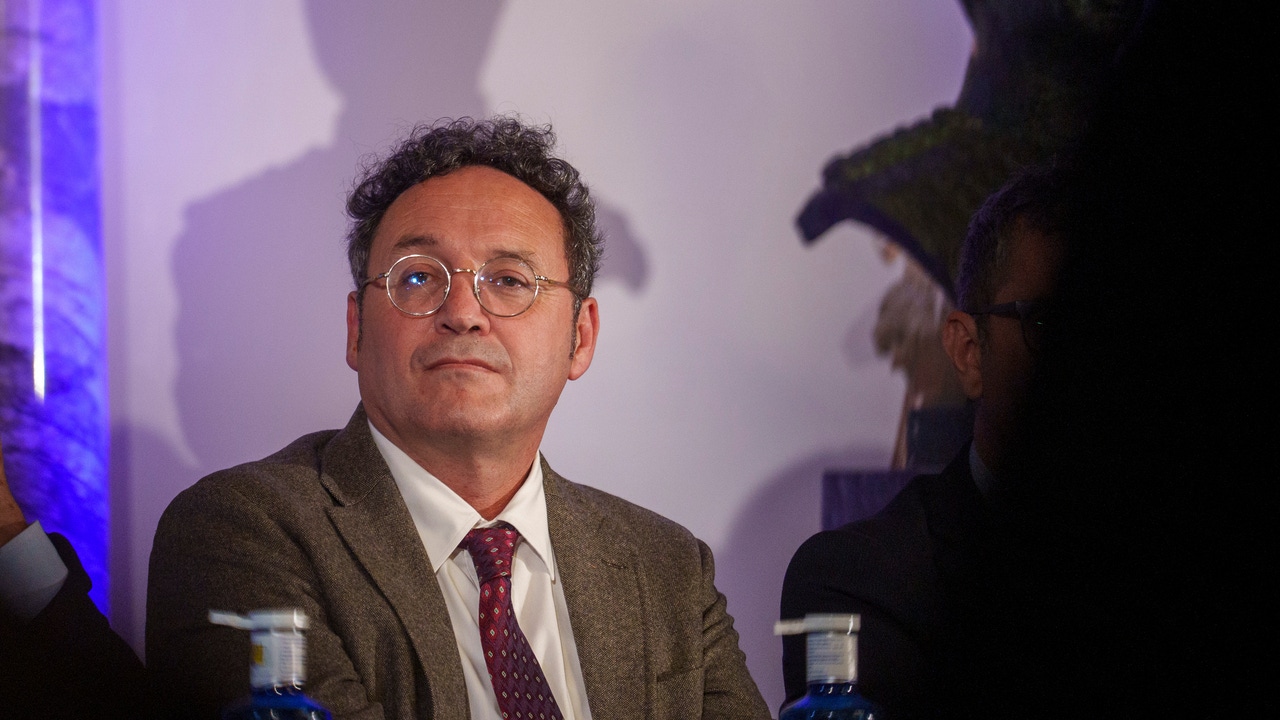
The judge of the Supreme Court (TS) Angel Hurtado has summoned the State Attorney General to testify as under investigation on January 29, Alvaro Garcia Ortizand has accused on his right hand, the head of the Technical Secretariat, Diego Villafañe. The instructor acts when he considers the criminal evidence against him and the chief prosecutor of Madrid, Pilar Rodríguez, supported. The latter will be questioned on January 30.
In his order, the magistrate explains that of the procedures carried out “it is coming to shore up” the alleged participation of both García Ortiz and Rodríguez “in the criminal acts.” But, he also explains that there are indications to expand the accusations and also add Diego Villafañe, who was also involved in the preparation of the note and the compilation of the emails about Isabel Díaz Ayuso’s partner.
Specifically, it says that “the three, in a coordinated manner, could have agreed to reveal secrets or confidential information related to another citizen,” in reference to Alberto González Amador. The magistrate insists that they were aware of the investigation “due to their job or position” and that the data that was published in the press, about the emails that their lawyer exchanged with the prosecutor Julián Salto “should not have been disclosed”.
“He was the person who led the steps”
The instructor relies on the latest reports from the UCO and, specifically, on the report regarding the dumping of Pilar Rodríguez’s phone. From the analysis of the messages it was determined that García Ortiz had “a preeminent participation“in the press leak of the communications, and specifically of the email that González Amador’s lawyer sent to prosecutor Salto in which he acknowledged the commission of two tax crimes and was open to reaching agreement.
The instructor relies on these conclusions to point out that, provisionally, we can speak of “a criminal dynamic that had the objective of disseminating, through leaks, information concerning the privacy of a person, which should have been kept confidential.” In this way, the Supreme Court maintains the evidence of a crime in the leak of the emails that the attorney general collected on the night of March 13 and not so much in the informative note that was written with this information and that was sent to the media on March 14. March.
“What the proceedings carried out so far indicate, with a high degree of plausibility, is that, for now, there is an indicative basis to presume the relevant participation of this investigator (García Ortiz) in that leak, to the extent that was the person who directed the steps that they brought to her, taking advantage of the superiority situation that he held over other prosecutors,” says Hurtado.
“Message transfer”
The absence of messages located on the attorney general’s phone does not prevent the instructor from supporting the evidence against those investigated. On the contrary, he considers “his relevant role” in the leak proven. “The mere transfer of the exchange of messages (…) and the steps it takes beforehand to get hold of it, revealing moments of urgency and great tensionwhich take place under his direction (…) is sufficiently indicative of his relevant role in the disclosure of reserved and confidential information that should not have been disclosed,” he maintains.
Hurtado refers to the movements that occurred at the top of the Prosecutor’s Office on the night of March 13 after El Mundo published that the institution had offered an agreement to Díaz Ayuso’s partner. To refute this point, García Ortiz contacted the chief prosecutor of Madrid, Pilar Rodríguez, and the senior prosecutor of the Community of Madrid, Almudena Lastra, to collect all the emails.
They entered García Ortiz’s personal email at 9:59 p.m. on March 13 and just an hour later, the first information was published in the press about the content of said communications. For Hurtado, this information is decisive since it highlights “a rush” on the part of García Ortiz to such an extent that “he could not wait for the next morning.”
“Fortuny’s team”
For Hurtado, the testimony of two of the eight journalists who testified in court last week does not distort the “objective data” against García Ortiz. These two witnesses explained that they had access to the mail before it was in the possession of the attorney general, so, if this were the case, he would be exonerated from responsibility for the leak.
The judge of the Second Chamber maintains that these testimonies “do not provide objective data” and that they also contrast with other testimonies from last January 8 that deny that this would have been the case. “The objective elements provided by the procedures carried out indicate that it is only after receipt by Álvaro García Ortiz of the email dated February 2 at 9:59 p.m. that its dissemination takes place, which should lead to maintain his status as an accused”, indicates.
In relation to Pilar Rodríguez, who is scheduled for January 30, she explains that she is the person who provided Diego Villafañe with the file on Alberto González Amador that was published in the press on March 12 and the one who sent García Ortiz the email. key knowing that the purpose was to leak to the press. Regarding Villafañe, who holds the position that García Ortiz held when the Prosecutor’s Office was directed by Dolores Delgado, he says that he has a relevant role in the events.
Hurtado maintains that in his capacity as a “trusted person” of the attorney general, he is in contact with Pilar Rodríguez and that he participated in the transfer of information collection. “It is only understood in the context of a coordinated operation“, typical of a team effort, as, moreover, Pilar herself ended up defining it when she spoke of ‘Fortuny’s team,'” maintains the investigating magistrate.