
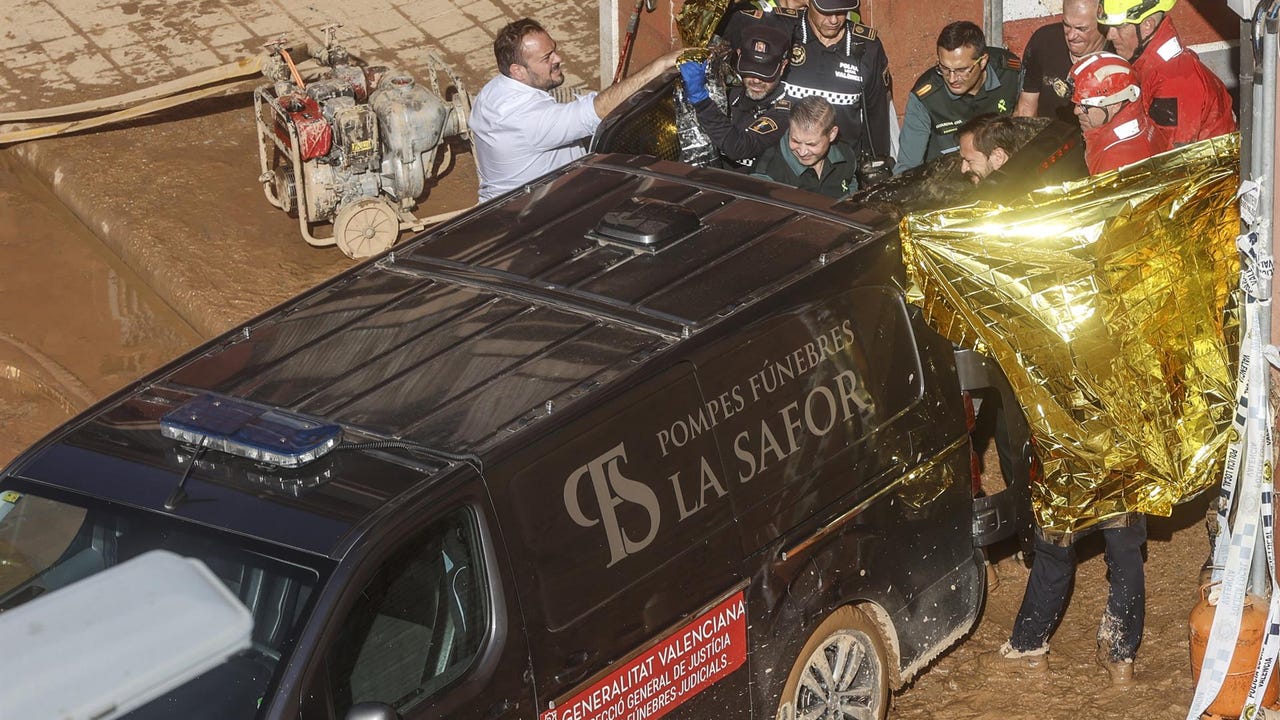
The work of the forensic experts who, for ten days, have been working in the areas most affected by DANA in Valencia It’s titanic. Not only because of the volume of deaths, but because of the specific nature of the situation and the conditions in which they are working. Corpses displaced by the current kilometers from population centers, convoluted accesses and corpses in a complex state for identification. Even so, the team of professionals, both Valencian and displaced from other autonomous communitieshas already identified 167 bodies and has performed 200 autopsies on the 207 victims of Valencia so far..
Your goal is give names to the bodies they identify so that their families can say their last goodbye. A hard work that, at the same time, brings a certain peace to those who have lost their loved ones. We spoke with the members of a team of forensic doctors and psychologists from the Community of Madrid who have traveled to the affected areas to collaborate with the Institute of Legal Medicine and Forensic Sciences of Valencia.
«We work mainly in Paiporta and Catarroja, the harshest areas, where we carry out the external examination of the bodies and the initial identification that is made at the same place of the survey. Then, in the pathology service, where some of the five forensic experts who have come from Madrid are also located, is where fingerprints are taken and, if necessary, the autopsy is performed,” explains Emilio Donat, forensic doctor and deputy director of the Institute of Legal Medicine and Forensic Sciences of the Community of Madrid.
Cross data
With a tired voice and his spirit touched by the magnitude of the tragedy, this expert assists us at the end of a hard day’s work while taking a walk to calm his mind. “Fundamentally, We have found bodies in streets, garages, highways, fields, farms…The location is very variable. Sometimes we don’t know if the body has been dragged or moved, it is very difficult to know. We have found bodies in places where they did not belong. They may have been swept away by the current or otherwise displaced. The location does not always correspond to the original place where the person died..
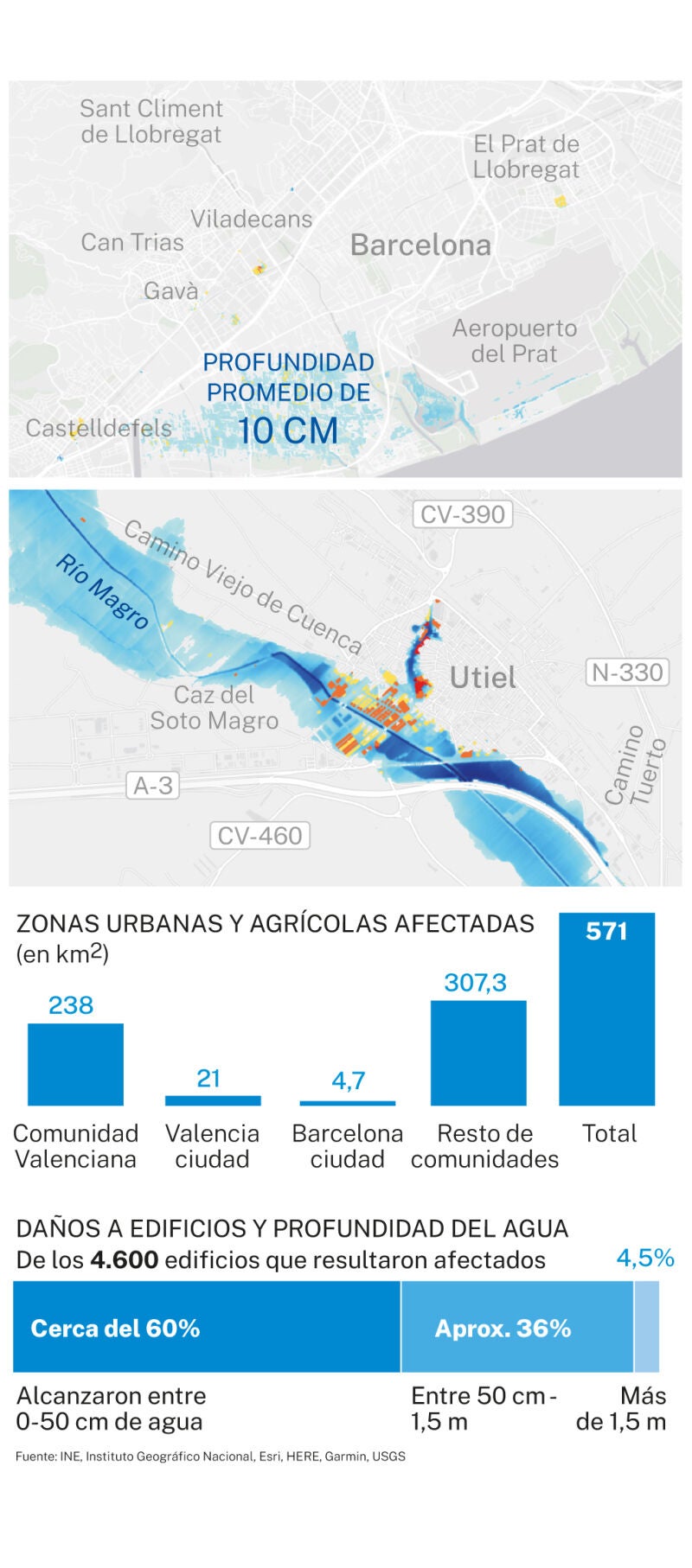
Regarding the state in which the lifeless bodies have been found, Donat asserts that “it is becoming more and more complicated as time goes by. Decomposition phenomena complicate identification and must be resort more to identification techniques such as dentistry or DNAamong others. But what is still important is the data obtained in the survey and from the complaints. In the end, everything is a chain of links that must fit together to reach identification.
Faced with what most impacts those of us who are not involved in forensic tasks, which is direct contact with the corpses and their inspection, the doctor highlights the importance of data integrationwhich in cases like Valencia is essential. «It consists of analyzing the data obtained through, for example, complaints, with the removal of the body, the results of the autopsy and other tests such as cheiloscopy or DNA analysis, in order to arrive at the identity of the person. And from there, that identity is communicated to the competent court and this to the family members.
In relation to the reason for death, the expert says, the vast majority presented “asphyxiation due to aspiration of mud.” Nor is it drowning because we are not talking about clean water, but rather cloudy water, mixed with mud and organic matter. The main cause of death in this case is suffocationfor the aspiration of all that material. “It is a death due to submersion,” says Donat, who has worked on identification work in catastrophes such as the Spanair accident or 11-M.
«The forensic doctor, when faced with situations like this, always does so from a technical point of view. But, of course, he is still sensitive to what is happening. What strikes me the most about this situation is not the corpses, but seeing living people working in the streets.covered in mud, sweeping. “That image is very shocking to me,” he concludes with regret.