
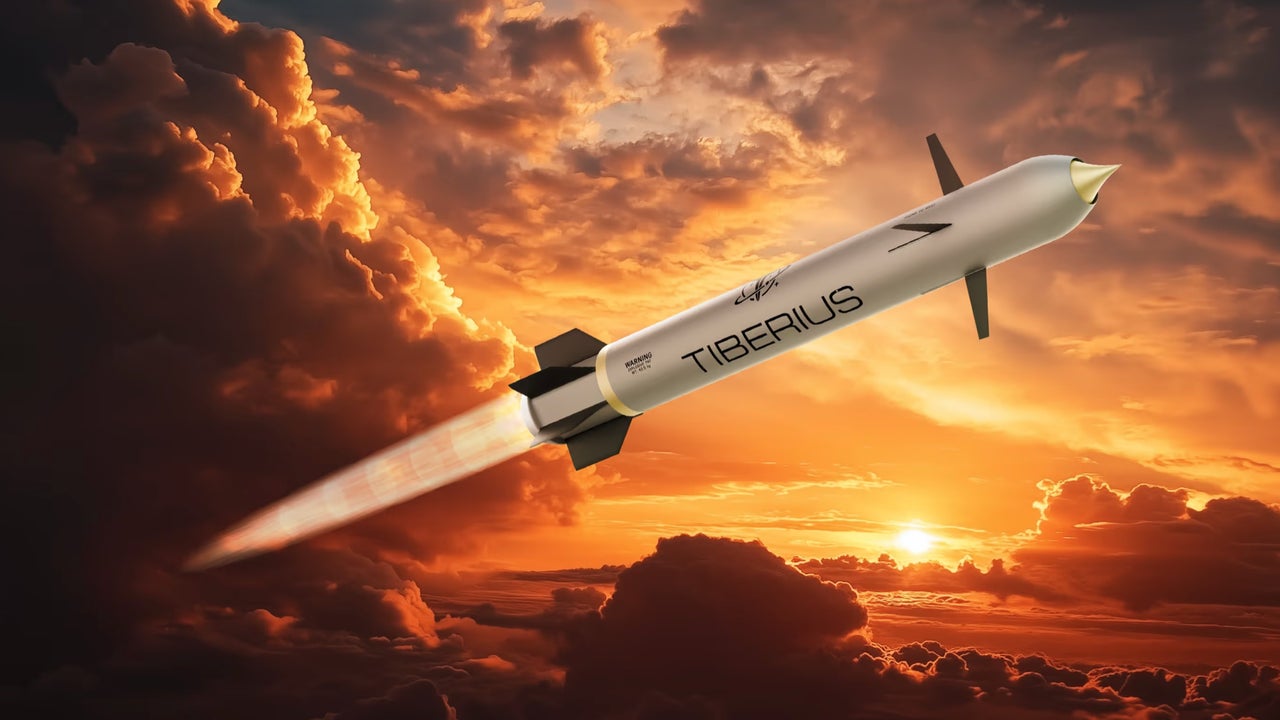
The Future Artillery Conference Artillery Fair, which took place last week in London, has left an announcement that represents an important technological leap in this sector. An American-British startup has presented The first supersonic artillery projectile in the world. This is, capable of overcoming the speed of sound (Mach 1 or 1,235 km/h), although in this case it does so. The weapon reaches Mach 3.5 (4,322 km/h) During the first phase of your flight, before reaching the peak, and can Impact on a target located at a distance of up to 150 km.
This innovative projectile of 155 mm, TRBM 155HG SCEPTREis driven by an engine Staminesssomething very uncommon in projectiles, which feeds with liquid fuel. The company that has presented the Sceptre is Tiberius Aerospacea defense firm based both in the United Kingdom and the United States that was founded on 2022 and has caught the attention of the sector with this, Your first product.
One of the reasons is the use of a RAMJET or stator, more common in missiles in which high speed and high range is required. It is a type of jet propulsion motor, without moving parts such as turbines or compressors, which Take advantage of the projectile speed to compress incoming air. This air is mixed with fuel and, when burning, it generates thrust when expelling hot gases by an nozzle.
TECHNICAL CHARACTERISTICS OF SCEPTRE
• Dimensions: 155 cm long and diameter of 155 mm.
• Propulsion: Stadreactor (Ramjet).
• Speed: Mach 3,5 / 4,322 km / h.
• Operational altitude: greater than 20,000 meters, which places it out of the reach of the majority of conventional GPS and countermeasures GPS interference systems.
• Scope: Up to 150 km.
• Payload: 5.2 kilograms.
• Precision: Probable circular error (CEP) less than 5 meters, even in gps without environments. In comparison, standard 155 mm projectiles usually have a CEP of more than 100 meters and a range of less than 100 km.
The system incorporates Artificial intelligence, GPS and sensors that allow correcting real -time trajectory errors. In addition, projectiles can communicate with each other during the flight to improve the aim or coordinate multiple impacts.
The Sceptre uses a liquid fuel system Compatible with diesel, JP-4 or JP-8. Unlike traditional solid fuel projectiles, the SCEPTRE uses a replacement design ‘just in time’, which reduces storage risks and prolongs its useful life to more than 20 years. It also facilitates logistics by allowing the use of common fuels.
Compatibility and open architecture
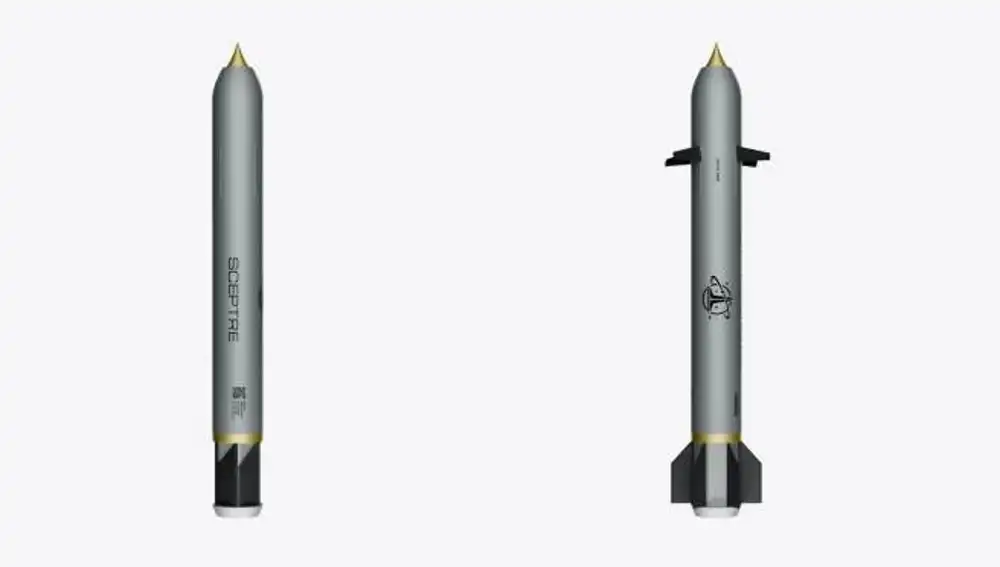
Designed to be Compatible with NATO standard artillery systemsthe peepter can be used with obuses such as M777he PZH 2000 or the AS90 No modifications. Its low wear ignition (of the canyon tube) and reduced contact profile (less friction in the cannon when shot) They help minimize long -term maintenance.
Tiberius Aerospace, led by its founder and CEO Chad Steelberghas applied commercial engineering principles as Modularity and open architecture. The projectile has an electronic open API system that allows Its integration with third -party fire control systemsfacilitating rapid update of aiming software.
Steelberg describes the system as a disruptive solution not only in scope or precision, but also in cost efficiency, survival and operational adaptability.
‘It is a weapon designed for the battlefield of the future: fast, precise and resistant in denied environments,’ he says in a company statement.