
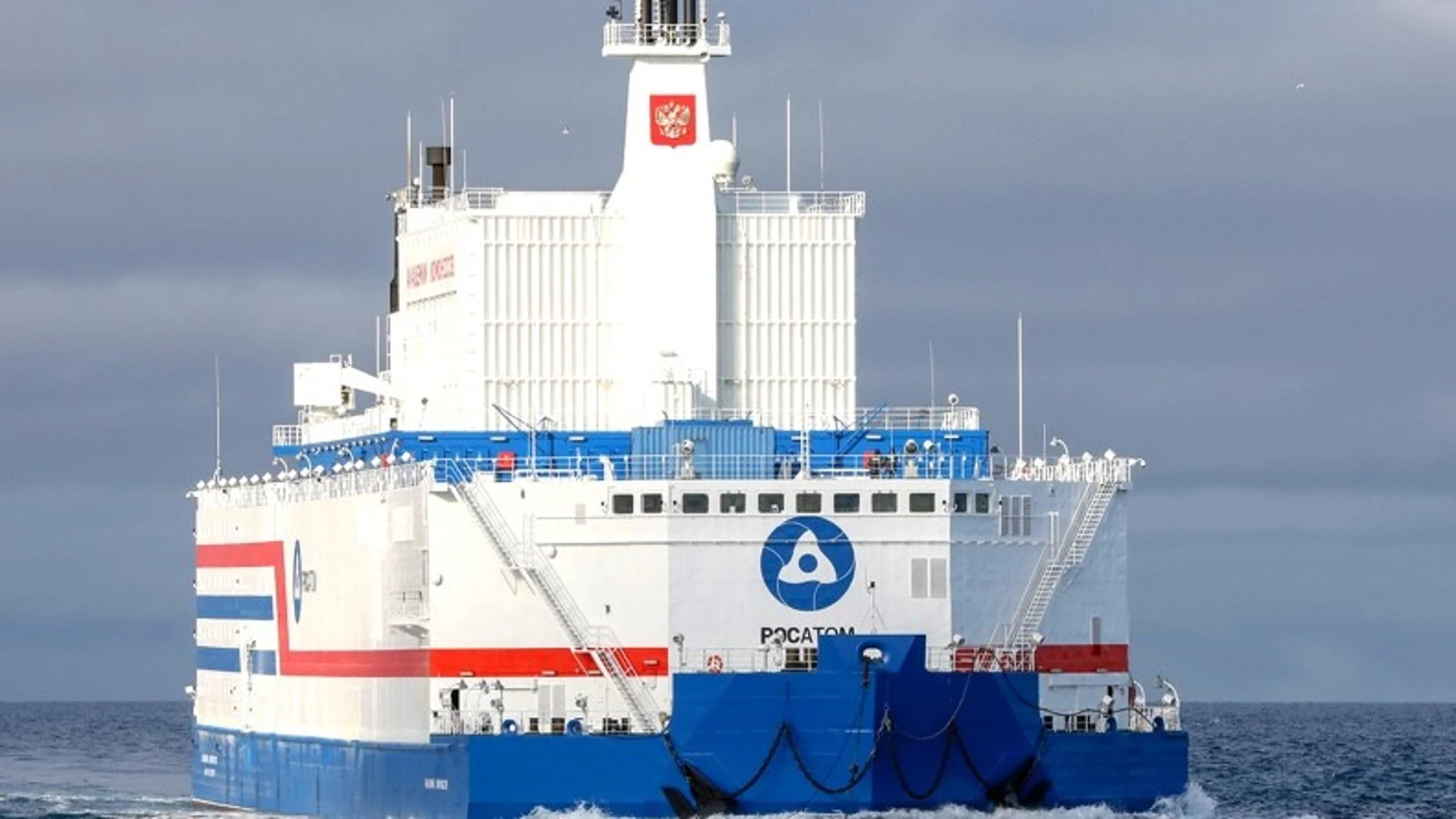
The Akademik Lomonosov, the only floating nuclear power plant in the worldhas completed an international review of its safety and operating procedures with positive results, according to Rosatomthe Russian state nuclear corporation responsible for the plant. The facility is moored in front of Peveka small port city in the Russian region of Chukotka located at the eastern end of the Arctic.
The review was carried out over two weeks by thirteen specialists from the Moscow Center of the World Association of Nuclear Operatorsknown as WANO. This organization brings together companies that operate nuclear power plants and organizes evaluations among professionals in the sector to compare their practices with those of other facilities.
The team observed the day-to-day operation of the plant and examined documentation on maintenance, engineering, radiation protection, operational experience and emergency preparedness. Rosatom assures that Fewer aspects susceptible to improvement were identified than in the previous evaluation in 2022.
‘The international team focused on critical areas such as organization and administration, maintenance and repairs, engineering support, radiation protection, operational experience, emergency preparedness and other fields‘, states the Russian corporation in a statement.
‘These results place the floating nuclear power plant at the level of the best nuclear power plants in Russiaincluding those of Balakovo and Kalinin’, added Viktor Yelagindirector of the facility.
A 21,500-tonne floating nuclear power plant
The platform, which operates from 2019is a steel barge without its own propulsion that measures 144 meters in length and 30 meters in widthwith a displacement of about 21,500 tons. Inside it houses two reactors KLT-40S of pressurized water, derived from those used in a previous generation of Russian nuclear icebreakers. Each one produces 35MWso the plant reaches a joint power of 70MW.
Currently it contributes around 60% of the energy consumed in the west of Chukotka and some nearby areas of Yakutia. In addition to generating electricity, part of the thermal energy produced by its steam systems is used to feed the Pevek district heating network.
The reactors use uranium enriched below 20% and are designed to be recharged every three or four years. The structure also has compartments intended to store new fuel, spent fuel and radioactive waste. Its expected operating life is 40 yearsalthough the design provides for the possibility of expanding it.
The choice of Pevek as a location responds to the isolation of this regionwhere to build a large land-based power plant and continuously transport coal, diesel or other fuels is especially expensive. The platform also helps to replace the production of the old nuclear power plant in Bilibino and the thermal power plant Chaunskaya. Its electricity also supports the exploitation of mineral resources in the area of Baimskaya.
12 years to build and transport it
The Akademik Lomonosov was built in European Russia before being towed to Pevek, avoiding having to manufacture the entire plant in one of the most remote and hostile regions of the Arctic. The work began in 2007 in the shipyard Sevmashin Severodvinskbut the project was later transferred to St. Petersburg Baltic Shipyardwhere the barge was completed and the two KLT-40S reactors were installed. In 2018 was taken from there to Murmansk to load the nuclear fuel and carry out tests and in August 2019 began a journey of about 5,000 kilometers for him Arctic to Pevek, where he arrived in September.
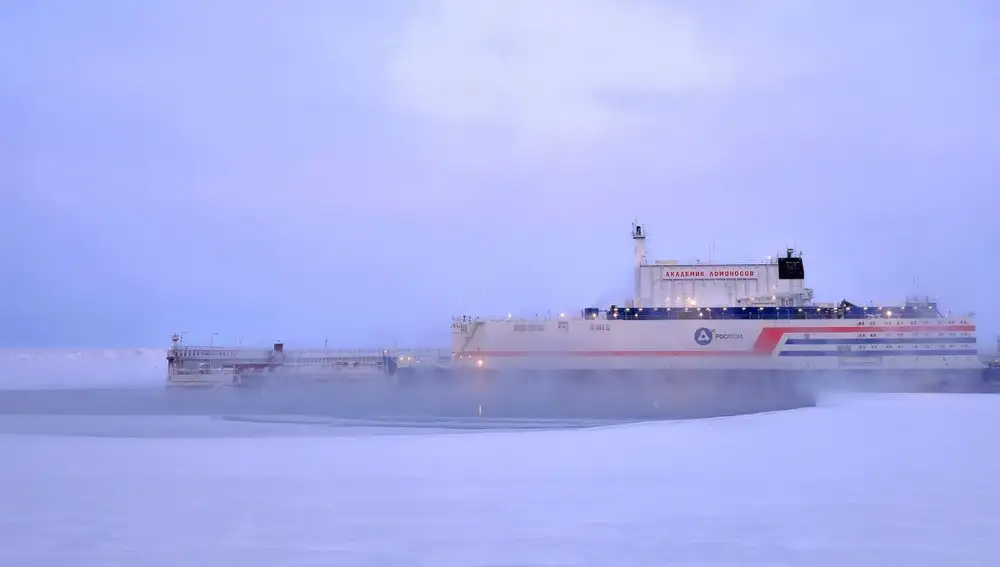
A floating nuclear power plant must face some different risks than a land-based one. The reactors and their auxiliary systems must resist storms, wave movements, corrosion, impacts and possible accidents during towing. The operation also depends on specific coastal infrastructure and a logistics chain capable of removing spent fuel and radioactive waste from one of the most remote regions on the planet.
A fundamental name in Russian scientific history
The platform is named after Mikhail LomonosovRussian scientist, writer and academic 18th century who participated in the founding of the Moscow University. Russia considers him one of the fundamental figures in its scientific history, which explains why Rosatom chose his name for a project conceived as a technological showcase.
Russia didn’t come first
Russia is not the first country to have operated a floating nuclear power plant. USA put into service in 1967 the MH-1A Sturgisinstalled on an old cargo ship and equipped with a reactor of about 10MW. The platform was moved to the lake Gatunin the area of Panama Canalwhere it supplied electricity between 1968 and 1976.
Four more floating nuclear power plants under development
The Akademik Lomonosov will not remain the world’s only floating nuclear power plant for long. Russia is building four more for a large mining project in Chukotka. The first should come into operation in 2028 and it is planned that all of them will be available in 2031. Each one will have two reactors derived from the family RITM-200 and will produce around 106MW electrical. Three will cover a demand close to 300MW and the fourth will be available as a reserve during refueling and maintenance operations.
The hull of the first of the four new plants, built in Chinaarrived in St. Petersburg in March 2026 to receive the reactors and the rest of the equipment manufactured in Russia. Rosatom also studies versions intended for export with a minimum power of 100 MW and a useful life of up to 60 years. The company believes that these plants can find a market in isolated coastal regions, industrial farms and countries that need stable electricity without building a large land-based nuclear plant.