
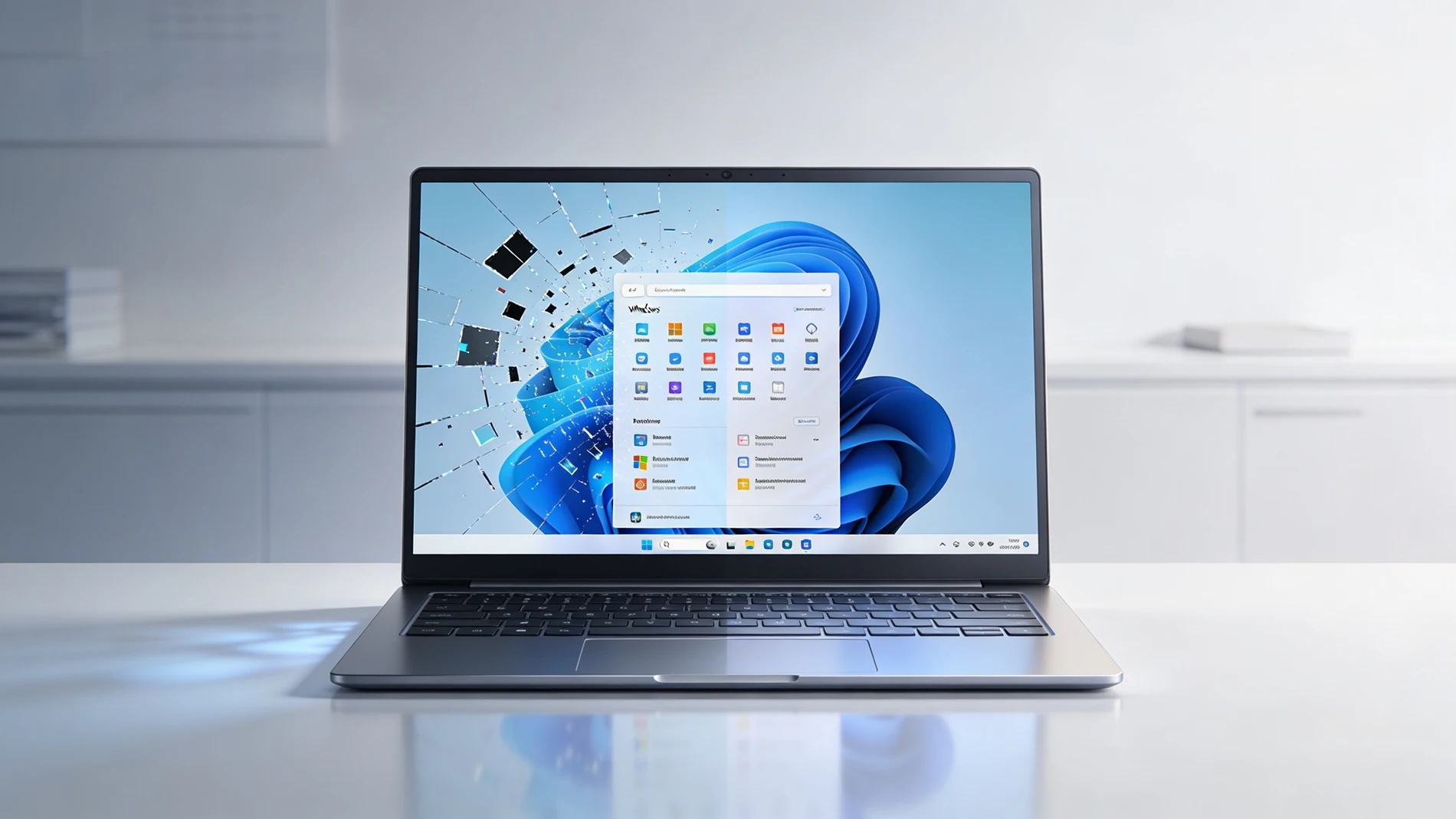
Windows K2the plan Microsoft to improve Windows 11 and gain the favor of users as he did Windows 10continues to incorporate new features. As reported by Windows Central, the Redmond company is testing a new ‘low latency mode’ that achieves performance improvements of up to 70% in certain tasks.
This ‘Low Latency Profile’ raises the CPU frequency for a few seconds to reduce application startup times and make items like the menu Start have a more immediate response. Thus, Windows 11 achieves that menus, drop-down panels, applications, and other elements perform better.
Strictly, this is not new. Since the beginning of the 2000s, the dynamic frequency scaling of processors is a common practice, but over the years it has been perfected and this is the meaning of Microsoft’s new function. Traditionally, a CPU scales based on load, temperature, battery, and power plan. Now, although it is not about a heavy or prolonged loadthe CPU increases its frequency for periods of between one and three seconds to accelerate certain tasks without significant detriment to autonomy.
Users testing pre-release builds of Windows 11 have been using this new feature for the past week and have noticed improvements significant speed increases when opening the File Explorer or the menu Startas well as applications such as Outlook, Microsoft Store and paint.
According to the media, this new acceleration mode can reduce up to 40% the opening times of Microsoft’s own applications and even a 70% those of the Start menu and context menus throughout Windows 11.
The new function has received some criticism, since it solves via hardware what comes from insufficient software optimization. Thus, Microsoft makes File Explorer work better, for example, not by improving it, but by making the machine run faster. This pushes users to look for better processors and not to receive better software.
Your smartphone already does this. Constantly. Every touch wakes cores, boosts clocks, renders a frame, then drops back to idle milliseconds later. You’ve discovered dynamic frequency scaling
Welcome to modern computer science. Come on in! The water changes temperature often. https://t.co/peGdf6PcF1
— Scott Hanselman 🌮 (@shanselman) May 10, 2026
Scott Hanselmanvice president of technical staff for CoreAI, GitHub and Windows, has defended Microsoft’s speed-improving changes in Windows 11, noting in a post on X that ‘your smartphone already does this’ and that Microsoft is not doing anything unusual by temporarily increasing the CPU frequency.
Apple does this and y’all love it.
sudo powermetrics –samplers cpu_power
and see it yourself. Let windows cook https://t.co/HqJ5w3TgRG
— Scott Hanselman 🌮 (@shanselman) May 9, 2026
The Redmond company is refining a common practice in operating systems to scale the performance of a CPU and prioritize tasks. ‘Apple does this and everyone loves it,’ says Hanselman. ‘Let Windows cook’.