
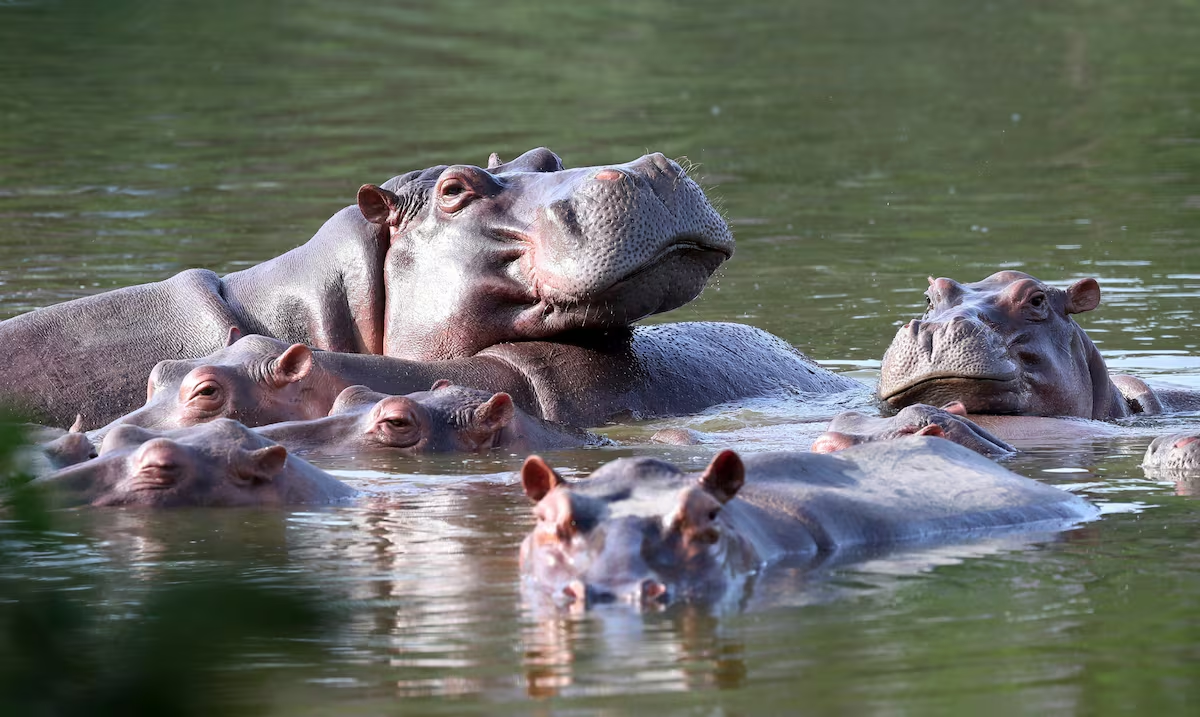
New Delhi – Indian billionaire heir Anant Ambani offered the Colombian government to take 80 hippos to his own wildlife rescue center in western India, after Bogotá authorized euthanasia to control this invasive species introduced into the country by drug trafficker Pablo Escobar.
“These eighty hippos did not choose where they were born, nor did they create the circumstances they now face. They are living and sensitive beings, and if we have the possibility of saving them through a safe and humane solution, we have the responsibility to try,” declared the magnate in a statement published this Tuesday.
Ambani, the youngest son of Asia’s richest man and director of the Reliance Industries business empire, proposed that the hippos be moved to the Vantara conservation center in the state of Gujarat, which already houses primates, big cats, elephants and other rescued animals.
Colombia has been debating for years what to do with the almost 200 wild hippos that inhabit the banks of the Magdalena River, in the center of the country, after four specimens of this invasive species were introduced by drug trafficker Pablo Escobar in the 1980s.
In mid-April, the Colombian Ministry of the Environment announced that it would sacrifice 80 of these animals to stop reproduction that, without control measures, could raise the population to one thousand by 2035, according to the ministry’s own estimates.
The decision came after no country agreed to receive the hippos, according to the Minister of the Environment, Irene Vélez.
“Compassion and public safety are not opposing forces. With sound science and careful planning, it is possible to protect riverine communities, preserve ecosystems and save animal life. Vantara has the experience, infrastructure and determination necessary to support this effort, on the terms that Colombia demands,” Ambani said in a statement.
Colombian authorities and experts warn that the presence of hippos puts aquatic ecosystems at risk, and especially native species such as the manatee. As they are territorial and aggressive animals, they also pose a risk to riverside communities, according to a 2022 Humboldt Institute report.