
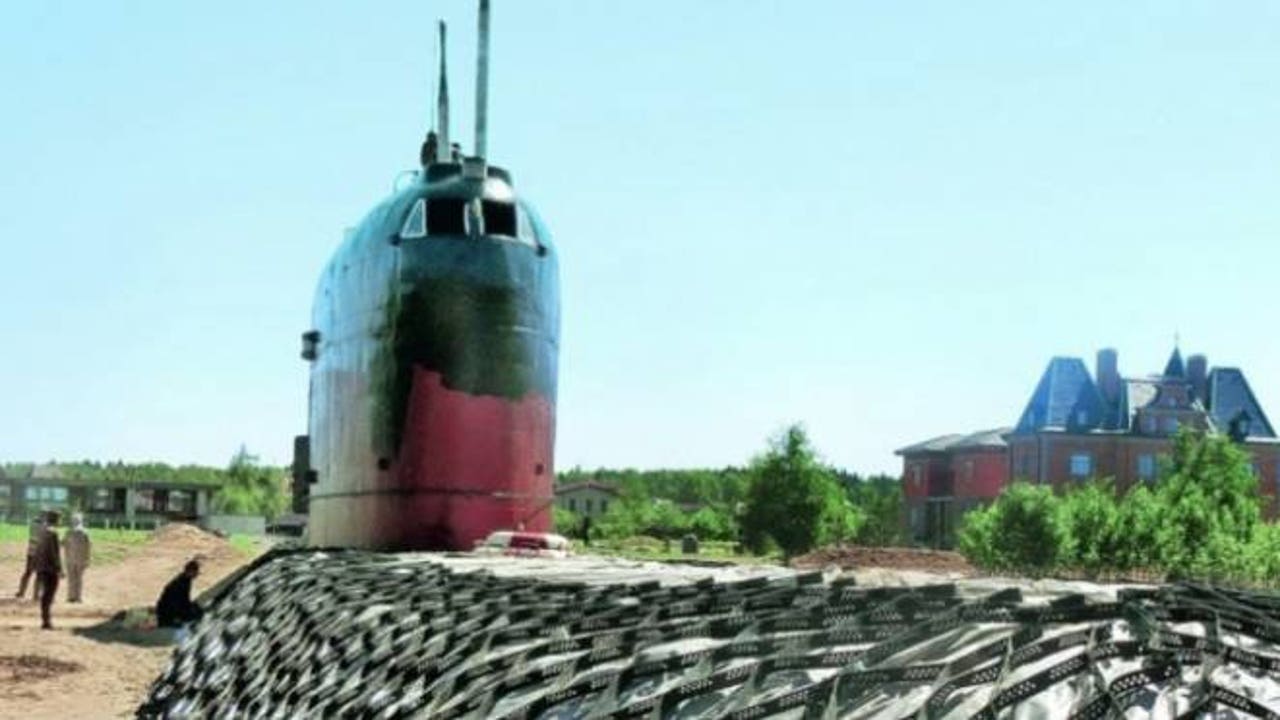
He K-19 It was a historical submarine in the Russian armed For several reasons. In service from 1961 to 1990, it was The first Soviet submarine armed with nuclear ballistic missiles (R-13 SBLM) and starred in a race plagued with accidents who ended up costing their lives to many dozens of their sailors, which led to receiving nicknames like Hiroshima, damnedor, popularized by the 2002 film starring Harrison Ford, Widowmaker (‘Widows maker’). After being removed from the service, he dismantled. However, today It is semi -soured in a private residential area near the Pavlovsky pondin the Moscow region. What does decades there after the reactor compartment was discarded in the Bay of Abrosimova, in the Kara Sea?
No, it’s not the submarine from the philadelphia experiment.
It’s the nuclear submarine k-19 buried near the uchinskoe reservoir in Moscow Oblast. pic.twitter.com/addimwjatc
– Massimo (@rainmaker1973) May 10, 2025
The K-19 Rubka
Despite its appearance, what is in the town of Nikulskoyein coordinates 56.02509 ° N, 37.67394 ° E, 100 meters from the edge of the pond, It is not the complete submarine but its blond or command towerwhich is 28 meters long and is placed On a ground embankment that simulates the helmet of a submarinehence the impression of finding yourself halfway.
The relocation of the K-19 section was A private initiative led by Vladimir RománovNot an official government project. Románov, Ancient K-19 sailor (He worked as a cook on board) and subsequently entrepreneur, dedicated their own resources To save this part of the drainage submarine.
After its dismantling in the first decade of this century, in the shipyard NERPA (Severodvinsk, northern Russia), the Rubka was removed in a nearby esplanade. In 2006, Románov acquired this section with the intention of preserving it. Organized the transfer of the huge piece in 2018cutting it into segments to transport it by train to the province of Moscow. In this way, the old K-19 found that year its ‘last stop’ in the Nikulskoye village in the form of a monument. Cutting, transport and installation operations were complex and expensive, estimating a total expenditure around half a million dollars Solved by Románov himself, who was supported by the local corporation.
The land in which the K-19 Rubka is part of A set of country houses (Dachas) with private security, where Románov resides. It does not work as a regularly open museum to the public, and spontaneous access is restricted. However, the place can be visited. In 2022, A Youth Youth Club sailed through the pond to Nikulskoye and approached the monument to pay tribute to the K-19 sailors. There is no formal public access, but it is not completely forbidden.
K-19 remains memorial of the dead sailors in their service. Románov and other former K-19 use it as meeting point in anniversaries and memory actsand the state of the structure is monitored for its conservation.
In spite of everything, this may not be the definitive stop of the K-19. According to Russian media, there are Plans to transfer it from its current location to the Museum of Victory in Moscowan official military museum.
Why the K-19 had nicknames like cursed, Hiroshima and Widowmaker
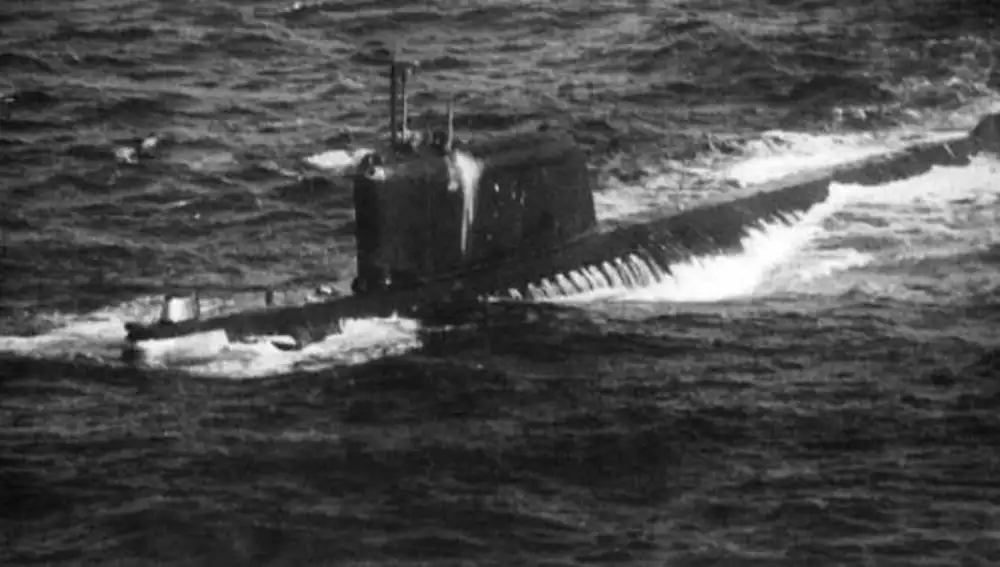
The K-19 was one of the submarines more problematic of the Soviet Navy. He moved 5,000 tonswas driven by 2 70 MW VM-A nuclear reactorshad a length of 114 metersmanga of 9.2 m and draft of 7.1 m. Was designed to dive at a depth of 300 metersalthough he never exceeded 250and its crew consisted of 139 sailorsincluding officers.
Initially known as Project 658 and then designated as Hotel classwas built as the Soviet response to USS George Washington from the United States, so hasty that He suffered multiple accidents that began even before throwing themselves into the sea. In total, 60 people died In the first years of submarine service.
- During construction (1958–1960): 2 workers died in a fire in the Naval Shipyard of Severodvinsk. Subsequently, 6 women died when inhaled toxic gases while applying rubber coat in a cistern. In other accidents, an electrician was crushed by the cover of a missile tube during the armament load and an engineer died when he fell between two submarine compartments.
- Nuclear accident (July 4, 1961): During exercises in the North Atlantic, a leak in the reactor cooling system caused an uncontrolled increase in temperature. The crew improvised an cooling system, avoiding a fusion of the nucleus. However, 8 sailors died shortly after exposure to radiation, and another 14 died in the following years due to related diseases. The nickname Hiroshima comes from this particular event.
- Collision with USS Cat (November 15, 1969): In the Barents Sea, the K-19 collided with the US Uss Cat. The impact seriously damaged the bow of the K-19, including the sound and torpedo tubes. Despite the damage, the submarine managed to emerge and return to port for repairs.
- Fire on board (February 24, 1972): While navigating 120 meters deep in the Atlantic, a fire broke out in sections 5, 8 and 9 of the submarine. The incident caused the death of 28 crew and required a rescue operation that involved more than 30 vessels and extended for 40 days.