
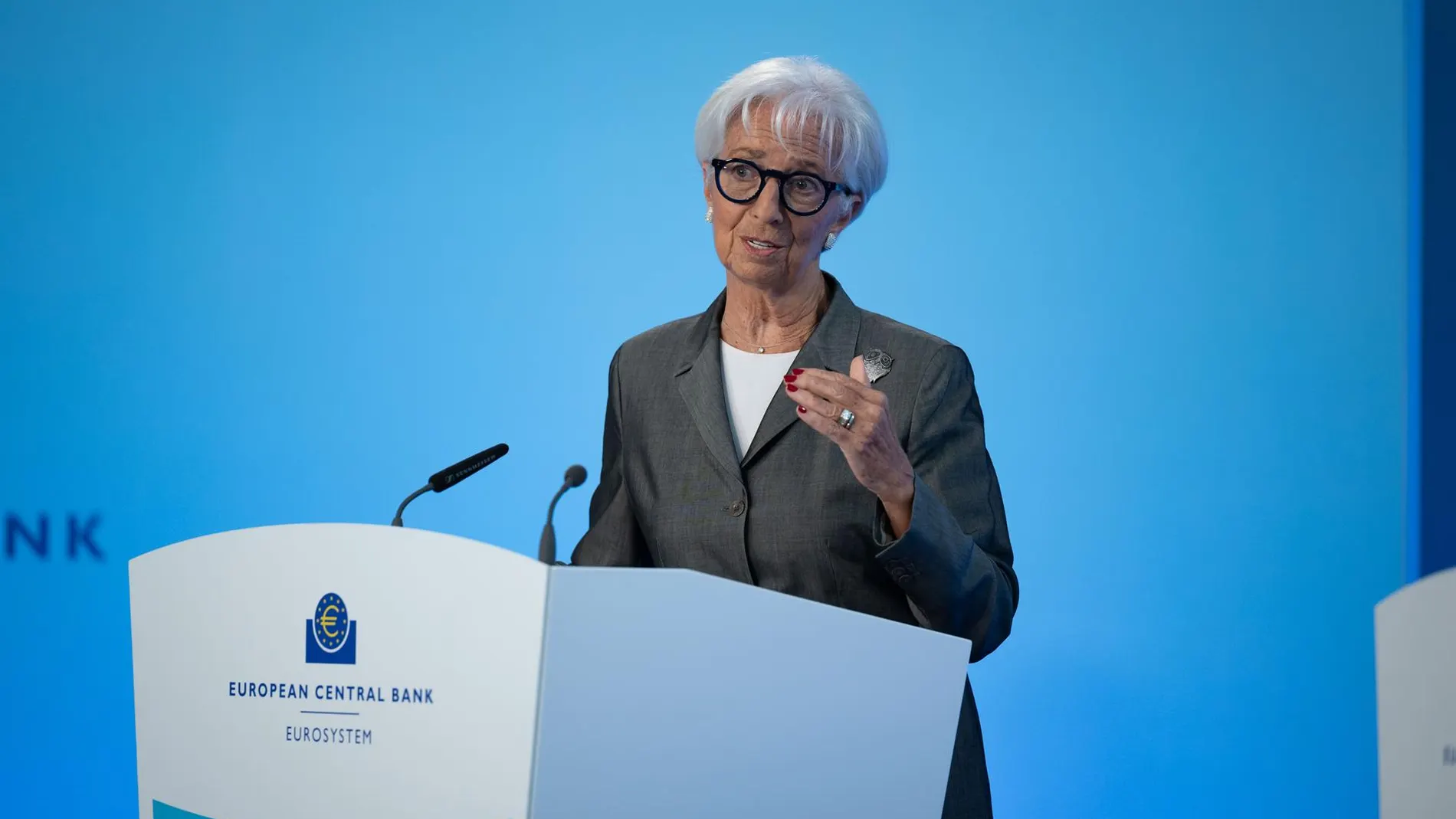
He European Central Bank (ECB) has raised interest rates again. The organism has increased in 25 basis points deposit facilitywhich goes from 2.25% to 2.5%, in the second increase in the price of money in 2026. It has also raised the rate of main financing operations to 2.65% and that of the marginal credit facility to 2.90%.
The new rise puts the focus once again on mortgages. Those who have a variable loan They may end up paying a higher fee, although the change will not be immediate nor will it affect all customers equally. mortgaged.
Those who have a fixed rate mortgage Your fee will not be modified by this decision. The situation is different for variable mortgages, whose interest is usually linked to the Euribor and which can become more expensive when their next review arrives if this index continues to advance.
A mortgage of 150,000 euros could pay about 240 euros more per year
The rise announced by the ECB It does not mean that all mortgages will automatically become more expensive by 240 euros. The figure serves to visualize what it would mean to transfer an increase of 0.25 points to the interest on a loan.
Taking as an example a variable mortgage with 150,000 euros pending and a remaining term of 25 yearsa rate of 3% would leave a monthly payment close to 711 euros. If this interest increased to 3.25%, the receipt would be around 731 euros.
The difference would be, therefore, approximately 20 euros per month or about 240 euros per year.
The result changes depending on the capital that still remains to be returned, the remaining years, the differential signed with the bank and, especially, the evolution of the Euribor. Therefore, this simulation allows us to measure the effect of an increase in 25 basis pointsbut it doesn’t anticipate exactly how much each mortgage will go up.
When will the ECB increase be noticed on my mortgage?
The mortgage bill does not change the day after a ECB meeting. In variable loans you have to wait for the date on which the interest rate is due to be reviewed.
Depending on the conditions of the contract, this update may be carried out periodically taking as reference the euribor corresponding. This is when the bank recalculates the interest and determines the new installment that the mortgagee will have to pay.
Therefore, a person whose review is near might encounter the changes sooner than someone who has just updated the conditions of your loan.
The rise of the ECB does not mean that the Euribor increases another 0.25 points
Here is one of the fundamental differences. The ECB has raised its rates from 2.25% to 2.5%, but that does not imply that the Euribor has to automatically rise another 0.25 points.
The Euribor responds to market conditions and expectations and can anticipate monetary policy movements. In fact, this Thursday’s rise was widely discounted before the ECB will officially announce its decision.
Therefore, the real impact on a variable mortgage will depend on where the Euribor is when the review arrives and what level it is compared to.
The ECB’s decision does introduce a scenario of more expensive money. The agency has justified the new tightening by inflationary pressures and expects inflation to remain above your 2% target over a long period.
Can the ECB raise rates again?
The next unknown is precisely what happens over the next few months. After placing the deposit facility at 2.5%, there is no unanimity on whether this will be the last movement of the year.
Some analyzes consider a break after Septemberwhile others do not rule out another increase before the end of 2026 if price pressures continue. The scenario itself is conditioned by the evolution of inflation and, especially, by the rise in energy prices.
The rise of the ECB does not change the mortgage bill from one day to the next. The date that really matters is in the contract and is the date of the next review.