
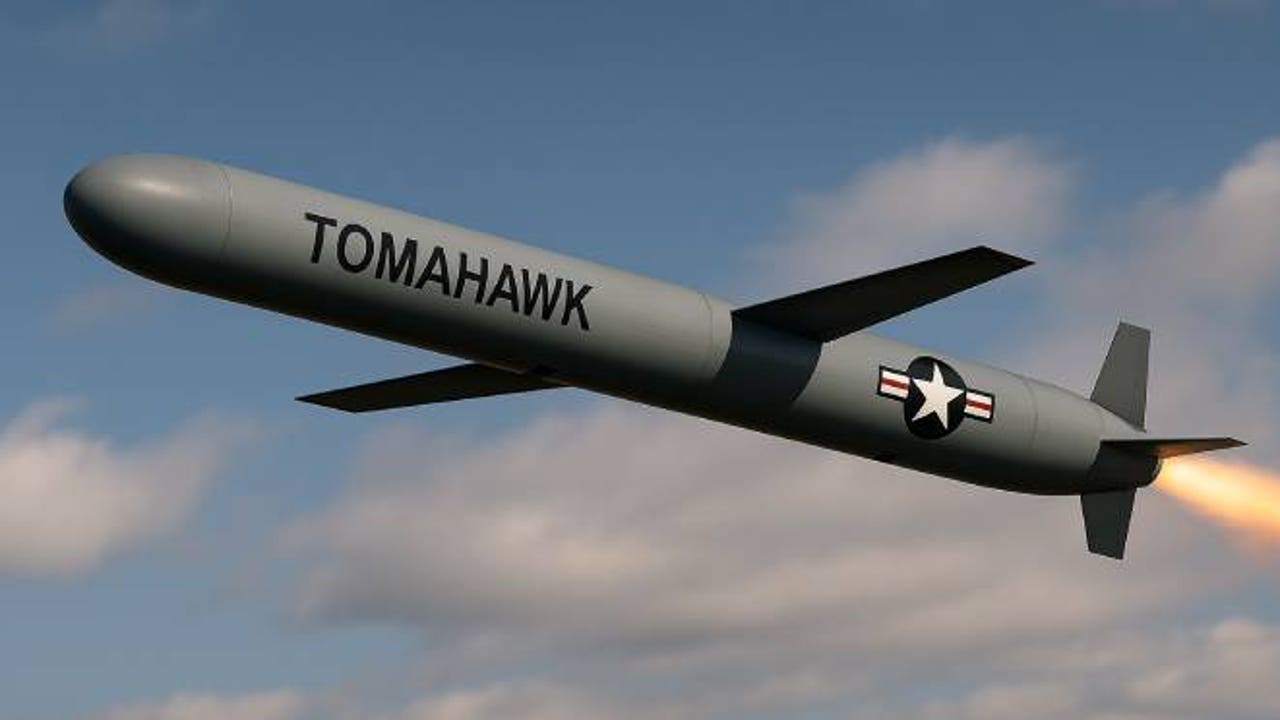
When talking about weapons like missilesof the type that may be, one of the fundamental aspects is how they are conducted to their objective with precision once launched: their Guide system. That is, the set of sensors, processors and actuators that allow the projectile to determine their position and direction, either autonomously or guided externally, to maneuver and achieve the goal. When dealing with this aspect, it is usual to mention that such ballistic missile, cruise or other uses An inertial guide system. In this article we will explain what this system consists of and why it is the most used.
Today, practically All missiles incorporate at some point on the flight an inertial guide system which can be the only one or combined with other methods (radar, GPS, IR or optics) to correct the small trajectory errors that can accumulate inertial navigation, INS for its acronym in English.
The inertial guide It is not exclusive to missiles. They are also used by airplanes, submarines and weapons such as torpedoes, bombs and artillery ammunition.
What is an ins
An inertial guide system in a missile implies that it is capable of Determine and control your position, orientation and speed autonomouslywithout depending on external signals.
In practical terms, the missile incorporates an inertial platform that Combine accelerometers and gyroscopes connected to a computer. The accelerometers measure linear accelerations in the three axes of the vehicle, while the gyroscopes record the angular speeds (rotations). From these readings, the system mathematically integrates the acceleration to obtain the speed and estimate the position relative to the launch point.
Before firing it, the known initial position (latitude, length, altitude) and the desired trajectory towards the target is introduced into the missile computer. As the missile progresses, the inertial system continuously calculates its location and, If it detects deviations from the programmed route (for example, due to the wind or small variations in the thrust), it generates correction signals for its control surfaces (vector fins). In this way, the missile adjusts its flight attitude (angular position) and direction without the need for external help.
Inertial navigation development
The concept of inertial navigation goes back to 19th centurywhen inertial sensors (gyroscopes and accelerometers) began to develop for scientific and nautical purposes. The first specialized inertial systems for guided did not appear until the 1940swithin the framework of military projects related to missiles and rockets.
The first fully operational was built in the MIT Instrumentation Laboratory in the United States and demonstrated its viability on trial flights at the beginning of 50 years. It was on February 8, 1953 when a plane equipped with the INS developed in the MIT successfully completed an autonomous navigation test.
From that moment, inertial navigation was quickly adopted In ballistic missiles, nuclear submarines (such as the USS Nautilus in 1958) and military aircraft, consolidating as standard technology throughout the 60s.
Advantages and problems of the inertial guide
Focusing on modern missiles, one of the main advantages of the inertial guide is its immunity at external interference, such as those produced by electronic warfare. Since it does not depend on active radar or connections to external data to know its position, the missile is very difficult to deceive or block.
However, All inertial systems accumulate errorswhat is known as driftas they fly, By small inaccuracies in the measurement of acceleration or rotation.
The most common guidance system in modern missiles
To solve that drift, inertial navigation is combined with another system that allows periodic corrections of the trajectory. The most common, INS with GNSS (acronym in English of global satellite navigation system), usually GPS.
In this way, the real position is constantly updated, reducing the trajectory error and improving precision in meters or even dozens of centimeters.
This is the best of two worlds: The autonomy given by INS and the precision of satellite positioning. If the missile suffers some type of electronic interference, it can always continue towards its goal using INS, although with less precision.
Some examples of INS/GNSS, notwithstanding that they incorporate more guidance options in certain phases of the flight, are the cruise missiles Tomahawk developed by the United States and KH-101/KH-55 of Russia; The anti -manpame missiles Harpoon Americans and Exocet Europeans; and Terier-Tierra tactical missiles Atacms and JASSMagain of companies in the United States.