
Sometimes meteorologists warn about storms that unuse such unusual rains that are described as floods 100 years or even 500 years.
Below we present what you have to know about how scientists determine how extreme a flood is and how common these extreme events are becoming.
What does a flood of 100 years mean?
Scientists use mathematics to help people understand how unusual a severe flood is and how to compare the intensity of one flood with another.
According to the United States Geological Service, A statistic that scientists use is the percentage of probability that an flood of a specific magnitude occurs. A 500 -year flood means that such an event has a probability of 1 in 500, or 0.2%, to occur in a year.
Another concept that scientists use is how often an event of a certain intensity is expected. For example, a meteorologist can observe the average recurrence interval of an flood that is expected to occur and see that a similar event is only expected once every 25 years.
The agencies have preferred to express the percentage of probability that an flood occurs instead of the recurrence interval, because this statistic represents better the fact that infrequent floods can occur with a difference of a few years from each other. It is something like launching a couple of dice and obtaining double six times in a row. It is rare, but statistically possible.
Another term that people listen to an imminent flood is that it could be an event that occurs once in a generation or once in life, an informal way to say that a flood could be different from anything that many people have experienced.
How are floods changing with the weather?
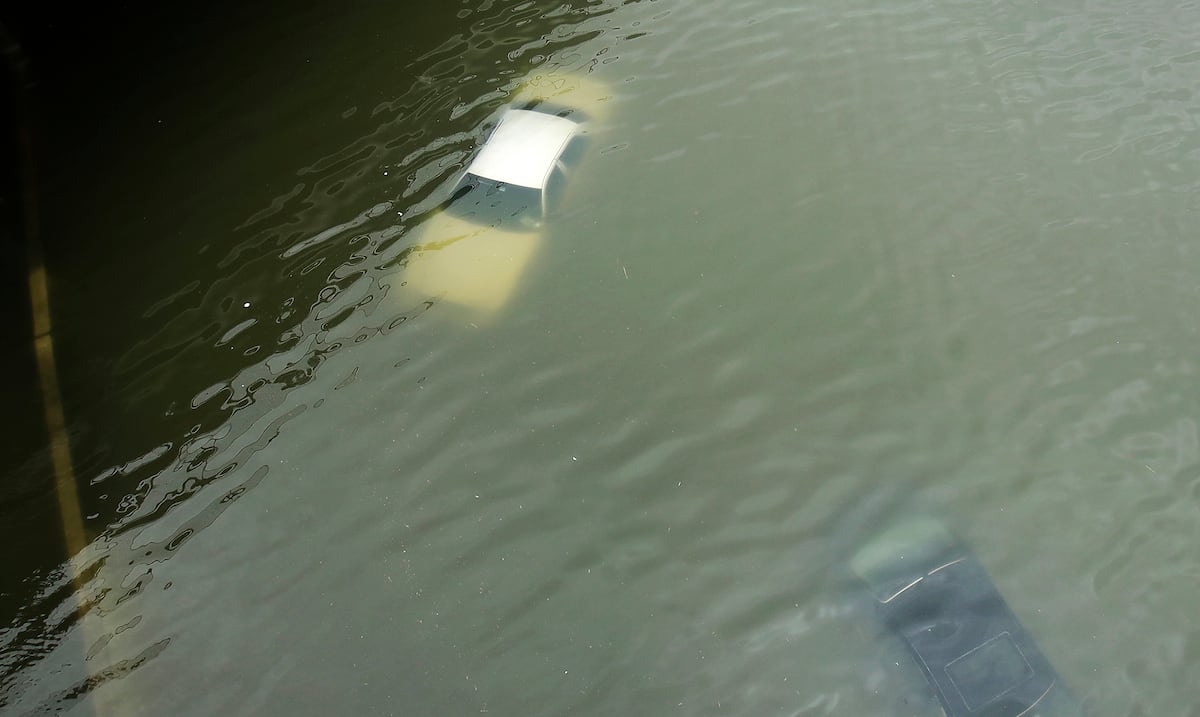
Houston, Texaswas beaten by three events that generated floods from 500 years from 2015 to 2017, according to local officials of the time. The events included the Hurricane Harvey, The most intense rain ever registered in USA. Homes and businesses were destroyed, and floods dragged some cars.
Although mathematics can calculate how often floods of specific magnitudes can be expected, nature has its own plans, including irregularity. Many interconnected systems in the environment, such as local climatic patterns and events with greater magnitude as The childThey can contribute to the changing probability that there are floods.
Since the early twentieth century, precipitation events have become more intense and frequent in most of the United States, and floods are becoming a more serious problemaccording to the National Office of Oceanic and Atmospheric Administration. Gases emitted by humans, such as carbon dioxide and methane, are heating the atmosphere, allowing it to retain more water vapor.
For each grade Fahrenheit that the temperature is heated, the atmosphere can retain almost 4% more water, which represents an increase of 7% for each degree Celsiussaid Victor Gensini, professor of atmospheric sciences at the University of Northern Illinois. In the long run that steam falls back to the ground in the form of rain or snow.
“We have definitely seen a change in the distribution of the probability of heavy rains in the last three decades,” said Gensini.
Other regions have experienced droughts due to changing precipitation patterns. According to the POTgreat droughts and periods of excessive precipitation have been happening more frequently. Worldwide, the intensity of extreme humidity and drought events is closely linked to global warming.