
“Alexa, remind me in two weeks to reserve the terrace of the restaurant we talked about yesterday… if the forecast changes and there is no rain.” A few months ago that phrase would have been not cryptic, but rather impossible for any attendee. It requires remembering a past event, being alert to a possible change over two weeks, and acting accordingly… in the future.. And yet…
For years, technology forced us to learn the language of machines: commands, menus, applications, prompts. In your assistants, hWe had to memorize specific commands, pronounce certain phrases and, on many occasions, rephrase the request until the device understood exactly what we wanted to say. With the new version of your assistant, Alexa+, Amazon It pursues just the opposite, that the machines are the ones who finally learn ours.
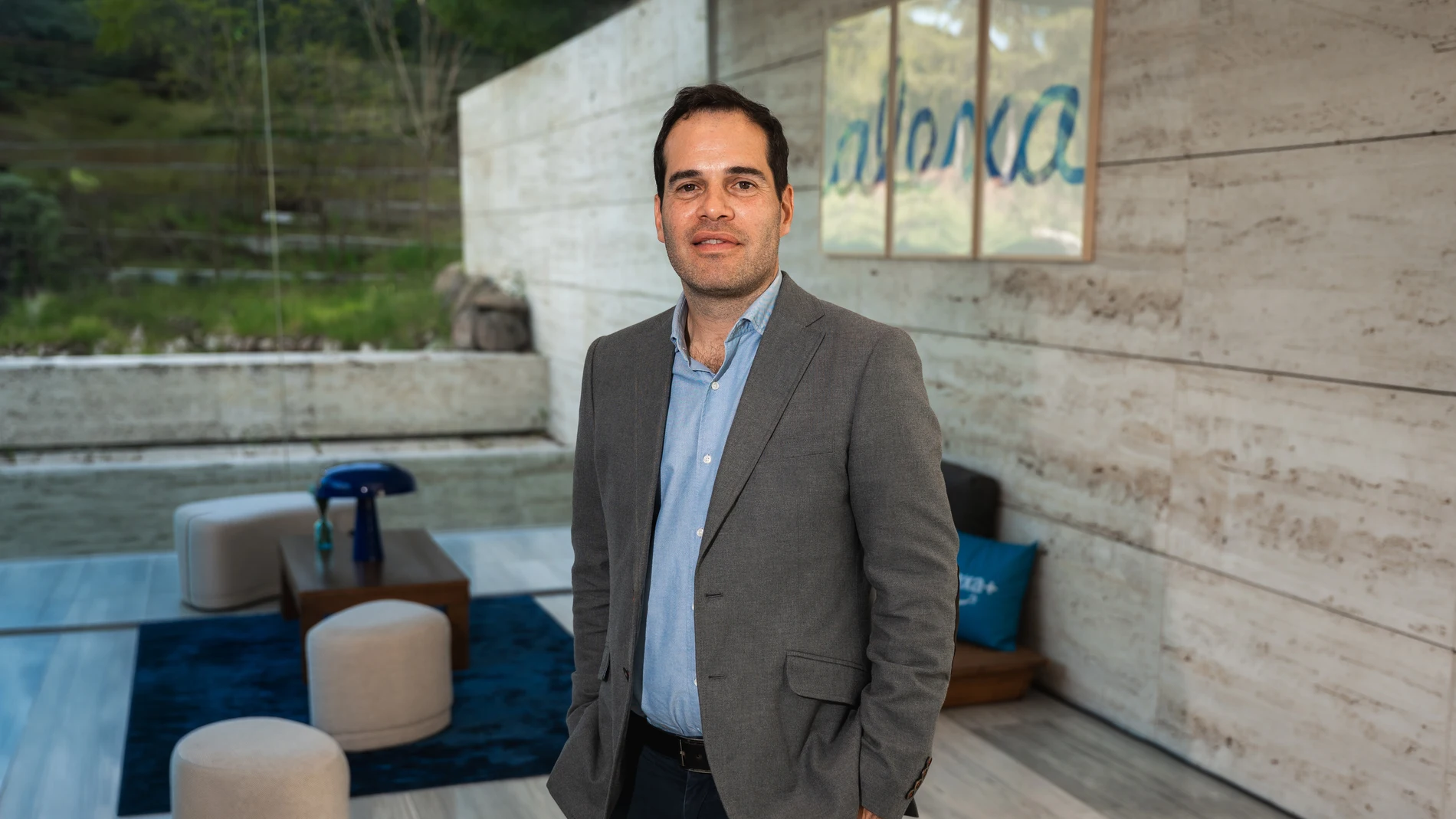
“We haven’t developed another chatbot or a great language model. It’s much more than that: “We want to build the best personal assistant on the planet.”explains Andrés Pazos, Alexa’s country manager in Spain, during an interview with La Razón.
This difference does not take long to appear during everyday use. Unlike a traditional chatbot, where each conversation starts almost from scratch, Alexa+ remembers previous details, stays on track even when we change the subject, and allows us to speak in a way that is much closer to a human conversation. The first days we gave him some references of those who live in our house, we made him listen to our voices and the different devices that each one uses… From that moment on he already addressed us by our names and identified who used a certain device. It’s true, he doesn’t always get it right, there are still moments when he asks for clarification, but the feeling of continuity is surprising. And it is no longer limited to answer questions: start acting.
Because the difference between a chatbot and A personal assistant is not only in the conversation, but in his ability to do things. Alexa+ can book a restaurant, organize a trip, check the agenda, control connected home devices, remember documents that the user has shared with it or coordinate several different tasks without having to jump between applications.
“Generative AI allows us to have a much more natural conversation, but the important thing is that Alexa can help you solve everyday problems – confirms Pazos -. Our goal is to make it really useful on a daily basis.”
This is partly due to the fact that Alexa + has 70 different language models and launches one or another depending on the moment or the interlocutor. “It doesn’t matter which model responds – adds Pazos -. The important thing is that Alexa automatically chooses which one is most suitable for each task.”
Like a brain that activates the hemisphere and specific neurons for each task. The curious thing is that the user never perceives that complexity. During testing it is impossible to know when Alexa is using one model or another. That invisibility is probably one of the system’s greatest achievements. The logic is simple. Checking the weather forecast does not require the same reasoning skills as planning a family vacation, summarizing multiple documents, or coordinating different digital services. It is a kind of invisible orchestra conductor that distributes each task among the most appropriate intelligence.
If the technological development has been complex, adapting Alexa+ to Spanish has been almost as demanding. “It is not a simple translation – says Pazos -. There has been a very strong localization work.” Because speaking Spanish does not necessarily mean understanding how Spanish people speak.. An assistant must be able to interpret double meanings, ironies, colloquial expressions, context changes or linguistic differences between different regions. You must also understand when a seemingly informative phrase is actually an implicit request.
To achieve this, Amazon has worked with Spanish teams during the development of Alexa+ and incorporated services that are very present in the country’s daily life, such as Cabify, TheFork or CoverManager.
“We wanted Alexa to not only speak Spanish, but to understand how we live,” summarizes Pazos. The key phrase here is more natural conversation. The teenager at home speaks a different language from her mother, who is Asturian, and her father, who is Argentine. Alexa + understands almost all of these dialectical variants and responds accordingly…Although he still struggles with certain words (tomato chutney recipes, for example, became tomato “chuteney”).
All of this makes up the type of evolution that the industry is beginning to describe as agentic artificial intelligence: systems capable of not only generating responses, but also acting on behalf of the user, always under their supervision. For Pazos, this difference will mark the future of digital assistants: “Artificial intelligence has to disappear from the conversation. The user should not think about what model they are using, but simply obtain the result they need – adds Pazos -. All of these functions maintain privacy controls integrated from the design and the user can decide at all times what information they share and what actions they authorize the assistant. Our mission is to build the best personal assistant on the planet.”
That involves much more than answering questions. It means understanding that When someone says “it’s unbearably hot,” they may not be looking for the weather forecast.but waiting for the air conditioning to turn on automatically. Or that a conversation about a trip can end with reserving a restaurant or adding an appointment to the calendar without the need to repeat instructions.
For Pazos, that is the true paradigm shift: stop designing systems that simply converse to build assistants capable of understanding the context and collaborating with people. A change is not intended to replace anyone. “Artificial intelligence does not come to destroy jobs; it comes to make people’s lives a little easier,” concludes Pazos.
After talking with Andrés Pazos and living with Alexa+ for several days, one ends up reaching a curious conclusion. For years we have understood voice assistants as speakers capable of answering questions. Amazon seems to have decided to abandon that idea: Alexa+ no longer tries to be the one who responds best, but rather the one who best accompanies.
It may seem like a small nuance. It is not. Maybe in a few years we will stop talking about intelligent assistants in the same way that today we no longer talk about “touch screen” phones. We will simply assume that the technology remembers, understands the context and acts before we even finish asking for it.. If that future ends up arriving, Alexa+ will likely be remembered as the moment when artificial intelligence stopped looking like an app and started behaving like an everyday presence.
I don’t know if Amazon has already built the personal assistant that Andrés Pazos imagines. I think not yet. But after trying it for several days I do have a pretty clear feeling: For the first time, artificial intelligence stops looking like an application installed on a device and begins to behave like someone who shares the same digital space with us.