
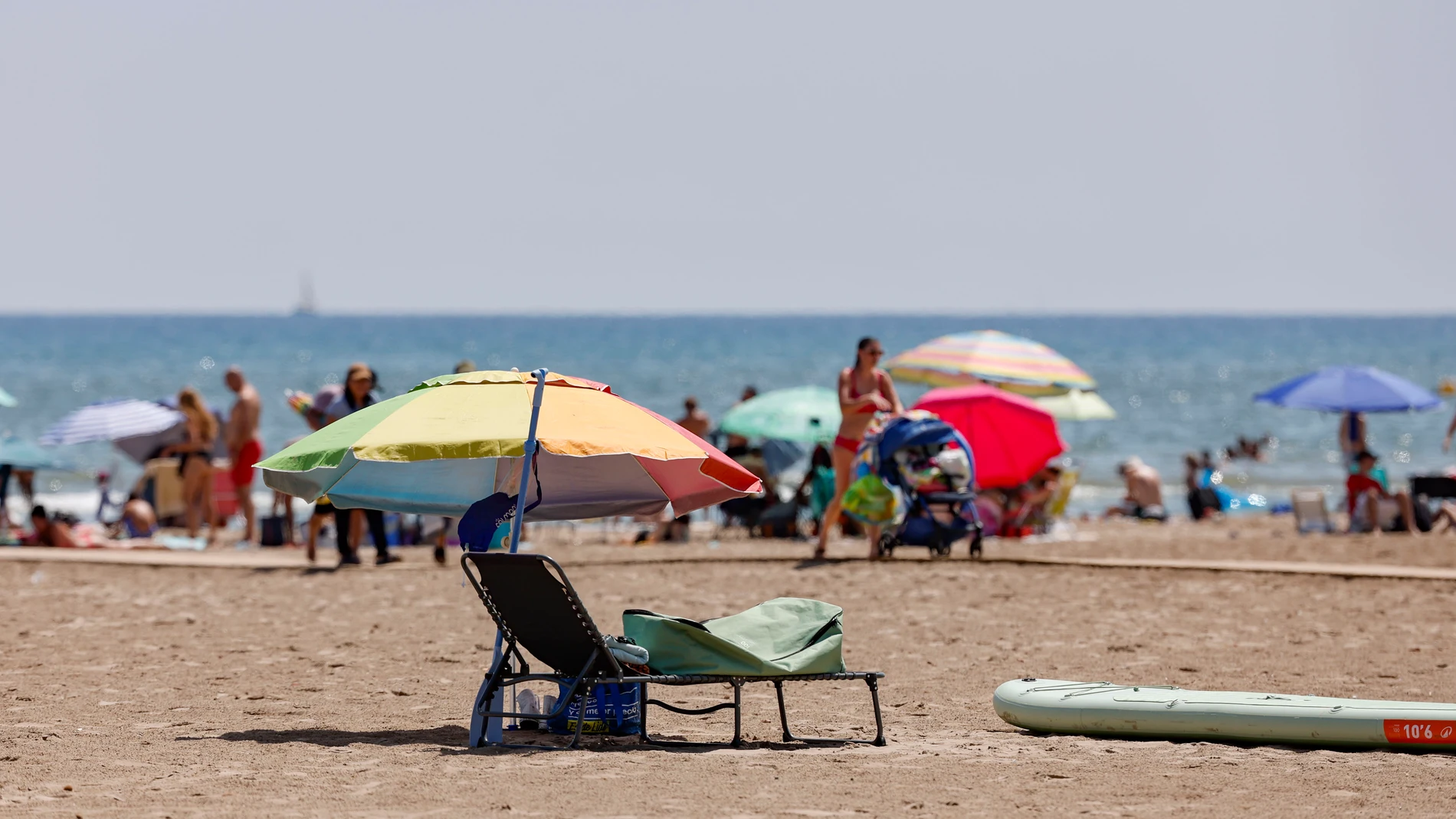
The sea is swallowing the Valencian beaches and with them, one of the main tourist engines in Spain. Besieged by rising sea levels, port construction and DANAS, the Mediterranean coast has required unprecedented intervention: the largest coastal regeneration in the history of the countrywhose works were completed just a few days ago.
To do this, a specialized vessel was located about three kilometers offshore, off the coast of Cullera, with a Bonny River suction dredger that extracted 3.24 million cubic meters of sand underwater deposit located about 80 meters deep to relocate it – through floating conduits and pipes – on the beaches.
A colossal picture of 43 million euros that has been repeated for five months with the aim of saving more than 11 kilometers of the coastlinespanning from Canet d’en Berenguer, Almardà, Corinto and Malvarrosa in the northern sector, to El Perelló, Pouet and Les Palmeres in Sueca, or Marenyet and l’Estany in Cullera.
The thrust of the waves had caused the strip of sand to recede in a worrying manner in all these municipalities and, to reverse this deterioration, the General Directorate of the Coast and the Sea – through the Coastal Demarcation of Valencia – promoted a colossal performance carried out by the UTE Dredging International España and the construction company Rover Maritime.
But transforming the coast is not just about moving sand. It involves working in the marine environment and submitting to unpredictable rules. Alejo Muruaga, head of the environmental consulting firm Versemar, in charge of directing the project’s Environmental Surveillance Plansums it up with absolute clarity: «When you work at sea, the sea is in charge. The client is not in charge, the administration is not in charge, I am not in charge, the boss is not in charge: the sea. This maxim was experienced especially harshly at the start of the works, during February and March, when a string of storms and storms disrupted the initial calendar.
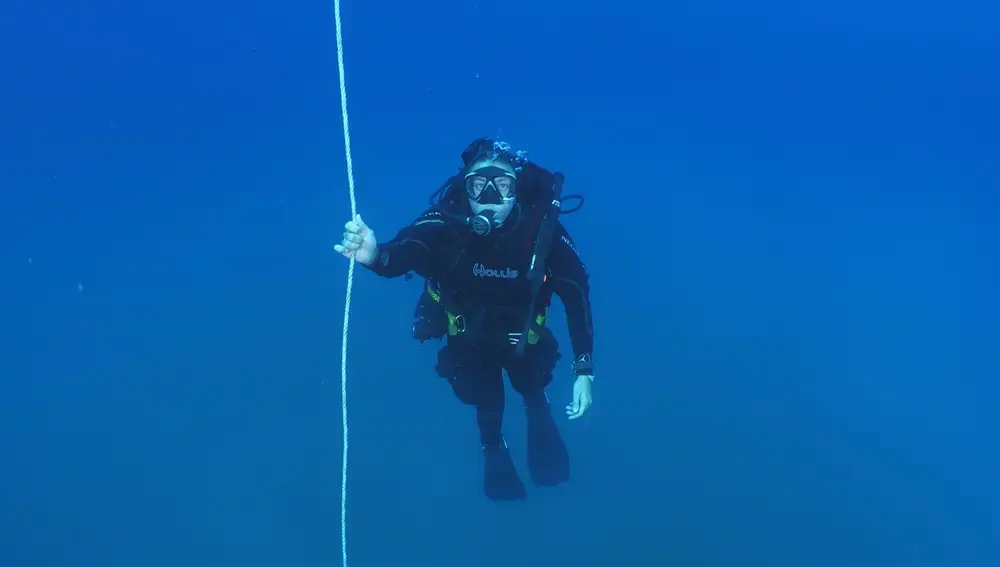
And before moving the first gram of sediment, the technical team needed to take the “initial photograph” of the ecosystem: analyze the previous quality of the water, sediments and the health of the marine flora and fauna to evaluate the subsequent impact. Despite the onslaught of winter, the team reorganized the dives and the rest of the field operations, managing to complete them within the scheduled time.
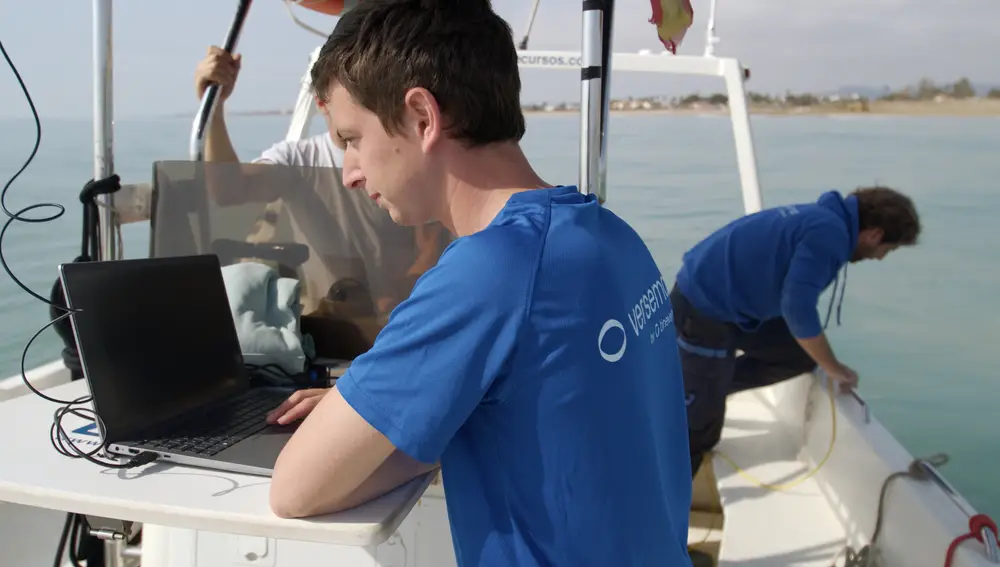
To ensure that massive spills did not alter marine habitats, Versemar deployed an unprecedented scientific monitoring network. It was deployed an army of 20 automated floating buoys: eight in the offshore extraction area and twelve distributed among the three large stretches of beach (Sagunto-Canet, Sueca and Cullera). These oceanographic buoys, equipped with high-precision sensors, functioned as continuous digital guardians.
«They are equipped with sensors that continuously measure certain parameters that are transmitted via GPRS, such as mobile data, to a server. This allows us to process the data in real time and not waitas was done in the past, when the data processing time lengthened the reaction time,” explains Muruaga.
One of the most monitored aspects in the more than 130 immersion and control campaigns was the turbidity of the water caused by dredging and dumping. If the suspended sediment cloud exceeded environmental safety thresholds, scientists could notify the ship in real time to apply corrective environmental measures immediately.
A controversial step appeared on the beach of El Perelló
The work was not without controversy either. During its execution, the appearance of large steps of sand on beaches like El Perelló raised doubts among some neighbors. Had they miscalculated the operation? Muruaga categorically denies any failure and clarifies that it is a planned dynamic process: «When you do a regeneration project, you are putting sand in an area and then that beach has to be restructured and stabilized. The appearance of these steps is a natural phenomenon that is already expected; “With time and the push of the waves, it ends up disappearing and the beach stabilizes.”
The surveillance did not neglect the heritage either. At the foot of the beach they remained continuous archaeological controls to verify that the contribution of sand did not affect to possible submerged or buried historical remains, especially in sensitive sectors such as Sueca and Cullera.
With the works phase completed, post-operational scientific monitoring has begun. Versemar is now working to evaluate the evolution of ecosystems through comparative analysis known as before-after. «We repeated exactly the same sampling that we did at the beginning and compared results. “This way we evaluate whether the observed changes remain within tolerable margins and without harmful environmental significance.”
Adjacent towns such as Tavernes de la Valldigna have already expressed interest in carrying out similar actions to stop the decline of its coasts and Muruaga affirms, without giving names, that they are working on intervening in other areas of the Valencian coast. Thus, this work of historic maritime engineering is already shown as a benchmark where technological innovation and environmental rigor.