
This year Ukraine announced the arrival of the amphibious vehicle BVS10 Viking, supposedly an unstoppable SUV. A few weeks ago, the United Kingdom confirmed the construction of the HMS Dreadnough, the largest nuclear submarine in the country, which will have 144 nuclear eyes. What do both have in common? They are part of the technology developed by the BAE Systems company. Like the common transpondor (CXP) AN/APX-123A (V) Friend-Enemigo Identification (IFF) used to prevent friendly fire incidents.
Recently, Baes Systems has received a contract of 30 million euros from the US Navy to develop This tool that will support the US Navy.
The updated CXP will offer a replacement for current IFF transponders, addressing obsolescence and increasing the processing capacity to meet future demands. Its design allows integration as a replacement of form, adjustment and function, guaranteeing compatibility with existing and emerging military assets.
The BAE Systems approach for CXP update is based on An open system architecture and programmable matrix technology in high density field. This allows software updates to expand the usefulness of the transpondor without the need for expensive hardware modifications.
“Common transponders provide our military with a reliable and safe solution that helps them identify allied forces and make decisions in various threat environments – explains Seth Guanu, director of the area of the Bae Systems Bae Systems Combat Identification Products, A statement -. The level of speed, safety and precision is essential for interoperability Among the US forces. This modernization allows us to provide a crucial capacity to thousands of existing applications and equip emerging platforms. ”
The AN/APX-123A (V) CXP will be equipped with the latest encryption and safe data exchange standards, including Mark Xiib IFF certification with S and 5 mode. It will also incorporate additional reception channels for Improve knowledge of the situation by passive acquisition of mode 5 level 2 and automatic dependent surveillance (VAD) – Transmission input.
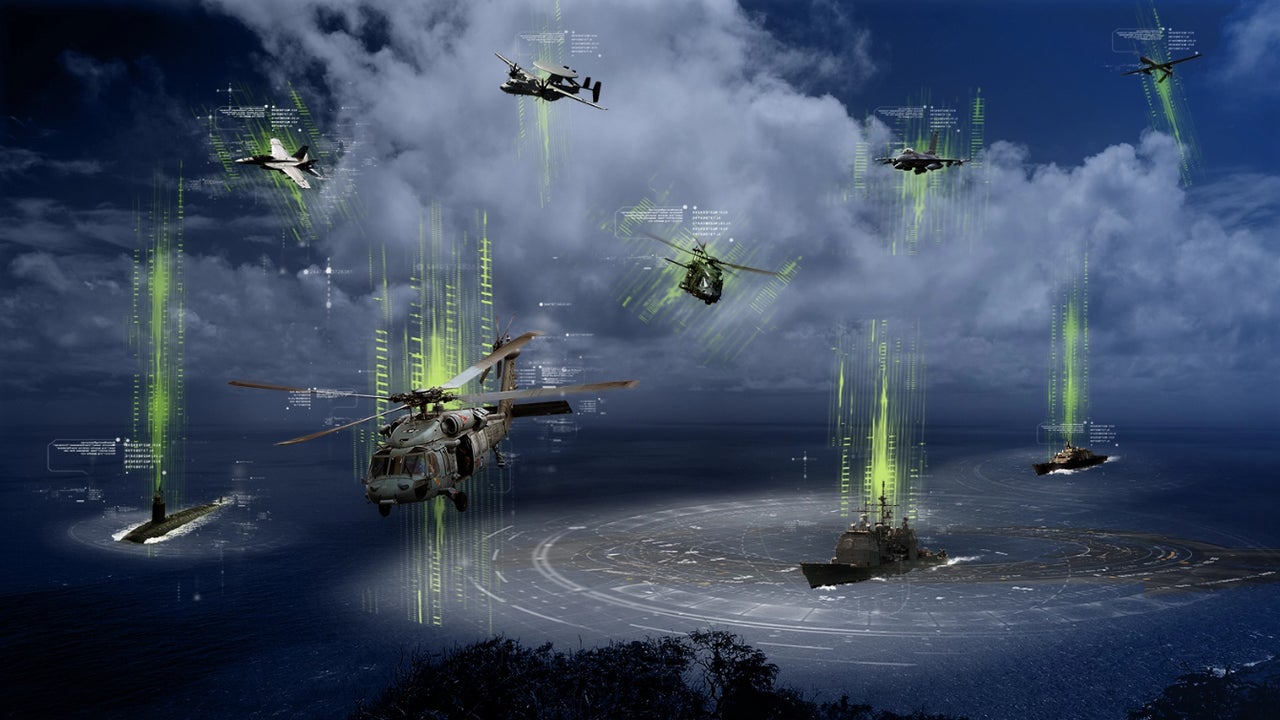
These types of systems function as a kind of interrogations. Transponders allow identifying aircraft and ships as friendly forces responding to interrogations of terrestrial or aerial systems. Transponders installed in aircraft and warships establish the identity of friendly forces.
The entire system is based on two ends. On the one hand, there is the “interrogator”, a terrestrial or aerial device that transmits a encoded signal. This signal is designed to be captured by the transponders IFF of Amigas Aircraft. At the other end is the transponder, located in the aircraft, and the “question” receiver. If the interrogation signal is recognized and the aircraft is a friend, the transpondor responds with a specific encoded signal. If the response is not recognized or the response is not received, the aircraft can be considered potentially hostile and additional measures can be taken.
Modern IFF systems use Cryptographic computers to encrypt the interrogator signal and the transponder response. This encryption helps prevent adversaries from stealing the codes and using them to supplant the identity of allied aircraft.