
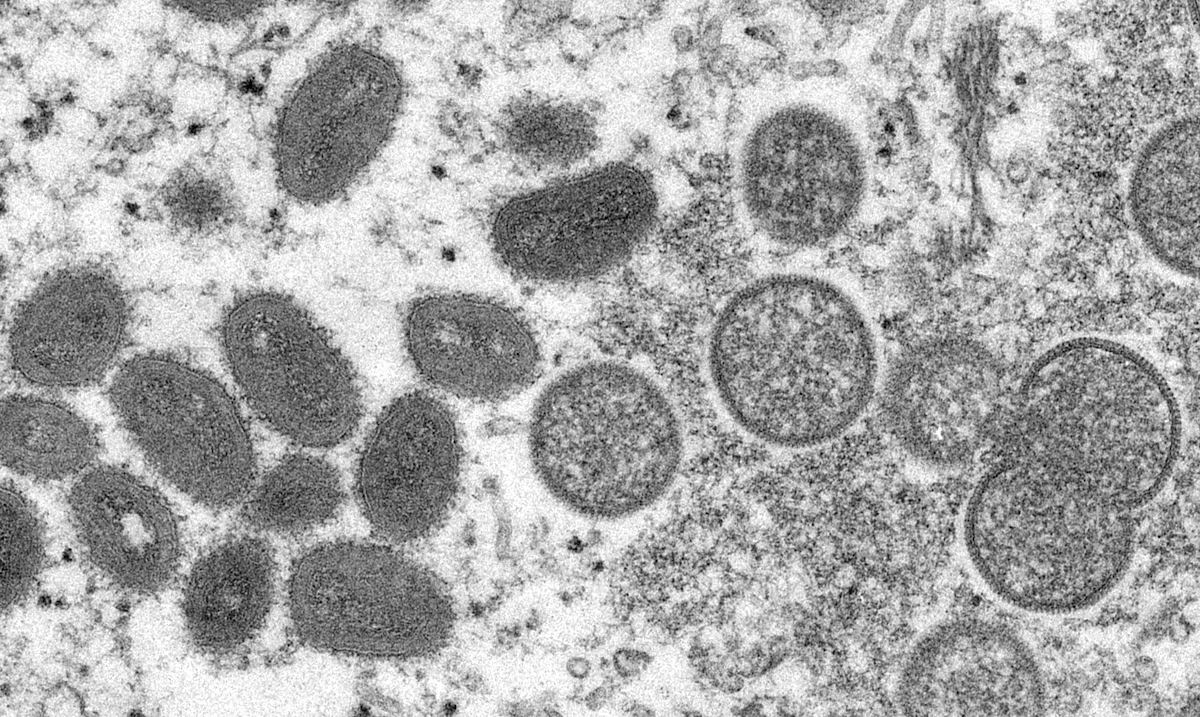
An international team of researchers, led by French scientists, has discovered a new family of giant viruses present in the human intestine that could help explain the evolutionary origin of the smallpox virus, according to a study published this Wednesday in the scientific journal Nature.
The researchers, led by Tom Delmont, from the French National Center for Scientific Research (CNRS), have named these viruses ‘egovirus’ and have identified its presence in intestinal samples from people, but also from livestock and wild animals from different parts of the world.
The finding is especially interesting because egoviruses are the closest known evolutionary relatives of poxviruses, the family to which the viruses responsible for the smallpox and the mpox (formerly known as monkeypox), so they could help reconstruct its evolution.
The team believes that egoviruses do not directly infect people or other animals, but rather single-celled microorganisms that live in their digestive system and participate in processes such as food digestion.
Researchers estimate that about 180 million people could harbor egoviruses in their gut.
The analysis detected viral proteins in samples from populations from different continents, from a hunter-gatherer people in Tanzania, to inhabitants of Europe, USA and South America.
The authors consider that egoviruses are an important piece to reconstruct the evolution of giant viruses and understand how some of them, such as the ancestors of poxviruses, acquired the ability to directly infect animals and humans.
In addition to French scientists, scientists from Switzerland, Germany and the United States, linked to centers such as the Pasteur Institute, the Federal Polytechnic School of Zurich and the American National Institutes of Health (NIH), have participated in the research.