
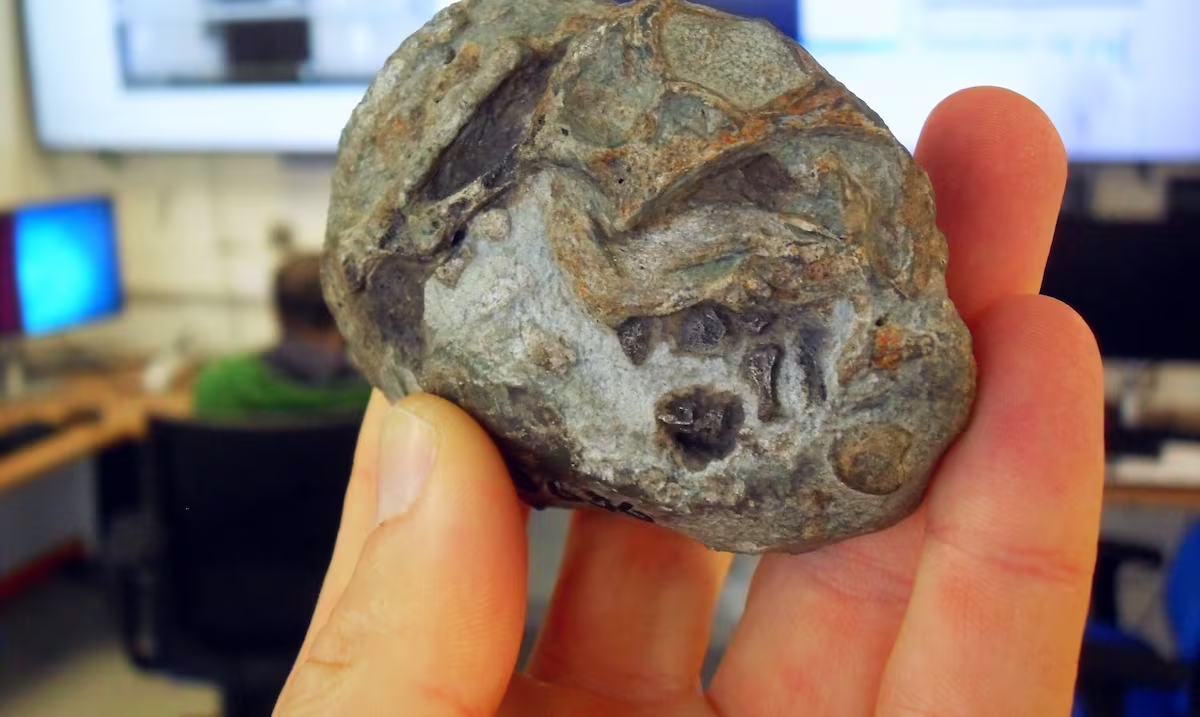
The egg of a baby Lystrosaurus is the first discovered from an ancestor of the mammalswhich provides direct proof that these ancestors laid eggs and tells the story of the survival of this animal, after the most devastating extinction event experienced in the Land.
The fossil egg dates back to about 250 million years ago and contains an embryo of Lystrosaurus, a resistant herbivorous mammal ancestor, indicates a study published Plos One.
This research is important because it provides the first direct evidence that the ancestors of mammals, such as Lystrosaurus, laid eggs, “which resolves a long-unresolved question about the origins of mammalian reproduction,” said Julian Benoit, from the University of the Witwatersrand (South Africa) and one of the signatories of the article.
The fossil was discovered in 2008, with a baby perfectly curled up inside, and although scientists suspected that it had died inside the egg, they did not have the necessary technology to confirm it.
Now, the fossil egg has been analyzed with the equipment of the European Synchrotron Radiation Laboratory (ESRF) in France, which allowed us to capture the level of detail required to study such tiny and delicate bones.
The researchers suggest that those eggs probably had soft shells, which are rarely preserved as fossils, making this find especially rare.
The study indicates that Lystrosaurus laid relatively large eggs compared to its body size. In modern animals, larger eggs usually contain more yolk, which provides all the nutrients an embryo needs to develop independently, without the need for parental feeding after hatching.
For the authors, This “clearly” suggests that this herbivore did not produce milk for its young, unlike current mammals, the University of the Witwatersrand explained in a statement.
Additionally, large eggs are more resistant to desiccation, which is a crucial advantage in a harsh, drought-prone environment, which would have been a critical survival trait.
The findings further suggest that the hatchlings were probably precocious. They were born at an advanced stage of development and would have been able to feed themselves, escape from predators and quickly reach reproductive maturity.
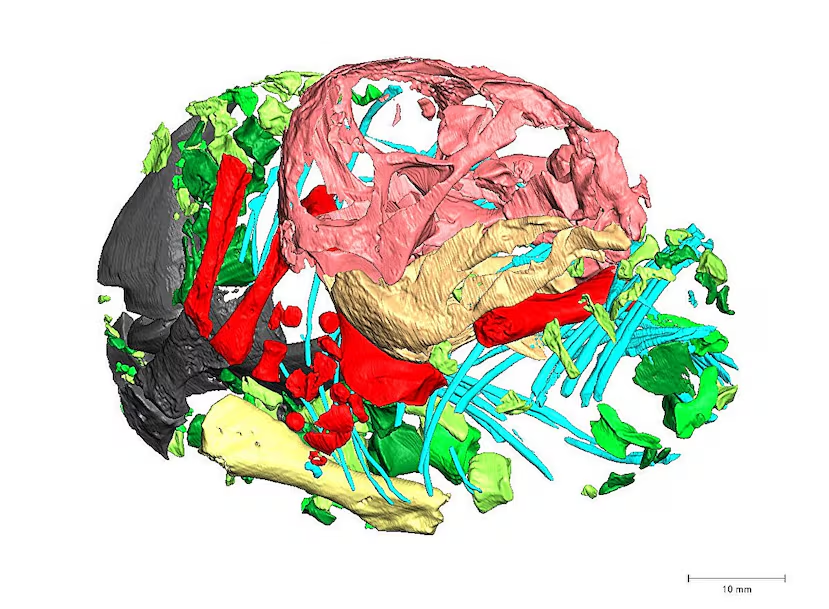
Lystrosaurus thrived thanks to its fast pace of life and early reproduction during one of the most difficult times in Earth’s history.
The Permian-Triassic mass extinction, some 252 million years ago, was the most devastating extinction event the planet has ever suffered, but this animal not only survived, it thrived in a world characterized by extreme environmental instability, intense heat and prolonged droughts.
Benoit highlighted that, in a modern context, the study has a great impact because it offers a long-term perspective on resilience and adaptability in the face of rapid climate change and the ecological crisis.
Understanding how past organisms survived global catastrophes helps scientists better predict how species might respond to current environmental stresses, “making this discovery not only a breakthrough in paleontology, but also something of great relevance to current biodiversity and climate challenges.”