
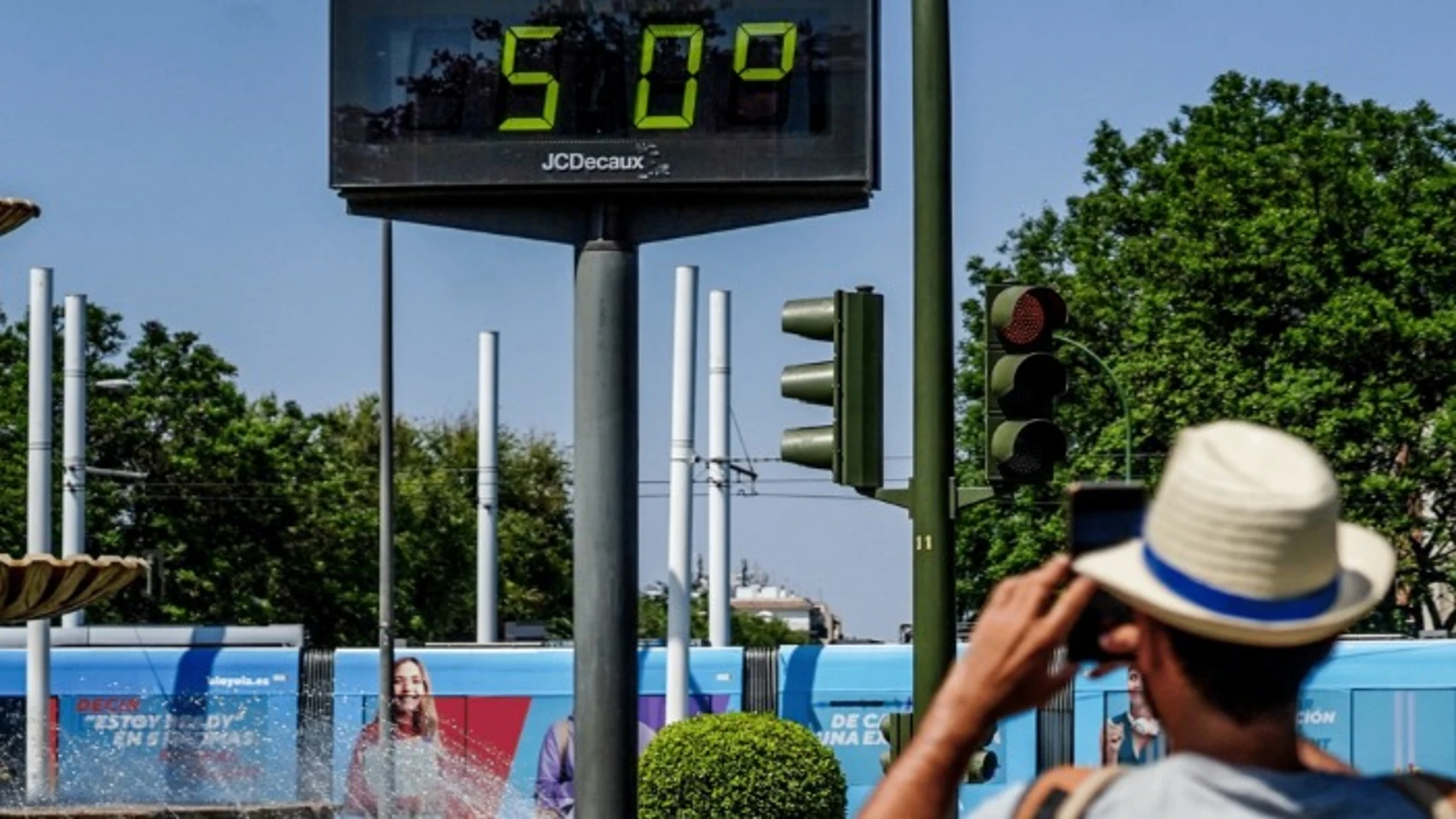
The scientific community and organizations such as United Nations or World Health Organizationwarn that adaptation has ceased to be a complement to the climate fight and has become an emergency, while the financing destined to prepare against this phenomenon continues to be far below what is necessary.
For years, the response to climate change focused almost exclusively on reducing emissions. That task remains decisive, but it is no longer enough. Heat waves, droughts, extreme rains, fires and agricultural losses force societies to prepare to live with impacts that are already here. This is confirmed by the Intergovernmental Panel on Climate Change (IPCC) and the World Health Organization (WHO), who agree that adaptation has gone from being a complement to climate action to an urgent need.
The problem, according to the United Nations, is that this preparation is progressing much more slowly than necessary. The agency warns that the financing gap for adaptation in developing countries remains very wide and that, if current trends continue, even the most recent international commitments to strengthen it will not be met.
Experts insist that adaptation and mitigation are not alternativesbut two sides of the same answer, on the one hand, reducing emissions limits future damage, while adapting reduces today’s damage and that which is already irreversible. Furthermore, the risks do not strike equally, The WHO estimates that 3.6 billion people already live in highly vulnerable areas to climate change, and estimates that between 2030 and 2050 the climate crisis will cause around 250,000 additional deaths per year due to malnutrition, malaria, diarrhea and heat stress.
Health, water and agriculture
Health systems will have to be strengthened in the face of a increase in emergencies linked to heat waves, fires and floodsespecially in countries with more fragile systems, according to the WHO. Water is another major front; climate change aggravates droughts and floods, which requires modernizing supply networks, protecting aquifers and reviewing infrastructure designed for a climate that no longer exists.
In the field of food, FAO defends practices such as conservation agriculture—minimal soil disturbance, permanent organic cover and crop diversification—to improve water use efficiency and make production more resilient, especially among small producers, the most exposed and with the least financial margin.
Cities and infrastructure
More than half of the world’s population lives in cities, where asphalt, lack of vegetation and urban density intensify the heat. Experts propose redesigning neighborhoods with more shade and trees, drainage prepared for extreme rains, and buildings adapted to higher temperatures.
The diagnosis is repeated in infrastructure, roads, bridges, power grids and hospitals were designed for rapidly changing climate conditions. Preparing involves reviewing design standards, reinforcing construction in exposed areas, and strengthening early warning systems.
The way to finance this adaptation continues to be the main brake. According to the UN Adaptation Gap Reportthe gap between real needs and available funds is deep and, if current trends continue, the goal of doubling international public financing for adaptation compared to 2019 will not be achieved. The report estimates that the private sector could contribute about $50 billion a year, but only if there are policies and financial instruments that mobilize that capital. The paradox, experts point out, is that adapting costs, but not doing so costs much more, since each unprevented disaster multiplies human, economic and social losses.
The IPCC warns that adaptation has limits: not everything will be able to be protected indefinitely if warming continues to advance, and some risks are already appearing earlier and with more severity than expected. Therefore, experts insist, preparing the world to resist cannot replace reducing emissions,
The less the planet warms, the greater the margin to adapt, and the longer decarbonization is delayed, the more expensive and unequal any resilience strategy will be.
The discussion, summarized by international organizations, is no longer whether climate change will come, but how to prevent its impacts from overwhelming the response capacity of societies. The adaptation agenda—health, cities, agriculture, infrastructure, water and financing—will determine, according to experts, whether this transition ends up being chaotic and unequal or planned and more fair.