
He “Danube blue” of Johann Strauss II He will travel to space this month at the speed of light to commemorate 200 years from the birth of the King of the Waltz.
The classical piece will be transmitted to the cosmos while interpreted by the Symphony Orchestra Vienna. The celestial farewell on May 31 – transmitted live with free public projections in Vienna, Madrid and New York – will also celebrate the 50th anniversary of the Foundation of the Foundation of the European Space Agency (THAT).
Although music could become real -time radio signs, according to those in charge, ESA will broadcast a pre -recorded version of the orchestra trial the previous day to avoid any technical problem. The live performance will provide the accompaniment.
The radio signals will be launched at the speed of light, or amazing 670 miles per hour.
At that speed, the music will leave the moon behind 1.5 seconds, Mars in 4.5 minutes, Jupiter in 37 minutes and will reach Neptune in four hours. In 23 hours, the signals will be as far from the earth as the Voyager 1 of the POTthe most distant spacecraft in the world, more than 15,000 million miles in interstellar space.
In 2008, NASA also celebrated its 50th anniversary by transmitting a song directly to the deep space: “Across The Universe” by the Beatles. And last year, NASA sent to Venus “The Rain (Supa Dupa Fly)” by Missy Elliott.
Music has even fluid from another planet to Earth, courtesy of a NASA Mars explorer. The flight controllers in the California jet propulsion laboratory sent a recording of “Reach for The Stars” by Will.i.am al Curiosity in 2012 and the Marciano Rover broadcast it back.
These are all transmissions to deep space, unlike the melodies that flow between NASA’s mission control and orbit crews since the mid -1960s.
Now it is Strauss’s turn, after being left out for Voyager’s gold records almost half a century ago.
Run in 1977, NASA’s Voyager 1 and 2 twins each carry a gold -plated copper copper phonographic disc, along with a reproduction stiletto and instructions for any person or something out there.
Discs contain sounds and images of the earth, as well as 90 minutes of music. The late astronomer Carl Sagan led the committee that chose pieces of Bach, Beethoven, Mozart and Stravinsky, along with modern and indigenous selections.
Among the omitted was Strauss, whose “Danube” adorned the science fiction work of Stanley Kubrick of 1968 “2001: Odyssey of space.”
The Tourism Office in Vienna, where Strauss was born on October 25, 1825, said he seeks to correct this “cosmic error” sending “the most famous of all the waltzes” to his home destined among the stars.
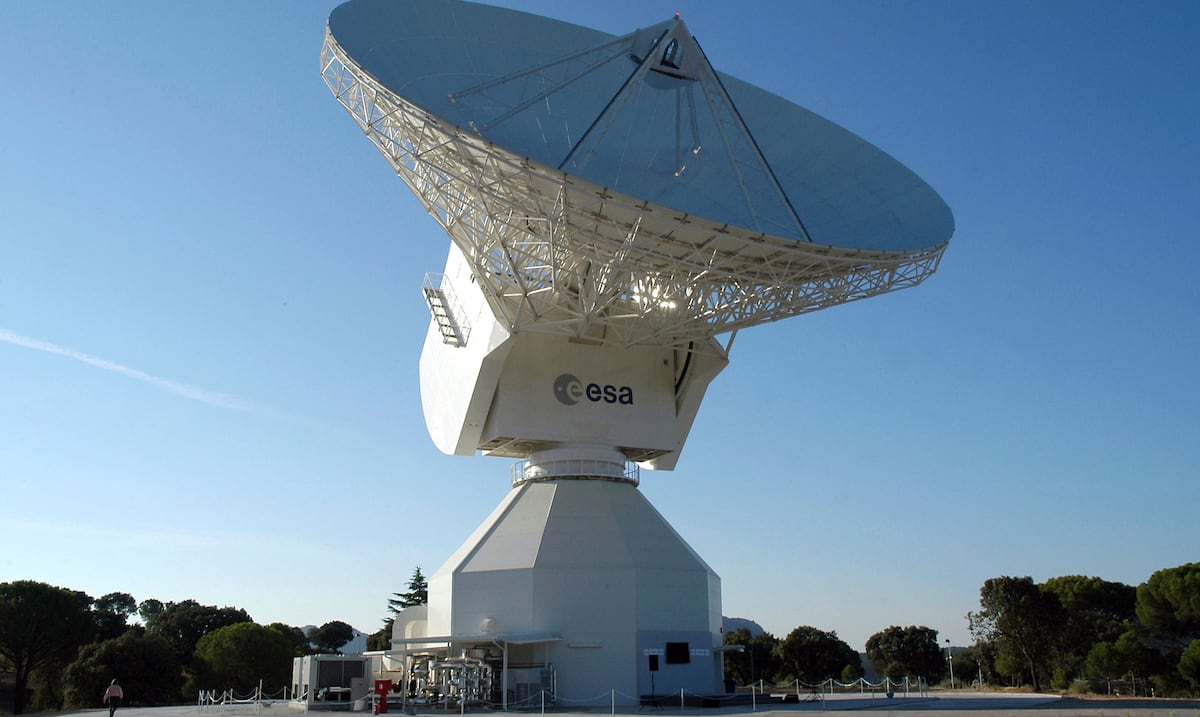
The great radio antenna of ESA in Spain, part of the Space Agency’s deep space network, will make the honors. The antenna will sign up in the direction of Voyager one so that the “Blue Danube” is directed there.
“Music connects us all through time and space in a very particular way,” said Josef Aschbacher, general director of ESA, in a statement. “The European Space Agency is pleased to share the stage with Johann Strauss II and open the imagination of future scientists and space explorers who could one day travel to the hymn of space.”