
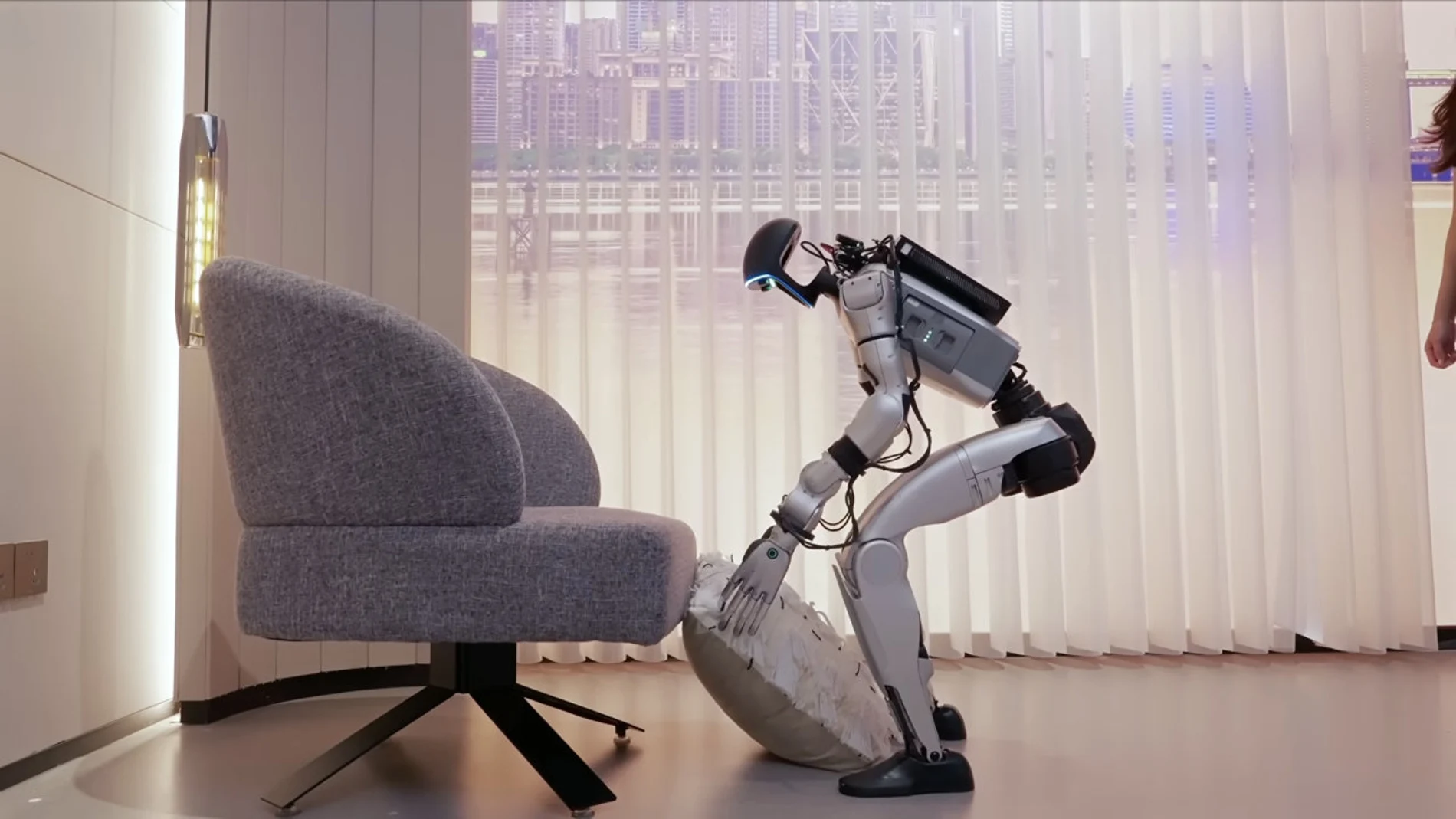
USA has prohibited the entry of new robots manufactured in other countries within a regulatory offensive that will especially affect Chinese manufacturers. The Federal Communications CommissionFCC for its acronym in English, has included the so-called ‘advanced robotic devices’ and the power inverters foreigners on their list of teams considered a risk to national security.
The measure covers humanoid robots, quadrupeds and other connected mobile machinesbut its reach is broader than the ad suggests. The FCC definition may also include robot vacuum cleaners and other home devices capable of moving autonomously.
The agency considers an ‘advanced robotic device’ any machine capable of moving on the ground, navigating or avoiding obstacles, as long as it incorporates sensors to perceive the environment and a chip that allows it to be connected to a network. It must also weigh more than two kilogramsincluding its charging base when it is part of the product.
This description does not require that the robot have arms or legs. A future robot vacuum cleaner that also has these characteristics You will need an exemption to enter the US market. The documentation used by the FCC even mentions the security problems detected in Dullthe robot vacuum cleaner DJI.
Power inverters are electronic devices that convert direct current from batteries, solar panels or other sources into alternating current. They are used in numerous areas, from electric vehicles and industrial machinery to air conditioning, rail transport and telecommunications installations. FCC ban pays special attention to connected models used in solar plants, energy storage systems and data centers, due to their importance for critical infrastructure.
The FCC maintains that these devices could be used to remotely access infrastructure, steal information, facilitate cyberattacks or interrupt power supply. Connected robots could also be used to carry out surveillance tasks, collect information or be controlled from another country.
‘The FCC has added two new categories of devices to our “Covered List”which prohibits the importation or sale in the United States of new versions. Advanced robotic devices, such as humanoids and quadrupeds manufactured in foreign countries. Power inverters manufactured in foreign countries’, stated the president of the organization, Brendan Carrin a statement.
The ‘Covered List’ is the registry of communications equipment and services that the US Government considers a threat to national security. The included products cannot obtain the necessary authorizations from the FCC to market new versions in the country.
‘These devices could generate vulnerabilities in the supply chain that could disrupt the economic and national security of the United States, in addition to creating a cybersecurity risk that threatens American critical infrastructure‘ says the FCC. The objective, in addition to protecting critical supply chains, is reduce dependence on internet-connected technologies designed or manufactured abroad.
The ban only affects new products that still need authorization. Robots and inverters that had already been approved can continue to be imported, sold and used, so there will be no recall of existing devices.
Companies may request an exemptionas is already the case with the prohibition of routers manufactured in other countries. The procedure does not necessarily require improving the safety of the product, but it requires explaining where it has been designed and manufactured, in addition to present a plan to move its production to the United States. According to sources cited by Reuters, the FCC could leave numerous non-Chinese suppliers out of the restrictions.
China will be the most affected country because it concentrates a good part of the world’s production of humanoid robots and also dominates the manufacturing of robot vacuum cleaners and solar inverters. Companies like Unitree, Agibot, UBTech, Leju Robotics, engine AI and Fourier Intelligence have taken advantage in the first commercial deployments of humanoids.
Already authorized versions may continue to be sold, but Chinese manufacturers will have difficulties introducing their next generations. Forbes points out that being limited to older models could make them lose competitiveness in a rapidly advancing sector.
The withdrawal of these competitors will favor American companies such as tesla, Figure AI, Agility Robotics and Apptronikwhich prepare humanoid robots for factories, warehouses and other commercial uses. Less competition could make it easier for them to enter the market, although it will also reduce pressure to improve their products and lower prices.
The Chinese government has condemned the decision and has accused the United States of politicizing trade and technology through ‘baseless pretexts’. Beijing has warned that it will take the necessary measures to protect the interests of its companies and has demanded greater international cooperation on artificial intelligence instead of new restrictions.