
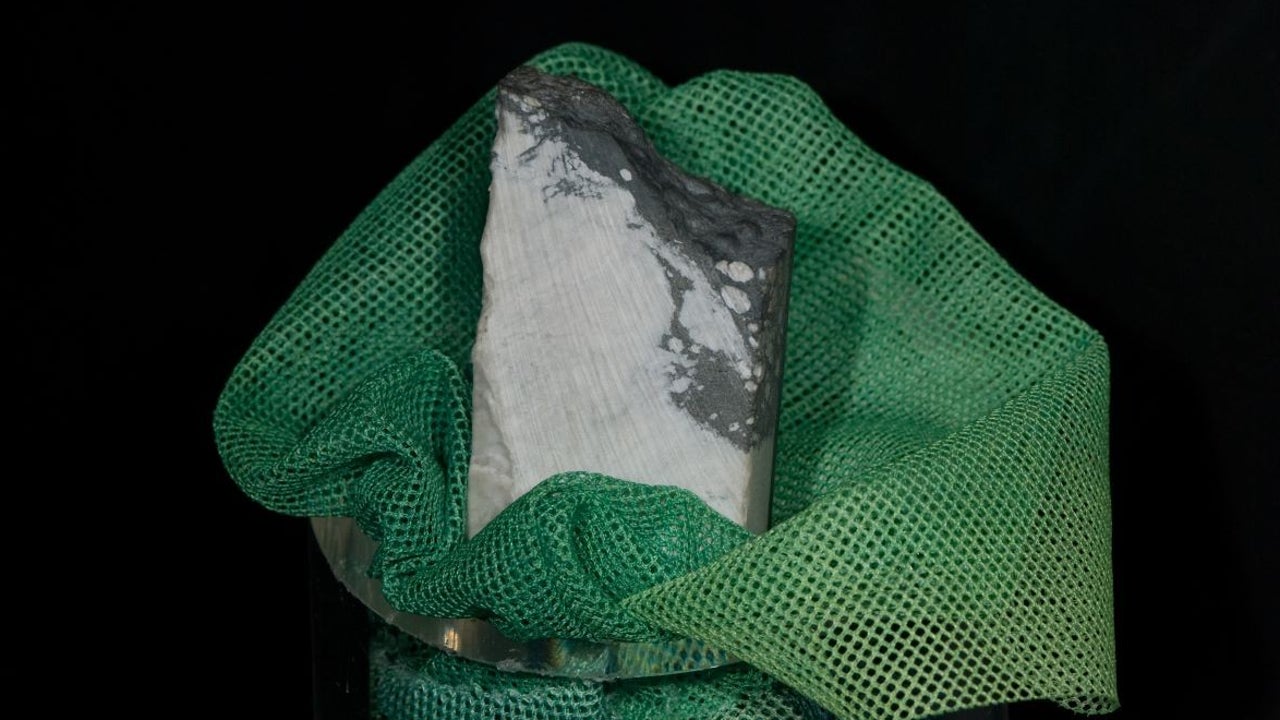
Almost 20 years have passed since it premiered Superman Returns And science is right. At least one of the sections. In the film, the Archionemigo del Superhero, Lex Luthor, steals a Kriptonite rock fragment of the Metropolis Museum. And in the box you can read the formula: boron silicate hydroxide, lithium and sodium with fluoride. The strange thing is that this formula is almost listed to that of the jadarite (boron and lithium and sodium silicate hydroxide) sodium) A mineral discovered at the beginning of the 21st century and has received its name in honor of the Serbia region.
According to Chris Stanley, mineral expert from the Natural Museum of History of London, “The new mineral does not contain fluoride and is white instead of green, but in all other aspects its chemical composition coincides with that of the rock containing Kriptonite”
The interesting thing is that this terrestrial twin of the kryptonite could be used as a lithium source, which is used in batteries, or in the Borage or Borax cleaning compound. What does the truly fascinating Jadarita is Its high lithium content and its potential to supply up to 90 % of the lithium demand for European electric vehicles.
First time In 2004 in the Jadar basin, in Serbia, by the Rio Tinto mining corporationthe Jadarita contains high concentrations of lithium and boron, two relatively rare and critical elements for the industry. Boro is widely used in fertilizers, heat resistant glass for smartphones and in the manufacture of solar panels and wind turbines.
Lithium, meanwhile, is An essential component of lithium -ion rechargeable batteries that feed electric vehicles and portable electronic devices. In this way, the Jadar basin, in Serbia, could be a turning point for the green energy objectives of the continent, according to a study Posted in Nature.
Jadarita’s formation is extremely rare, and requires a precise alchemy of rich lakes in alkaline, volcanic glass loaded with lithium and the transformation of clay into glass into strictly controlled conditions.
“As a cake is baking, everything must be measured and accurate for this rare mineral to form. For example, if the mineral ingredients are not adequate, if the conditions are too acidic or cold, the jadarita will not be formed -, explains Francesco Putzolu, leader of the study, in A statement -. The criteria seem to be so precise that we have not yet seen them replicated anywhere else on earth. ”
Due to its low potential for energy extraction compared to traditional lithium sources such as spodumen, The Jadarita could be a turning point in the European impulse towards renewable energiesif they manage to find more deposits or recreate the conditions in a laboratory.
“As lithium demand continues in the race towards renewable energies, If extracted, the Jadarita can offer enormous potential – Add Robin Armstrong, co -author of the study -. This process brings us closer to the identification of other possible deposits by unraveling the training conditions in the laboratory ”.