
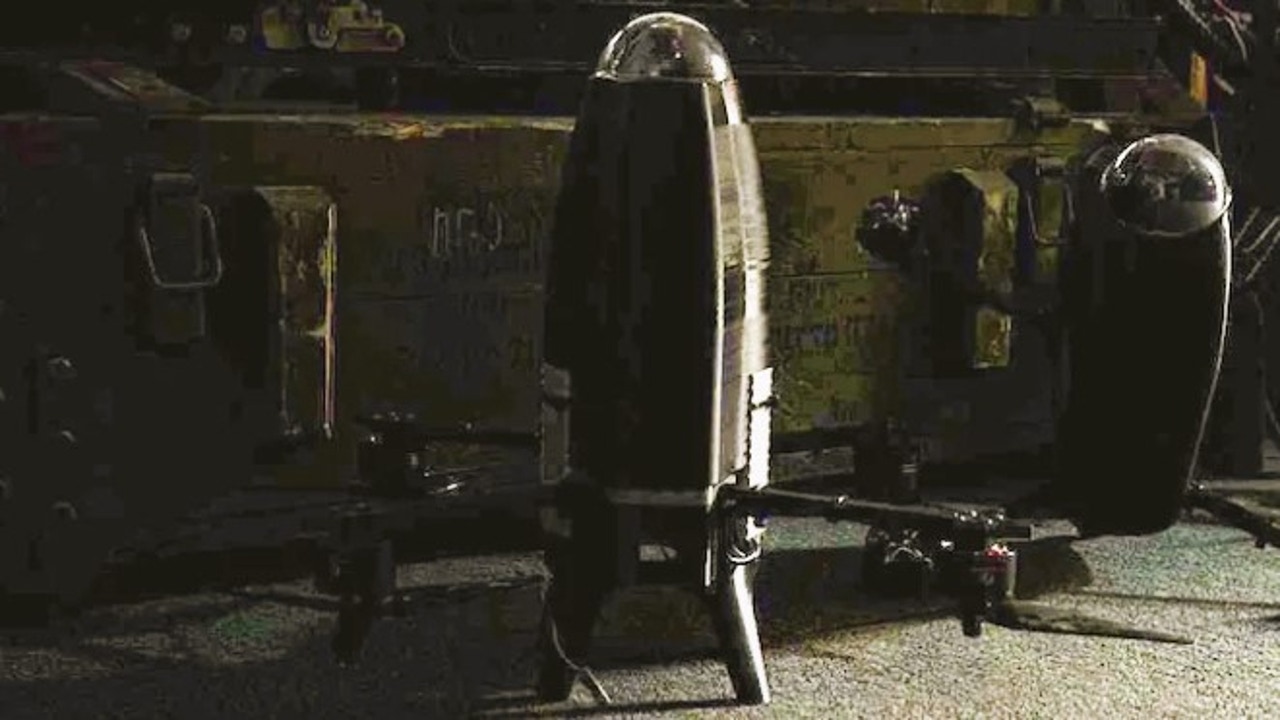
The war in ukraine Not only does it imply that this country has received numerous weapons from other countries, but it has also boosted its own production. If we talk about drones, the Ministry of Digital Transformation of Ukraine has multiplied its manufacturing capacity tenfold in the last year and expects to reach 4 million units in 2024. Many are new designs –more than 140 authorized this year-, focused on the specific needs of war, and One of the latest developments is the one known as Sting or ‘Sting’, in Spanish.
This new drone is specifically designed to achieve and intercept Russian Shahed-136 kamikaze drones of Iranian design participating in the war since September 2022. The Sting, developed by the group Wild Hornetsrepresents a solution much more affordable than conventional air defense munitions to counter the threat of these loitering munitions.
According to The Telegraph, the Wild Hornets drone can reach speeds of more than 160km/hoperate at altitudes up to 3,000 meters and is equipped with automatic tracking. However, this speed is somewhat lower than the 180km/h that reach the Shahed-136, which is now manufactured by Russia under the name Geran-2.
The FPV (First Person View) Drone It is operated from the ground using a goggle-mounted viewer that allow the operator to see exactly where they are flying, and Wild Hornets plans to include a tracking system using artificial intelligence which will allow more precise tracking of enemy drones.
🔴 EXCLUSIVE: Developers say its latest innovation can fly faster than 100mph and at altitudes nearing 10,000ft
Find out more 👇https://t.co/4Ch6hFioUVpic.twitter.com/aVu3mg3LjV
—The Telegraph (@Telegraph) October 20, 2024
The Sting’s design follows a classic quadcopter model, with a camera and warhead mounted in a transparent dome that protrudes at the tip. But the main advantage of the drone is that it has a cost per unit considerably lower than that of the Shahed-136.
‘Its average cost is dozens of times less than that of the Shahed drone,’ they point out from Wild Hornets. A Shahed-136 costs between 20,000 and 25,000 dollars; a Stingbetween 2,000 and 5,000 dollars.
Currently, the closest comparable model in the West is the roadrunner of Andurilwith a price of $500,000 per unit. Even by adding features like machine vision and night cameras, the cost would not increase significantly and would still be economically viable.
Russia produces more than 6,000 Shahed/Geran drones annually at its Yelabuga plantin Tatarstan. The volume of attacks, which usually ranges between 30 and 80 drones per dayrepresents a major challenge to Ukraine’s air defenses and drains its stock of surface-to-air missiles delivered by the West.
The introduction of the Sting is expected to alleviate some of this pressure by providing a cost-effective method to intercept Shahed dronespreserving high-value air defense missiles for other threats.