
By Manuel Domínguez, general director of ASPAPEL
Last year more than 354,000 hectares of forest burned, the highest number since records began. And 2026 does not invite optimism: our country once again leads the burned forest area in the European Union. We are not facing a bad streak, but rather a structural problem. And that changes the question we should ask ourselves. It’s not just how many resources we need to put out the fire, but whether we are doing enough to prevent it from happening.
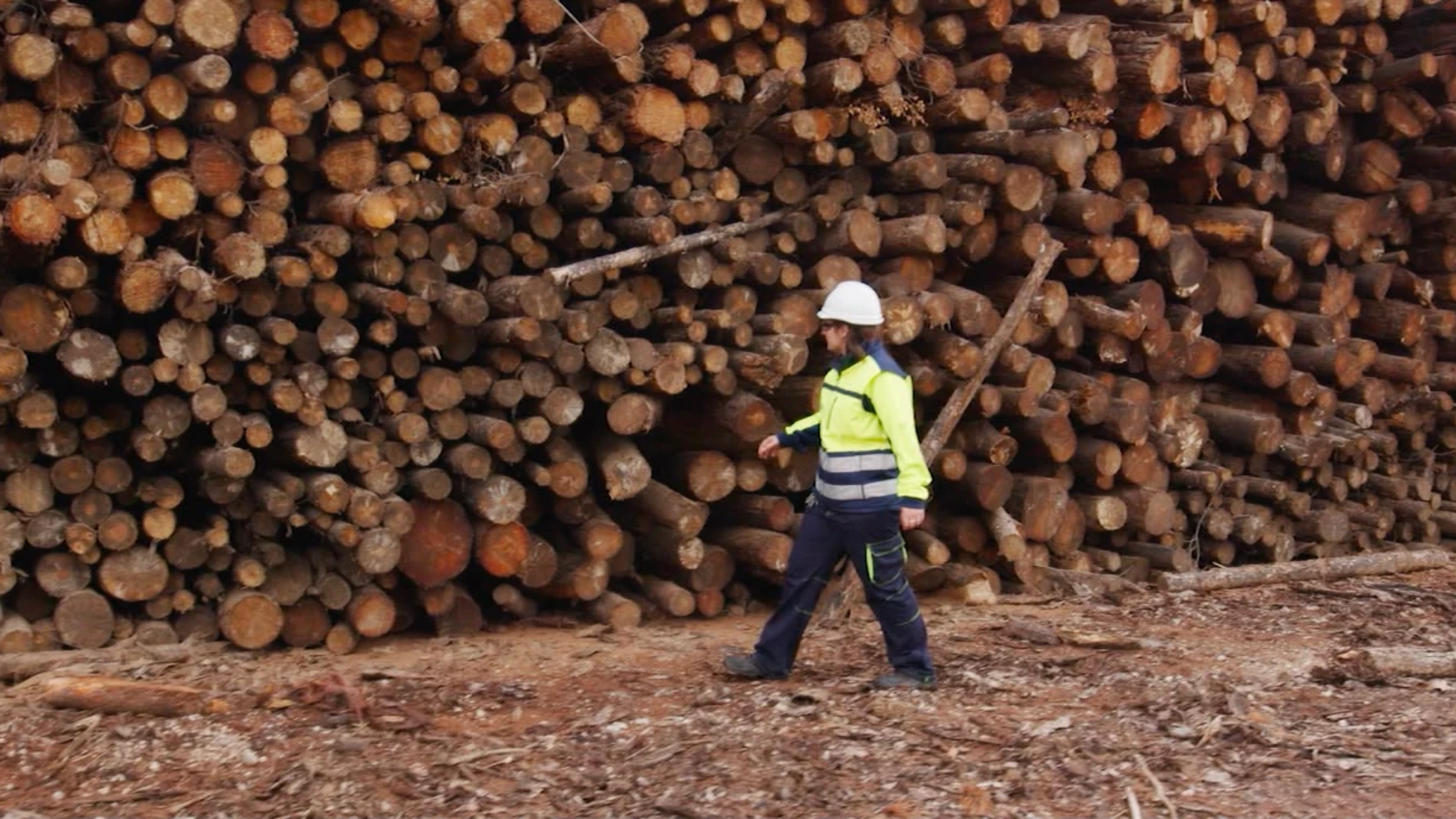
The answer is no. Too often we confuse conserving the forest with not intervening in it. Just the opposite happens. A forest that is not managed accumulates biomass and increases its fuel load. Inaction does not protect the forest, it makes it more vulnerable. And there Spain has obvious room for improvement. While the European Union takes advantage of about two thirds of its annual forest growth, Spain does not even reach a third. In other words, we manage our forests much less than the countries around us.
If lack of management is part of the problem, the solution must necessarily involve sustainable forest management. It consists of intervening in an active, planned manner and with technical criteria. It is not a theory, but the consensus of experts.
There is a misconception: that Spain’s problem is that we are running out of forests or that they are subject to excessive exploitation. The reality is different. According to the FAO, more than half of the Spanish territory is forested – 28 million hectares, of which more than 19 million are wooded areas – and that area has grown by almost 1.5 million hectares since 1999. The true origin of a good part of its problems is abandonment.
72% of the Spanish forest area is privately owned, and a good part of these owners no longer live in rural areas. Many inherited plots of land, live hundreds of kilometers away and, in many cases, do not even know exactly what land they have or where their boundaries are. It is the reflection of an emptied Spain, where depopulation has weakened the link between the owner and the forest, and where the fragmentation of property into small plots makes any planning difficult. The result is forests that have not received the management they need for years, sometimes decades, and that are a little more vulnerable each summer.
It is the reflection of an emptied Spain, where depopulation has broken the link between the owner and the forest, and where the fragmentation of property into small plots makes any planning difficult. The result is forests that have not received adequate management for years, sometimes decades, and that are a little more vulnerable each summer.
Managing forests requires resources. And the best way to ensure that they are taken care of is that they have value. Beyond their function as carbon sinks and biodiversity refuges, forests are a major economic driver for rural Spain. They generate employment, stop depopulation and sustain local value chains. They are, in short, a central piece of the bioeconomy, the model for the sustainable use of renewable resources that the European Union considers strategic to reduce its dependence on fossil raw materials and gain strategic autonomy. An issue that is more important today than ever. In a context marked by geopolitical tensions and the fragility of supply chains, having our own and renewable resources has ceased to be just a question of sustainability and has also become an essential factor of economic and strategic autonomy.
It is precisely here where the paper industry is part of the solution. In Spain, the wood used as raw material comes from sustainably managed and certified plantations, and the demand for paper products works as a real incentive to keep the forest cared for and active. A misconception still persists: that making paper contributes to deforestation. The reality is just the opposite. The responsible use of wood provides economic value to the forest and helps it continue to be managed and conserved.
The data helps you understand it. 90% of the wood used to manufacture cellulose is of national origin. This means that, unlike other products, the origin of our production cycle is here, in Spain, and not thousands of kilometers away, which reduces the logistical footprint and reinforces the direct link with the country’s forest owners. Plantations used to manufacture paper absorb more than 41.5 million tons of CO₂ per year. All pulp mills in the sector are certified by PEFC and/or FSC, independent seals that guarantee good practices. And the forestry activity associated with the industry generates more than 4,500 direct jobs and 14,200 indirect jobs in rural areas, establishing population in territories especially hit by the demographic challenge.
Taking care of a forest is not leaving it at the mercy of the passage of time. It is to intervene in it with technical and scientific knowledge. Sustainable forest management seeks balance between three dimensions: the environmental, which conserves biodiversity and ecosystem services; the social, which generates employment and territorial roots; and the economic one, which allows us to obtain renewable resources without mortgaging the future. A well-managed forest is a more resistant forest. To fire, but also to pests, drought and the rest of the impacts derived from climate change.
Generalizing this model requires promoting active management throughout the Spanish forest territory. Among the most urgent actions are reducing the excessive accumulation of biomass, creating discontinuities in the vegetation and improving access infrastructure to the mountain, so that extinguishing teams act more quickly and safely when the fire appears. It also requires public policies and budgets that encourage management and support private owners, many of them without resources or information to act alone. And it also requires something deeper and long-term: building, from childhood, a forest culture based on knowledge and responsibility.
The fires each summer are not only a fatality of the climate, they are also the result of decades of neglect. The good news is that we know how to reduce that risk. The future of our forests is not decided when the first seaplane takes off, but long before, with planning, management and work on the ground. Because the most effective firewall is not built during a fire. It is built every day of the year, with sustainable forest management.