
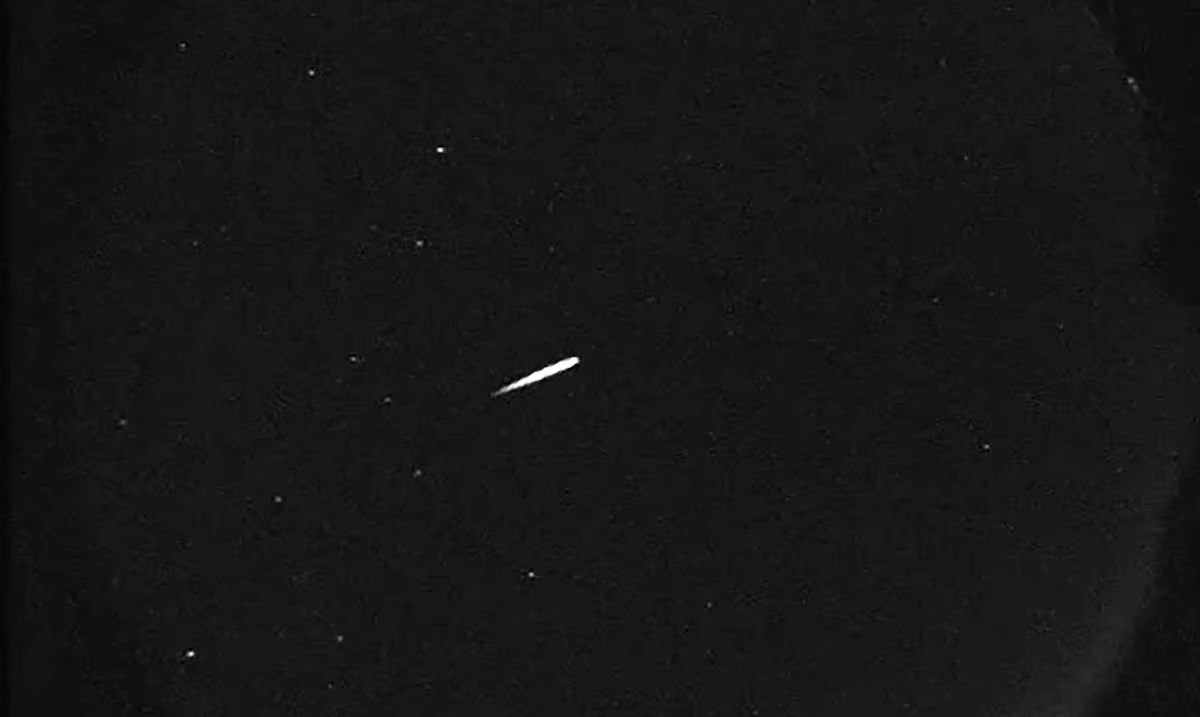
Puerto Ricans will be able to enjoy the stellar spectacle of the meteor shower The Orionids which will be visible in the sky between the night of October 21 and the early morning of October 22.
“The best is in the early morning, when it gets the moon”highlighted Cesar López de la Puerto Rico Astronomy Society in interview with The New Day.
López explained that between 4:00 am to 5:00 am multiple shooting stars can be seen in the area where the Orion constellation is located towards the south of Puerto Rico, specifically around the stars of “The Three Wise Men”as it is known colloquially in the archipelago.
1/11 | A unique visual spectacle: we offer a look at the Northern Lights. The Northern Lights are seen in the skies near St. Mary’s Lighthouse on the northeast coast of England. -Owen Humphreys
For its part, the National Aeronautics and Space Administration (NASA) clarified that although they maintain the name Orionids, they are visible throughout the sky.
The Orionids, one of the two major meteor showers, is caused by debris from Halley’s Comet. During the peak it will be possible to see up to 20 meteors per hour in ideal viewing conditions, depending on the American Meteor Society. The meteors will be visible for a few weeks before and after the peak.
Orionids can be especially bright and fast, and can leave luminous trails that can last several seconds. Here’s what you need to know about the Orionids and other meteor showers.
What is a meteor shower?
As the Earth orbits the Sun, it passes through debris left by passing comets and, occasionally, an asteroid several times a year. The origin of the Orionids is the remains of Halley’s Comet, which passes near Earth every 75 years.
When these fast-moving space rocks enter Earth’s atmosphere, The fragments encounter extreme friction from Earth’s air, heat up, and eventually disintegrate.
Sometimes the surrounding air glows briefly, leaving a burning tail, the end of a “shooting star.”
SAPR said no special equipment is needed to view the meteor showers that cross the sky each year, but it is helpful to find a spot far enough away from city lights and other light pollution.
How to observe a meteor shower
The best time to observe a meteor shower is usually after midnight, or in the early hours before dawn, when there is usually less interference from the Moon’s light.
Competing light sources, such as a bright Moon or the artificial glow of lights on the ground, are the main obstacles to clearly seeing meteors. Cloudless nights, when the moon wanes to its smallest size, offer optimal viewing opportunities.
It may take several minutes for your eyes to adjust to the darkness and be able to see the flashes.
When is the next meteor shower?
The next major meteor shower, the Southern Taurids, is expected to peak on November 5, when there will be just a crescent moon, offering favorable viewing conditions.