
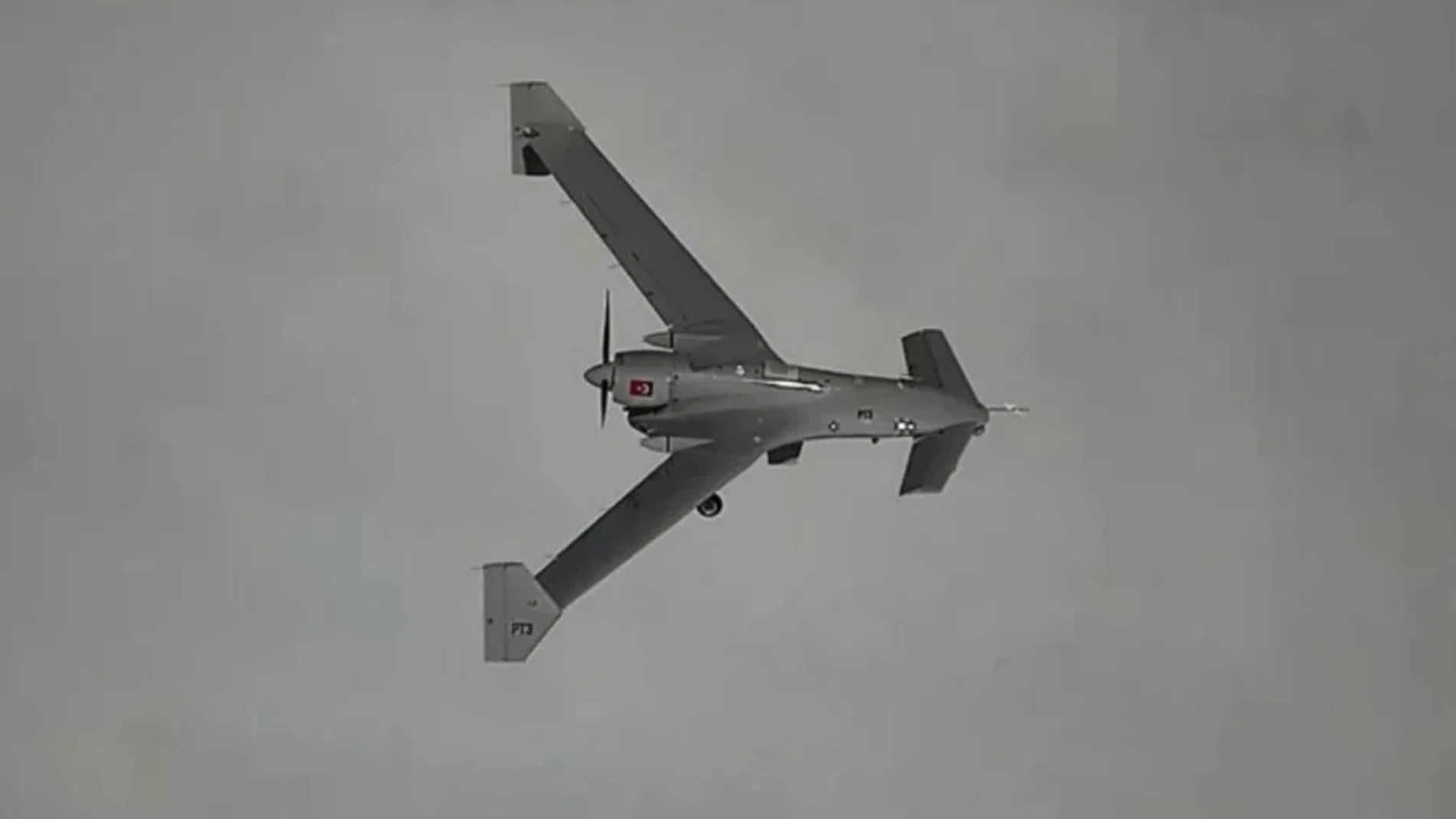
The Turkish drone manufacturer Baykarknown mainly for the Bayraktar TB2a drone already tested in combat, has presented the K2 Kamikaze. As its name indicates, it is a loitering ammunition of high capacities and low costthe most advanced it has developed to date. It is an attack drone that has artificial intelligence, a range of more than 2,000 kilometers and can carry a large warhead of 200 kilograms. Additionally, you can operate swarm autonomouslyeven without using the GPS.
Its maximum takeoff weight is 800 kilograms, which categorizes it as a heavy loitering ammunition. It has more than 13 hours of autonomy and is designed to carry out deep attacks, far behind enemy lines, against strategic infrastructure and high-value targets.
Since his emergence into the news for his role in the Ukrainian war, the Shahed-136 Iranian has become the best-known loitering munition and has demonstrated the influence of cheap, large-scale produced drones on modern warfare. However, it pales in comparison to the K2. Its weight is 441 kilos and the one with the ogive is between 30 and 50. The K2 expands on the Shahed-136 approach with a warhead four times heavier and approximately double the range.
Haluk BayraktarCEO of Baykar, has pointed out about the K2 that ‘its cost is approximately one-fiftieth that of conventional military guided munitions with equivalent range‘. We are not talking so much about a cheap drone like the Shahed-136, estimated at around $35,000 per unit according to Reuters, but of a ‘cost-effective defense solution’.
Another advantage is that the drone is designed to operate from short or poorly prepared runwaysallowing it to be launched from more advanced bases and field airfields.
What also sets the K2 apart from other more basic drones is its artificial intelligence system. In the first flight tests carried out at the Keşan Flight Test and Training Center in the Turkish province of Edirne, five K2 drones operated autonomously in formationexecuting V, line and step patterns over the Gulf of Saros.
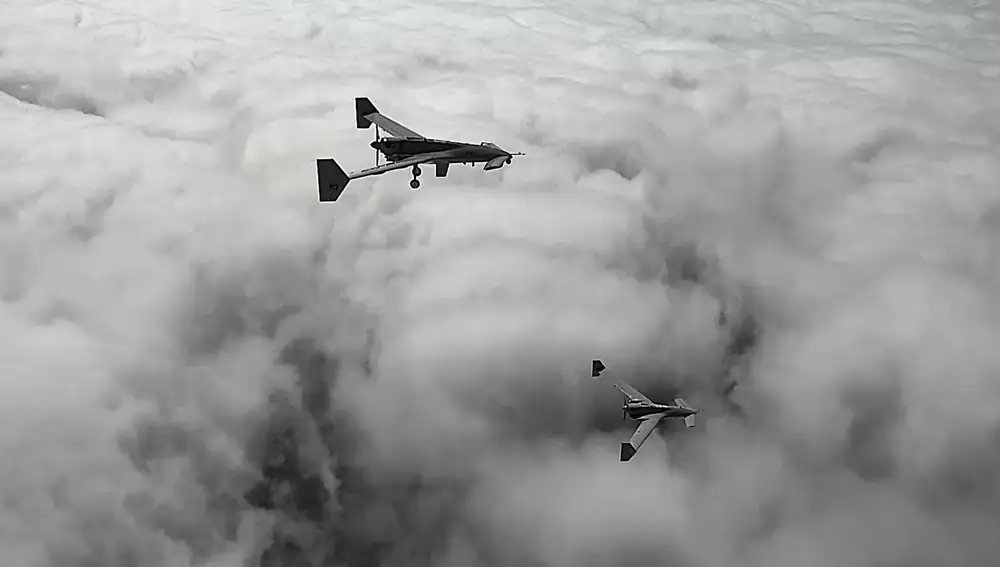
According to Baykar, the drones used on-board sensors and proprietary software to determine the position of the other members of the swarm and maintain the formation without any direct external intervention. The system is flexible and allows for other swarm configurations such as ‘Turan’ and ‘wall’ to attack several targets at once or saturate defenses.
The K2 also incorporates visual target identification and automatic target lock systems, allowing you to achieve them both through predefined coordinates and by visual detection in real time.
One of the most important features of the K2 is its ability to navigate without signals GNSSGlobal Navigation Satellite System. Electronic warfare systems, which interfere with satellite navigation by jamming or spoofing signals GPSare as common as drones, so this is a crucial capability.
The drone determines its position by analyzing images of the terrain using a camera EO/IR stabilized, electro-optical and infrared, and a secondary optical system with night vision capability. For long distance control and data transmission, it uses both direct range radio links such as satellite communicationswhich operate beyond direct visual range.
The K2 has been presented at the same time that Baykar announced 2.2 billion dollars in exports in 2025, with around 90% of its income comes from international sales and agreements with 37 countries.
The company’s offer now includes the TB2 tactical, the Akıncı high altitude, TB3 suitable for operating from ships and the Kızılelma jet powered. The K2 adds to that offering a specific loitering ammunition for deep attacks. Baykar is also studying a future reusable variantcapable of returning to base after releasing its cargo, a feature that would significantly reduce the cost per mission.