
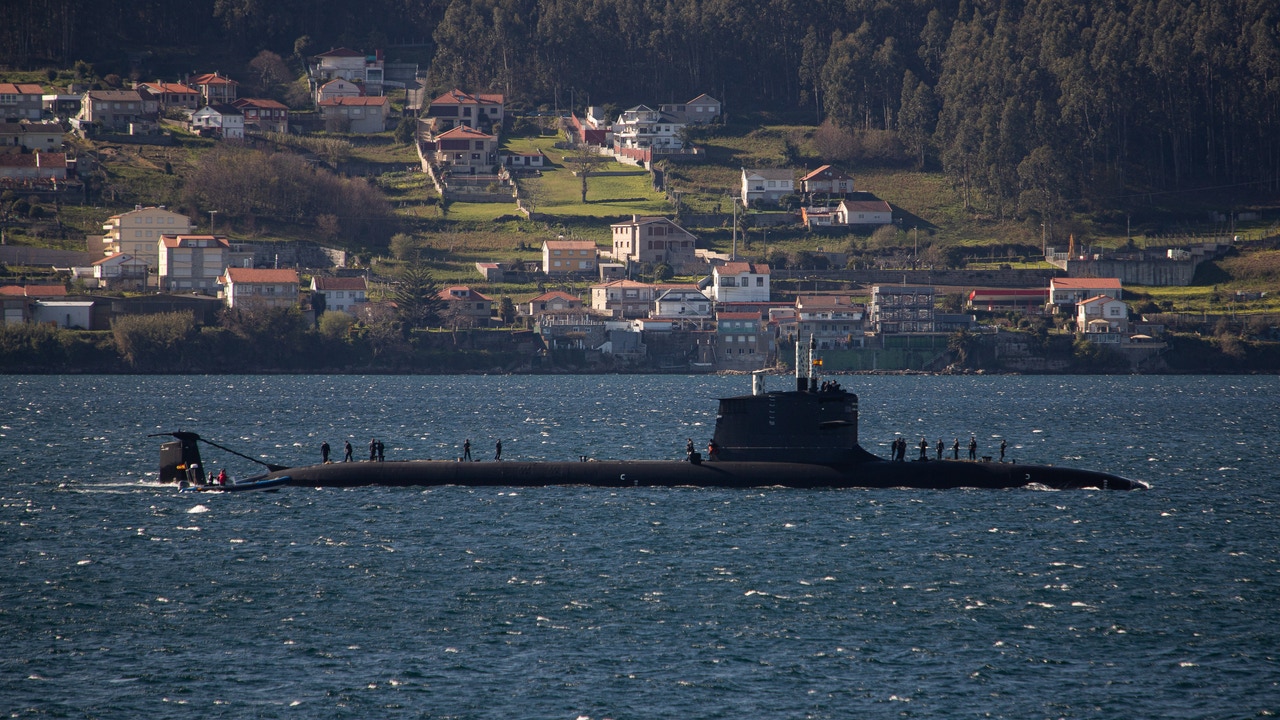
He S-81 submarine Isaac Peral is not one more in the Spanish Navy fleet. This is the first submersible designed and built entirely in Spain, a sample of the country’s technological advance in defense.
Currently participates in Dynamic Mariner/Flootex-25 maneuversthe largest NATO naval exercises in 2025, which take place in the Gulf of Cádiz until April 4.
With more than 4,000 military, 30 ships, 20 fighters and about twentySpain leads an operation that tests interoperability between allies and new war technologies such as drones, artificial intelligence and autonomous systems.
S-81 Isaac Peral: A silent, lethal and almost invisible submarine
The S-81, thrown in 2021 and delivered to the Navy in November 2023, is designed to be one of the most advanced non-nuclear submarines in the world. Among its characteristics are:
- Independent Air Propulsion (AIP): It allows you to be submerged more than three weeks without emerging, which drastically reduces its detectability.
- Acoustic stealth system: Designed to minimize your sound firm, making it almost invisible to enemy detection systems.
- Offensive capacity: You can launch missiles against terrestrial objectives and place smart mines on the seabed.
These capabilities make it a strategic platform for disjursement, intelligence and attack missions.
This is the interior of the S-81: avant-garde technology
Isaac Peral incorporates some of the most advanced systems ever installed In a conventional submarine. Its development has involved the collaboration of more than 80 Spanish companies, consolidating a high -tech industrial ecosystem.
Among its main technical characteristics are:
- Integrated combat system developed with Indra, which allows to operate sensors, weapons and communication systems centrally and in real time.
- Precise and autonomous navigation capacity, with positioning technology that does not depend on GPS, essential in hostile environments.
- Improved habitability for an endowment of 32 people, with an option to transport up to 8 additional troops for special operations.
- Torpedo, missile and mines capacity, increasing its versatility in multiple combat scenarios.
The S-81 is also prepared for intelligence, surveillance and recognition missionswhich makes it a key tool not only in conflicts, but also strategic prevention and safety operations.
Its modular design will facilitate future technological updates, ensuring its competitiveness during the next decades. A history of technical challenges and industrial improvement
A history of technical challenges and industrial improvement
The road to the S-81 launch has not been easy. The program was born in the 90s, but it was not until 2004 when the execution order of the first four submarines was signed. The first had to be delivered in 2013, but a critical error in the design – the submarine could not emerge – forced to redesign the helmet, which delayed the project almost a decade.
The cost also shot: 2.3 billion initial euros has passed to about 4.5 billionfor a series of four submarines: the S-81 Isaac Peral, S-82 Narciso Monturiol, S-83 Cosme García and S-84 Mateo García de los Reyes.
National Technology with Global Projection of the S-81 Isaac Peral
Despite the setbacks, the S-81 has become a symbol of industrial and technological potential from Spain. Manufactured by Navantia in his shipyards in Cartagena, he not only reinforces the national defense, but opens doors to future international collaborations and exports.
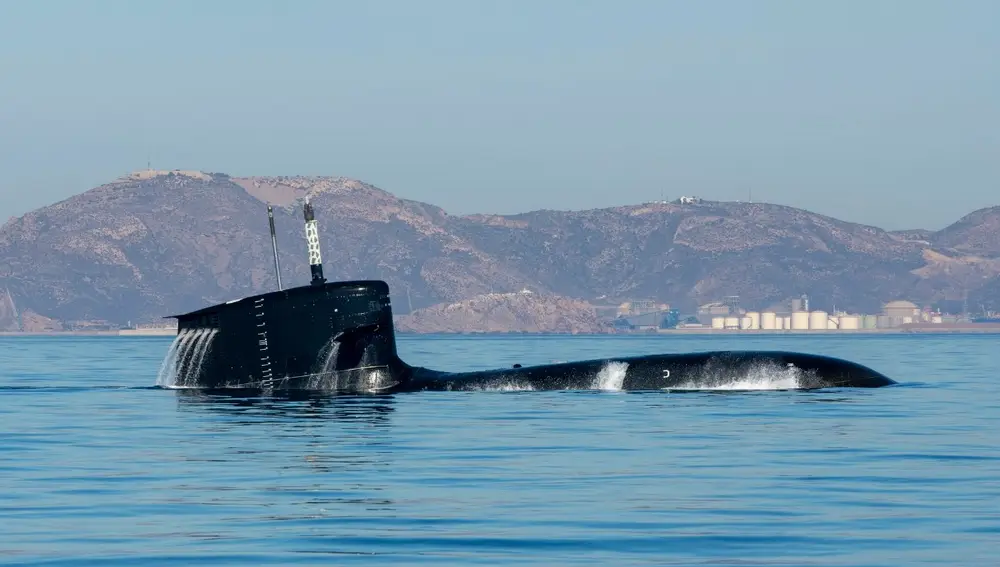
With their 81 meters of length and 3,700 tons in immersionthe S-81 represents the avant-garde of conventional submarines, and their debut in Cádiz is not only a test of fire, but a demonstration of strength and strategic autonomy.
Spain has launched its largest underwater weapon, and the world is already observing it under the waters of the Atlantic.