

It could not be in 2023 and neither in this 2025. The probe Resiliencethat the Japanese private company ISPACE sent towards the Moon In January in a rocket Falcon 9 of Spacexlost contact with the mission control center in Nihonbashi, Tokyo, 105 seconds before the foresting planned. Three hours later, the company has confirmed that could not stop enough and crashed into the lunar surface.
After several weeks orbiting the moon, Resilience began its landing sequence at 21:13Spanish time, this Thursday. ‘The module descended from an approximate altitude of 100 kilometers Up to approximately 20 km and then successfully turned on its main engine, as planned, to start the deceleration‘, has indicated the Japanese company in a statement.
As of 8:00 am on June 6, 2025, Mission Controllers have determined that it is unlikely that communication with the Lander Will Be Restored and Therefore Completing Success 9 is notchievable. It has been decided to conclude the mission.
“Given that there is Currently no … pic.twitter.com/iorufggoiq
– ISPACE (@ispace_inc) June 6, 2025
It was in this phase where everything was twisted, as happened on the first mission Hakuto-R two years ago. ‘Although it was confirmed that the position of the module was almost vertical, later Telemetry was lost and no data was received to indicate a successful landingeven after the scheduled time passed, ‘explains Ispace.
The company believes that the failure in the moon landing is due to one of the components of the capsule, The laser telemeter. This is in charge of Measure the distance between Resilience and the Lunar Surface During the final approach to the sea of the cold, the landing zone, but experienced delays when obtaining measurements And that caused the probe I will not decelerate enoughimpacting instead of making a controlled landing.
‘Since there are currently no perspectives for a successful lunar landing, our highest priority is to quickly analyze the telemetry data we have obtained so far and work hard to identify the cause‘, he said Takeshi Hakamadafounder of ISPACE. ‘We will strive to recover confidence by providing a report with the findings to our shareholders, customers of useful charges, Hakuto-R partners, government officials and all ISPACE supporters.’
If successful, this would have been the first time that a Japanese private company manages to land on the moon, something that They have only achieved two US companies. Japan, in any case, was already in the select group of countries that have managed to alunize and also includes The United States, Russia when it was the Soviet Union, India and China.
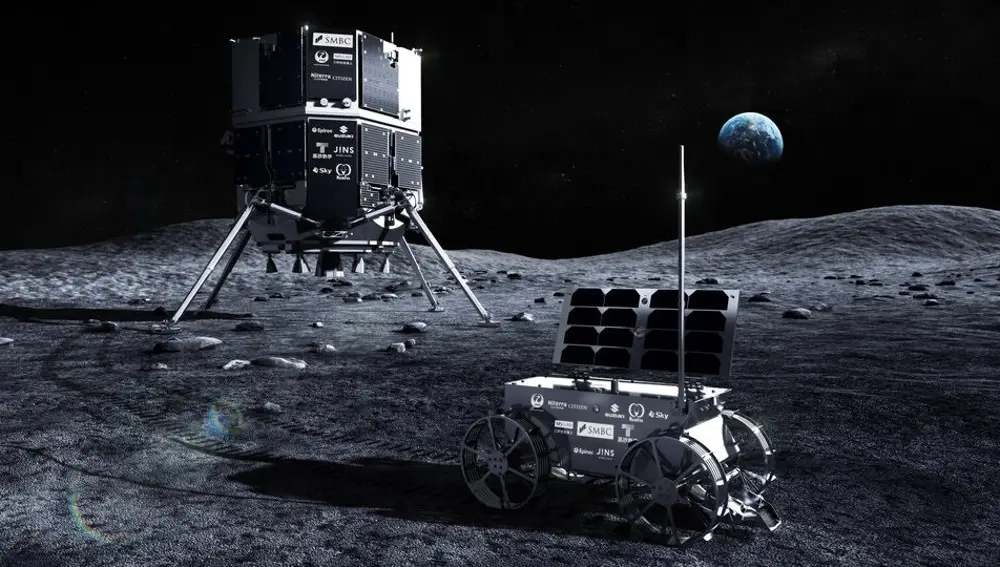
In the load that Resilience transported is Tenaciousa small exploration vehicle manufactured by the ISPACE European subsidiary. Other useful charges were An electrolysis device To obtain oxygen and hydrogen from moon ice, an algae culture that could be used as food for future astronauts and a radiation probe. The cost of the mission has been estimated in 14 million euros. The Japanese company, with a new module, will try to reach the moon again in 2027.