
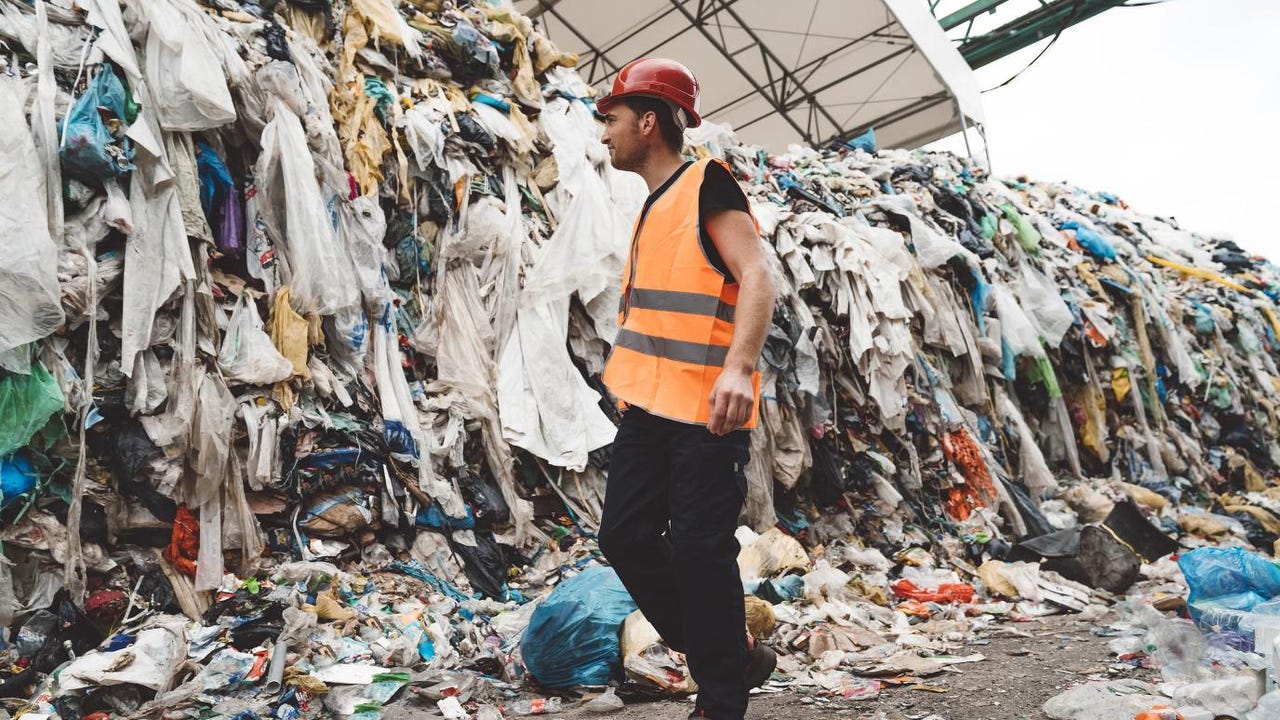
It is estimated that households, small businesses and public service providers generate each year between 2,100 million and 2,300 million tons of urban solid waste, which cover from containers and electronic equipment to plastics and food. In addition, every year, around 931 million tons of food and 14 million tons of plastic waste are dought to aquatic ecosystems.
To these almost unbarkable figures must be added that around 2.7 billion people do not have solid waste collection services and only between 61 % and 62 % of urban solid waste are managed in controlled facilities. If this trend continues, in 25 years the generation of urban solid waste will increase to 3.8 billion tons per year.
International Zero Waste Day
In this context, more and more voices demand more responsible production and consumption systems with the sustainability of the planet. Every year since 2022, the International Day of Zero Waste is celebrated worldwide in order to promote sustainable consumption and production modalities and promote the transition to a more circular economy.
This year, the organizers, the United Nations Environment Program (UNEP) and the United Nations Program for Human Settlements (UN-Habitat) have focused on the need to act in the textile and fashion sector to reduce waste and move towards more sustainable solutions.
The massive consumption of cheap fashion has changed the textile industry in a few years. However, behind its low prices a very high environmental and social cost is hidden. This rapid growth in the production and consumption of cheap textiles is imposed on sustainability efforts in the sector, causing serious environmental, economic and social repercussions, especially in the global south.
Brands began a few years ago to respond with business responsibility strategies and international commitments. Specifically, between 2018 and 2019, more than 150 brands and about thirty companies signed the fashion industry letter for climate action, committing to reduce greenhouse gas emissions by 30% in 2030 and the fashion pact, which includes commitments on climate change, biodiversity and oceans.
However, despite these efforts, the data is very eloquent, the production of clothing doubled between 2000-2015 and 92 million tons of textile waste are generated annually worldwide. This is equivalent to a garbage truck full of incinerated clothes or sent to landfills every second.
Each year, the textile sector produces between 2% and 8% of world emissions of greenhouse gases, and uses 215 billion liters of water, the equivalent of 86 million Olympic swimming pools.
The increase in clothing production needs more natural resources to produce raw materials such as cotton or raising livestock to produce wool, backmark or skin. The chemicals used in the staining and treatment of fabrics are contaminating the rivers and damaging ecosystems. Although fashion is an industry that moves millions, workers continue to face low wages and dangerous working conditions.
On the opposite side of production are waste. We wear clothes for less time, increasing waste that usually ends in less favored countries and in which there are no minimum guarantees of sustainable recycling.
How to stop the crisis of waste
According to the United Nations approaches to try to stop the waste crisis, consumers, governments and industry must be involved. Consumers transforming their consumption habits, governments improving the formulation of their policies and, the industry designing and manufacturing durable products and in less quantity, using materials that minimize air pollution, earth, water and extraction of limited natural resources.
Consumers can significantly reduce environmental damage by adopting practices such as reuse, repair and recycling. Hurrying out of fast fashion and investing in long -lasting clothing not only retains resources, but also meets traditional sustainability approaches.
The textile sector must work on the design of durable products, which can be fixed and recycled, while adopting circular business models that slow chemical pollution, reduce production volumes, use sustainable materials and help reconstruct biodiversity. Innovation and responsibility must guide business strategies.
Governments also play a decisive role in enforcing the producer’s expanded responsibility systems, regulating harmful chemicals, investing in recycling infrastructure and encouraging sustainable business models to boost the transition to a circular economy.