
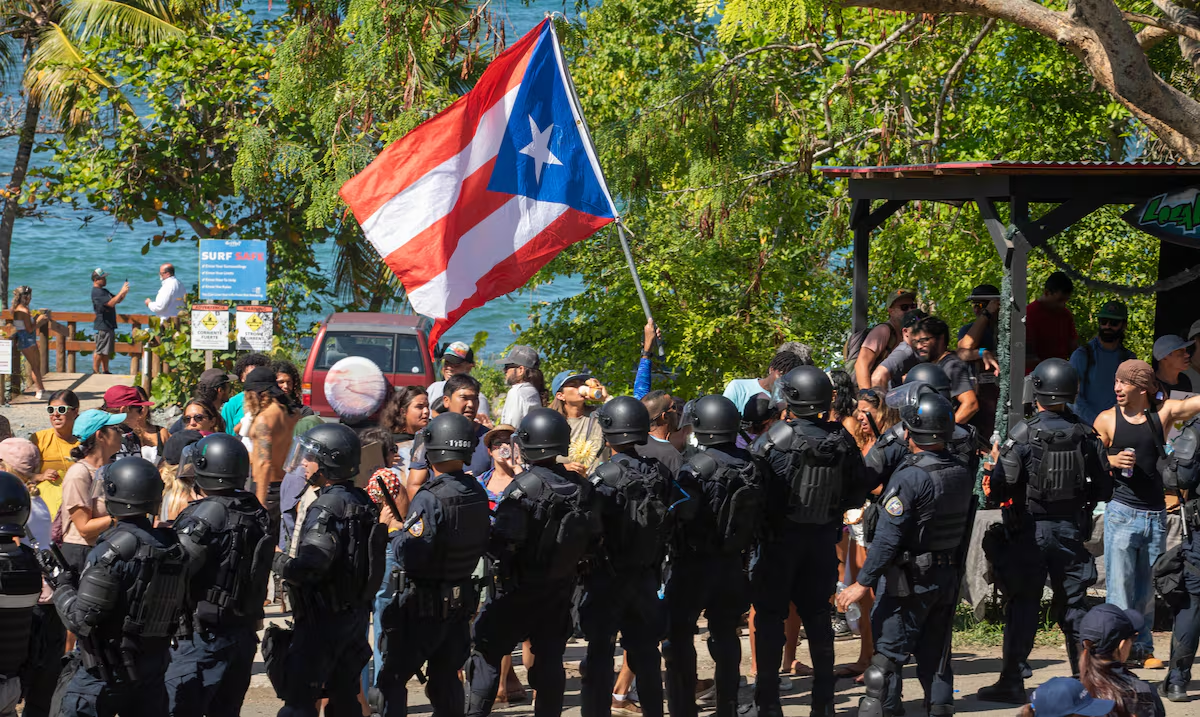
Corner – The environmental leader Carola Acum remember the scene as if a day had not passed; the row of green trunks bathed in the morning sun and sea spray. On the other side of the fences that separated the protesters from the police, the yellow machinery felled dozens of trees, immune to the tears of those present. Was March 2025and the State was making its way to fill the coastline of this town, in the west, with cement and asphalt.
“The feeling was as if your arm had been cut off.”reflects Acum, spokesperson for the coalition Responsible Walkabout the fight – which continues – against a bicycle ride that would alter the Rinco coast and a protected area – the Tres Palmas Marine Reserve –, home to wetlands, threatened corals and abundant marine life.
For decades, the western region has been a protagonist in the defense of the environmentborn from the heart of the communities that inhabit those spaces. A defense that, according to leaders and experts, has intensified both in the number of threats and in the obstacles imposed on those who seek to protect lands from excessive development.
“In the west, everything that is happening in the country is continuing and getting worse,” said the environmental lawyer. Omar Saadé Yordan. “Yes, we can say that, with the projects that have been presented, the threat in the west is worsening. But the reason, let’s say it’s all-encompassing, is the government’s lack of compliance with the rules that already exist. That is the main problem; and they know it, and they know the illegalities, and they know the rules that apply. And therein lies the big problem. And, above all, why do they want to limit, more and more, the people who protect the environment, access to the administrative forum and the court?
There are multiple and varied environmental conflicts present in the region, which has historically experienced a lower intensity of urbanization than the metropolitan area. The luxury enclave Essencewhich aims to impact more than 2,000 acres in an area of high ecological value in Red Capeis the most popular due to its magnitude, but it is not the only one. There is the Cyclist and Pedestrian Walkin Corner; coastal development Isabela Reefsin Isabella; tourism-residential development The Cliffon the cliffs of Aguadilla; and the proposed construction of industrial renewable energy projects on land of high agricultural value and ecologically sensitive in the Lajas Valleyto mention a few.
There are decades-long movements, such as Let’s save Playuelawhich protects the coastal valley of that name, in Aguadilla, from works such as the Christopher Columbus Landing Resort hotel project; and the historical struggle over illegal constructions in La Parguera. Other cases, such as that of Sun and Beach condominiumin Rincón, have gone beyond the limits of the territory to become a country struggle, evidencing the tensions between coastal development, conservation and the right of public access to beaches.
“What Rincón has represented in recent years is an epicenter of environmental struggle, it is an epicenter of consciousness, it is an epicenter of responsible development for the future; organically, the community has realized that this is the way to follow. Rincón has become a role model of environmental struggle in Puerto Rico and, so far, we have won them all. That doesn’t mean the fight is over; On the contrary, it gets harder and more difficult,” said the planner. Ramon Diaz Zambranaof the organization Friends of Tres Palmas.
Saadé Yordán knows first-hand the access barriers that citizens face when trying to resort to legal processes to resolve environmental conflicts. Among them, he listed a “pattern” to make access to information difficult. and, as an example, he highlighted the cases of Playuela, in Aguadilla, and the bicycle ride, in Rincón.
“The administrative forum (before agencies such as the Permit Management Office and the Department of Natural and Environmental Resources) is extremely useless in the vast majority of the times, and the court also has enormous features. Neither of them represents a viable alternative for communities in Puerto Rico because they are extremely expensive processes. And the government knows it, and makes it more expensive. How do you do it? Making access to information difficult, that is the first step. They are obvious patterns, where people are first forced to sue to obtain the information. That’s thousands of dollars there. After you have the information, you realize that they knew about the illegalities“, denounced the lawyer.
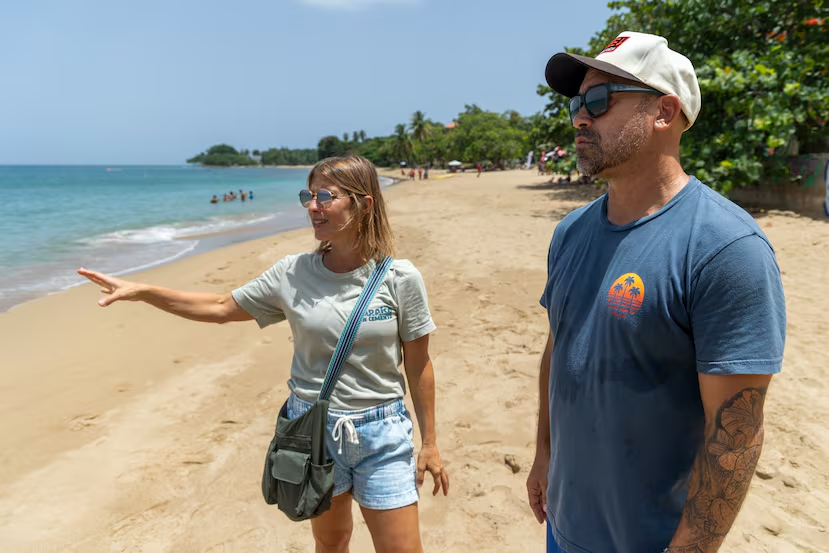
“There is a general sense of people, increasingly generalized, that they do not really have forums to go to, and where strategies are increasingly limited and people are pushed more to protest and fight in the street. Which, ultimately, has always been the main thing,” he added.
One of the most recent systemic obstacles is the Law 82 of 2026signed in May by the governor Jennifer Gonzalezand that requires a minimum bond of 10% of the total value of a project for any request for a stoppage in court. It also opens the door to “strategic, priority or critical infrastructure” developments on specially protected rural land that, by definition, is not contemplated “for urban or developable use due to its special location, topography, aesthetic, archaeological or ecological value, unique natural resources or other attributes.”
The president of the Planning Board, Hector Morales Martínezrecognized that the language of the statute is “conflicting” and should be reviewed. Asked if he considers that, as such, it weakens the protection of those soils, he responded: “Not yet, because the Land Use Plan (from 2015) is valid”.
“It could weaken them, as long as the language it has is a little open,” he said. “I have to try to adjust what the law is saying to what we have to do. I believe that the legislative intention is to avoid controversy. I believe that the drafting the measure led to something else. I definitely think that this legislation needs to be improved.”.
1/12 | Battle against cement and the privatization of the coasts: a review of emblematic environmental struggles in the West. The controversy surrounding the works of the Sol y Playa condominium in the maritime-terrestrial zone (ZMT) of Los Almendros beach, in Rincón, has been one of the most notorious environmental disputes in recent years. In the photo, a man hits a wall in the sand with a hammer, in 2023. – Alejandro Granadillo
Added to this is the reform of the permit systemwhose final version is still unknown, but which keeps environmental groups and experts on alert due to the impact it would represent for territorial planning and environmental protection.
At the close of this edition, the Coastal Map 2.0 of Friends of the SEA –which aims to make visible the magnitude of the privatization that occurs on the coasts– had documented 194 complaints, of which 28 are in the west. The environmental organization estimates that, for every complaint, there are five that are not identified in the tool.
Behind this surveillance, there are citizens exposed to environmental struggles that can last years, and even decades, leading them to suffer constant stress that, sometimes, can result in physical conditions.
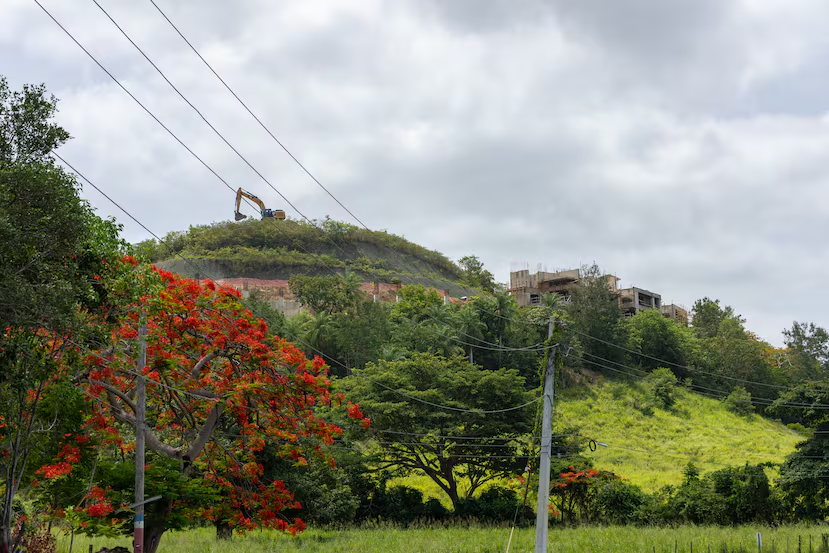
In June, Acum celebrated the court decision that revoked the construction permits of the cycling ride in Rincón, but clarified that the emotional burden does not stop despite the victory. Another factor that weighs is economic; Community fight against court ride has cost nearly $200,000.
“It was a year or so when, basically, you didn’t sleep. I mean, we were awake at dawn, we had cameras, obviously, that warned us, but waiting for any movement. I mean, it affects and changes your entire life. Yes, we have hope, but, on the other hand, When we see all these irresponsible laws that they are trying to present, well, then, we also have a lot of anxiety about what is going to happen.”, he expressed.
This has a name: “hypervigilance”, a state of extreme and constant alert in which the nervous system remains activated in survival mode.
The clinical psychologist Venice Butler-Perezfrom Amigxs del MAR, has observed among the communities it accompanies in the west pain due to the loss and banishment of the spaces they have inhabited for generations, anger, sadness and a constant cycle of hope and despair.
“When we talk about mental health basic, there we see access to water, electricity, education, etc. And that, in itself, in Puerto Rico is inefficient. To that, you add the layer of constant banishment. Displacement is not just moving the population from one place to another; They are banishing it from its connection with the space they have inhabited for years or for generations, because there are people who want to settle in those spaces. And we see this with what they call development.”, he outlined.
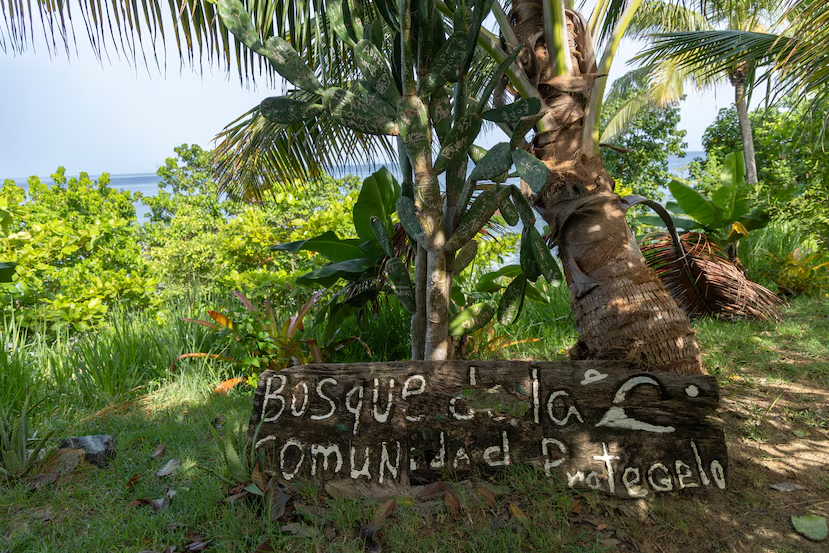
He added that one of the most important factors in community efforts is collective support. This has been reflected in actions that have led to the creation of the Mabodamaca Community Nature Reservein Isabela; the La Armonía Forest and the Tres Palmas Community Walk, two areas rescued by the people of Rincón; and the defense of the Cabo Rojo and Las Salinas National Wildlife Refuge, where communities and environmental organizations managed to stop tourism development proposals.
“Here, we are conserving and protecting what belongs to the community”defended Díaz Zambrana, from the Rinco walk that hundreds of people visit every week. “If the people do not get involved in this governance process, we have a despicable future for our generation, so we have to take action and make things happen.”