
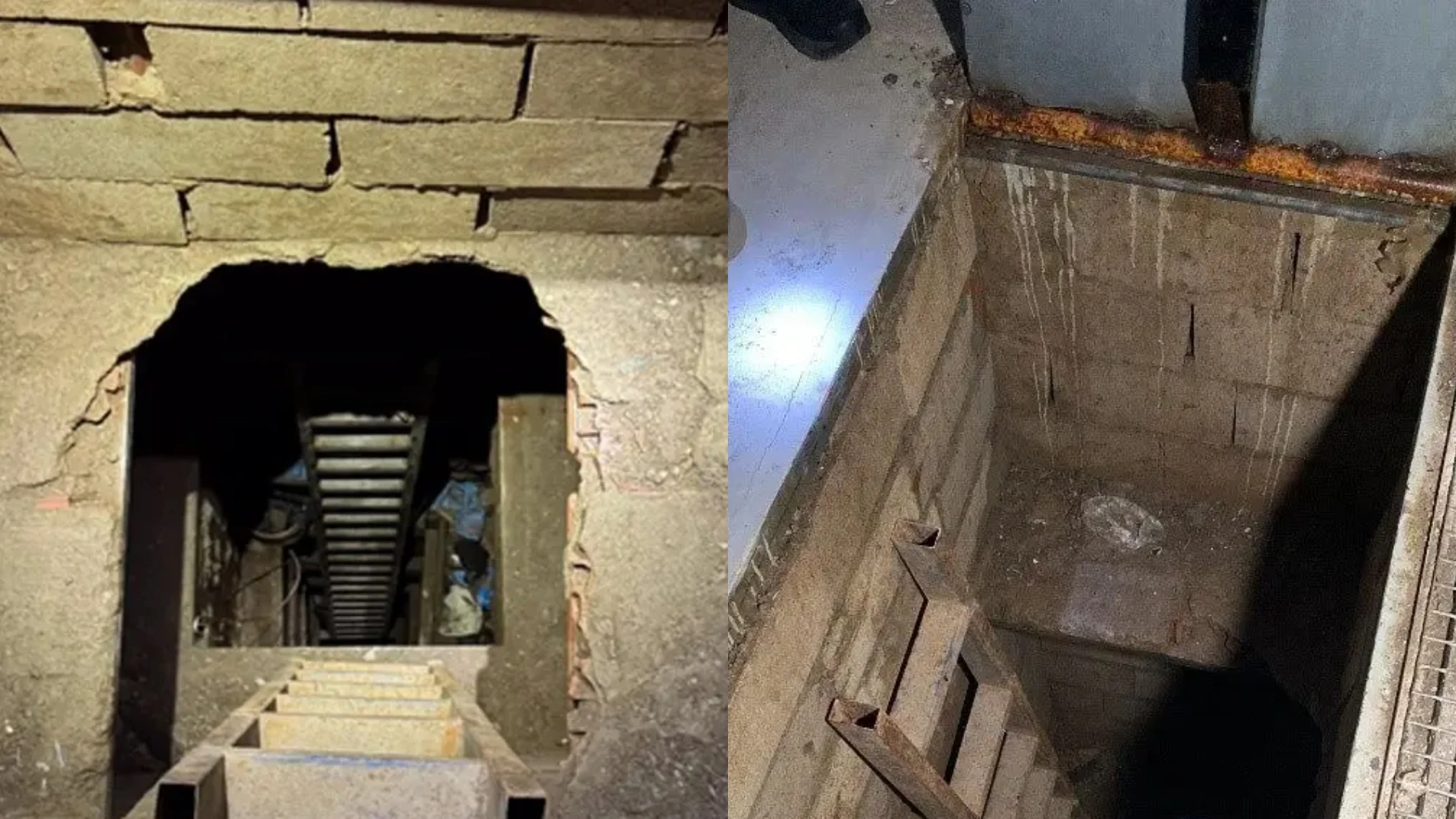
The narcotunnel discovered at the end of February 2025, which connected Ceuta underground with Morocco, “operated for at least 10 years,” according to sources in the case told LA RAZÓN.
For more than a year, the National Court (AN) has been investigating the criminal organization behind this gallery that ranged from an old abandoned marble factory, located in a warehouse in the Alborán del Tarajal industrial estate in Ceuta, to a building located in a military compound located in the neighboring country to the south. It extended 50 meters in length and had a depth of a total of 12 meters.
Magistrate María Tardón also holds a total of three Civil Guard agents charged, some stationed in the Port of Ceuta, who would have provided cover and security to the group that was dedicated to illegally introducing narcotic substances, mainly hashish, for trafficking in our country. Among the services performed in exchange for money, there are allegedly the checking of vehicles during boarding and the transfer of information of interest to drug traffickers.
Their work for drug trafficking was detected within the framework of an Internal Affairs investigation of the Armed Institute and, now, the actions against the agents are being followed in the Central Court of Instruction number 3 of the AN, in coordination with the Special Anti-Drug Prosecutor’s Office, for crimes against public health, membership in a criminal organization and bribery.
The aforementioned sources familiar with the investigations indicate that there would be another group of people involved and that, for the moment, they have not been arrested. Like the owner of the ship that housed the passage, whose whereabouts are unknown, and whom the sources of the judicial procedure believe is a fugitive from justice in Morocco.
And, likewise, they point out that they continue to investigate whether the drug tunnel was also used to illegally introduce people into the Autonomous City from the territory of the Alawite kingdom. In short, for human trafficking.
And even, as this newspaper reported this past Monday, both the National Intelligence Center (CNI) and the Special Central Unit 3 (UCE-3) of the Civil Guard are investigating whether it was used to introduce other types of merchandise, such as weapons, that could have ended up in the hands of the Guadalquivir drug families. Which would explain, according to the sources consulted, the increase in the presence of weapons of war in the arsenals of the bosses who control traffic between the main river of Andalusia and the Strait of Gibraltar.
Among the total of fifteen people who were arrested with the outbreak of “Operation Hades”, is the still deputy of the Ceuta Assembly Mohamed Alí Duas, who was released from provisional prison this past January, after 11 months of imprisonment, after paying bail of 20,000 euros.
Upon stepping onto the street again, he announced that he was leaving the lower regionalist party with which he was elected local parliamentarian, Movement for Dignity and Citizenship of Ceuta (MDyC), to join the group of non-members. It so happens that Alí Duas is a prison officer.
His brother and a nephew were also arrested and all of them are credited with having offered financial and logistical resources to the criminal group.
The police operation that led to the discovery of this unusual infrastructure, which for many years was nothing more than a rumor, was carried out by the Benemérita Subsoil Unit. It has several galleries and, although it depends on the area of the tunnel you are in, the measurements are mostly 40 centimeters wide and 60 centimeters high.
The original investigations date back to the capture of three trucks that hid more than 6,000 kilos of hashish in double bottoms.
More than a year ago, Judge Tardón sent a rogatory commission to the authorities of Mohamed VI to investigate the exit from the drug tunnel and send a report to the AN with the conclusions of the diligence that she requested to carry out. Minister Marlaska celebrated, at the time, a collaboration now in between.