
Pedro Sánchez ends his vacation as he started it: with Ceuta as the epicenter of the Government’s problems. Yesterday the president left the Royal Residence of La Mareta, in Lanzarote, where he has spent three weeks in which he has had to expand his response to the crisis as it got out of control. What began on July 30 at the border with the irregular entry of more than 72,000 people has ended up overwhelming the offices of half of the Council of Ministers.
The sequence explains the story. First, the entry had to be contained and returns negotiated with Morocco. Then, provide accommodation and care to those who remain in Ceuta. Later came the problems with the minors, the battle with the PP, the clash with Brussels and a good part of the European partners, the reproaches between the Interior and Defense and even the first criticisms coming from the PSOE itself. The situation has gotten so out of hand that Sánchez has ended up placing Minister Ángel Víctor Torres as coordinator of all the ministries involved.
The Government is preparing a recovery plan for a city that is far from returning to normal. The Executive will present it tomorrow at the first Council of Ministers of the course. Some sources consulted in the Government privately admit that the Ceuta crisis has surpassed them. The Government has had to back down on the fly. First he assured that those who entered irregularly would be returned.
But among the tens of thousands of people who crossed the border there were thousands of minors and Spanish legislation does not allow them to be lumped together. The Executive knew it. Each case requires proof of age, activation of the protection system, listening to the minor and proving that returning to their family or remaining under the protection of the Moroccan authorities is in their best interests. And every file by file.
So reality has ended up imposing itself. The Executive agreed to transfer to the Peninsula 500 girls who have remained for weeks in especially precarious and vulnerable conditions. This is an emergency solution that immediately opened another war with the PP that also prioritizes the return of minors. The Government accuses the popular parties of proposing an illegal response. The situation of the children has become a new dividing line between Sánchez and Feijóo. But the Government has encountered an added difficulty. The European wind no longer blows in their favor.
The Ceuta crisis has erupted when much of Europe has hardened its immigration discourse. Brussels has placed emphasis on accelerating returns, also of minors. Many European governments have moved towards more restrictive positions in recent years. Sánchez has chosen to set his own profile in immigration and defend a more guarantee line. Ceuta has provided the stage to do so, but it has also revealed the extent to which the European debate has changed.
The Government no longer discusses only with the PP about how to respond to irregular immigration. It also has to explain why Spain intends to follow a different path than that taken by some of its partners. The crisis has ended up affecting even the relationship with Italy, after the crossing of border controls between both countries. Nor has everything been harmony within the Government. The question that has been haunting Moncloa since July 30 continues without an answer: How could an entry of such magnitude have occurred without the State being able to anticipate it? With that issue, friction began within the Executive.
Margarita Robles closed ranks with the CNI in the face of doubts about the prior warnings handled by the intelligence services. Fernando Grande-Marlaska defended that Moncloa did not have information… Behind the discussion there is a battle to limit responsibilities. And José Manuel Albares has simultaneously had to walk another rope: putting a good face on Morocco without allowing The crisis calls into question Spanish sovereignty over Ceuta.
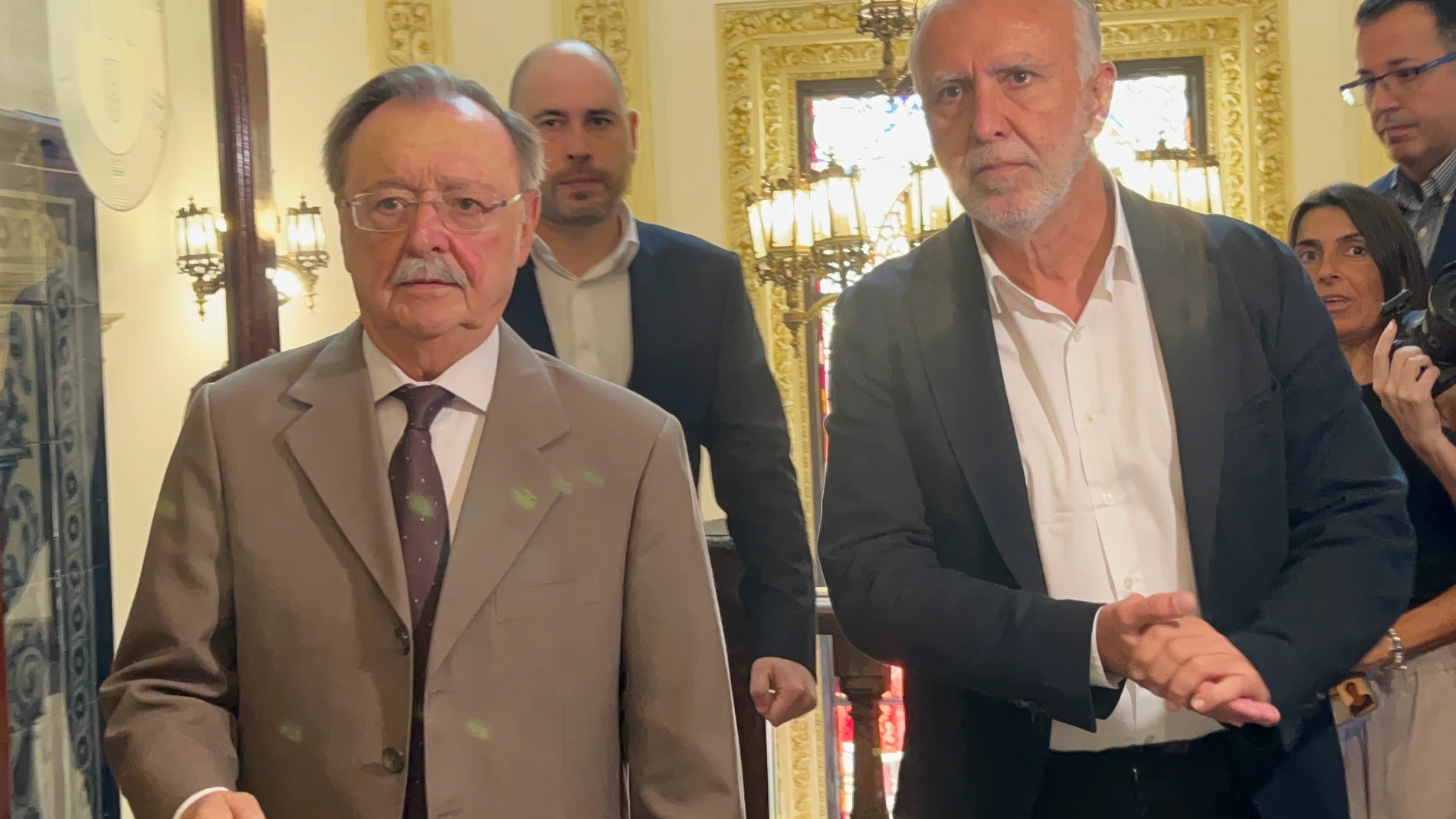
Each ministry has managed its part of the emergency. And each minister has tried to ensure that the bill does not end up on their table. In the end, Sánchez placed Ángel Víctor Torres in charge of coordinating all the departments involved. The Minister of Territorial Policy harmonizes the actions of the Interior, Defense, Foreign Affairs, Migration and Children, among others.
The Government explained the choice by the transversal nature of its Ministry and by its experience managing migratory pressure when it presided over the Canary Islands. But the appointment came three weeks after the crisis began. Until now, Moncloa defended that coordination already existed under the direction of the president himself. Sánchez held two meetings by videoconference from La Mareta and the ministers have been passing through Ceuta. However, the Executive has ended up creating precisely the figure that the city was demanding in recent days.
Moncloa has tried for much of August to present the noise around Ceuta as an offensive of the PP. Juan Jesús Vivas has been raising the stakes and Génova has turned crisis management into one of his main battering rams against Sánchez.
But criticism is also heard in the PSOE. The first vice president of the Ceuta Assembly, the socialist Melchor León, charged against the Executive, which he demands greater involvement. The migration emergency has not yet been resolved and the following problem has already appeared: recovering Ceuta’s economy. The crisis has hit commerce, tourism and economic activity during one of the most important months of the year. So the Government is now preparing a package of measures and a recovery plan that will reach the Council of Ministers tomorrow.
The photograph of the crisis explains its evolution: Economy was not among the leading ministries when the border was blown up on July 30. Now it is also part of the solution. Ceuta has been incorporating ministers into the crisis as the days went by. And starting this Monday, the carousel of appearances in Congress begins. Robles, Bolaños, Mónica García, Marlaska, Albares and Elma Saiz They will go through their respective commissions to explain the different aspects of the crisis – and the way they have approached it – even before the regular period of sessions formally begins.
Then it will be the turn of others in the Executive. Who knows if even the president himself. In the PSOE there are those who believe that the crisis has reached sufficient severity for Pedro Sánchez to end up being responsible for the management. The Government is aware that the migration crisis has exceeded its expectations. And it puts him in a difficult political position. Sánchez changed the Spanish position on Western Sahara without prior deliberation. lThe situation in Ceuta raises an uncomfortable question: what benefit did Spain obtain from that turn if Rabat continues to press.