
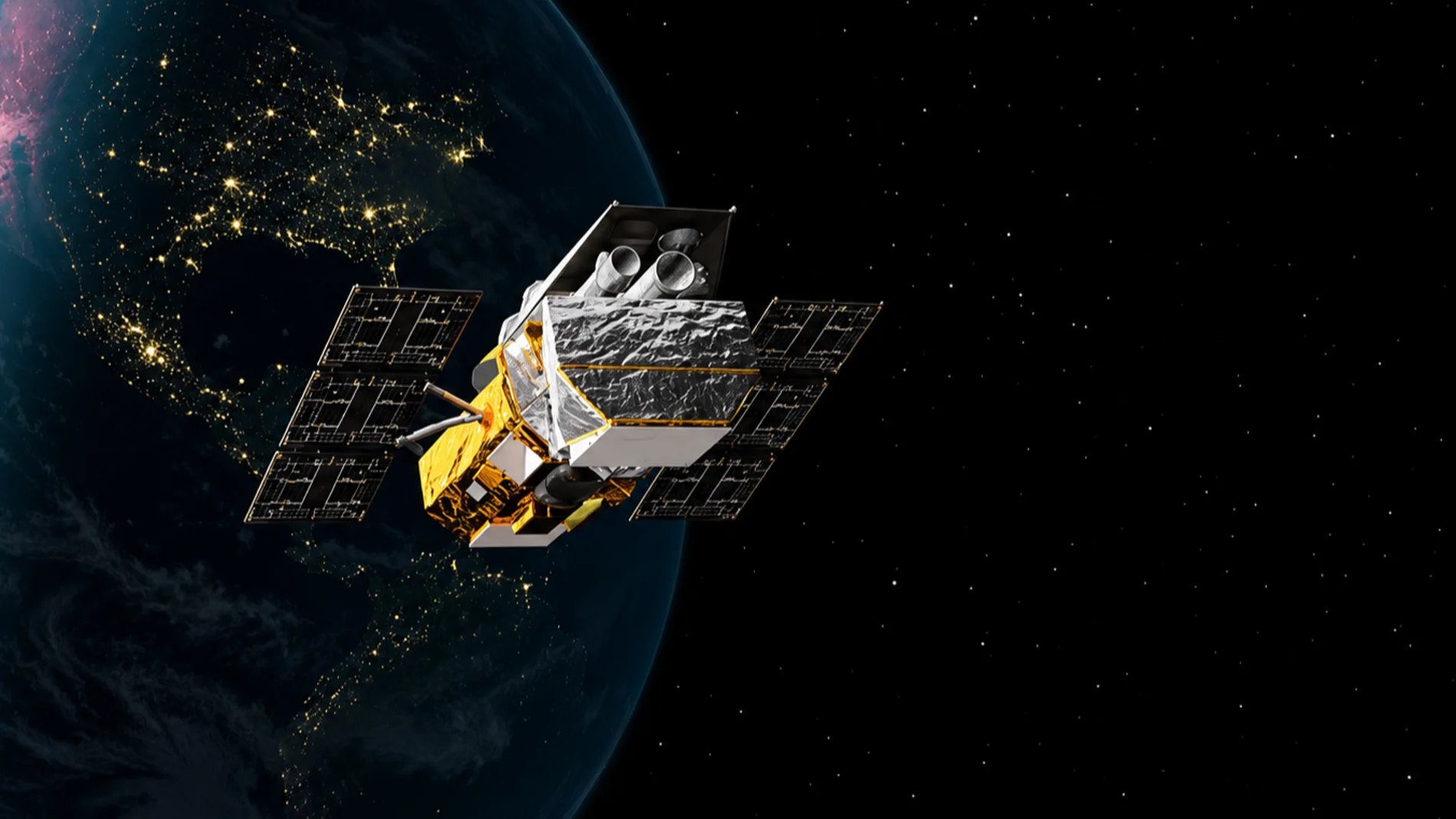
The space observatory Swift of the POT It will finally re-enter the atmosphere this Wednesday, November 4, around 9:30, Spanish peninsular time. The space agency’s estimate has a wide margin of 11 hours, sooner or later, and most of the ship will disintegrate, although some fragments could reach the surface.
Released on November 20, 2004, the Neil Gehrels Swift Observatory was born to study gamma ray bursts, the most powerful explosions in the universe. His initial mission lasted two yearsbut ended up also observing supernovae, black holes and comets for almost 22 years.
Swift weighs approximately 1.5 tons and measure 5.6 meters tall and 5.4 wide, including deployed solar panels. To observe the sky at different wavelengths he used a Blast Warning Telescope (BAT), another of X-ray (XRT) and one more Ultraviolet and Optical (UVOT).
Over the years, solar activity has intensified atmospheric friction and accelerated their loss of altitude. In September 2025, NASA commissioned Katalyst Space the mission LINK with the aim of saving the observatory. The LINK orbital service ship was launched on July 3 and was to Grasp Swift with its three robotic arms and gradually raise the orbit using thrusters.
Unfortunately, an electrical fault disabled two of LINK’s three reaction wheels, used for orientation, and the ship began to spin uncontrollably. The engineers partially regained control with propellants, but they consumed so much propellant that There was no longer enough left to attempt the rescue maneuver safely..
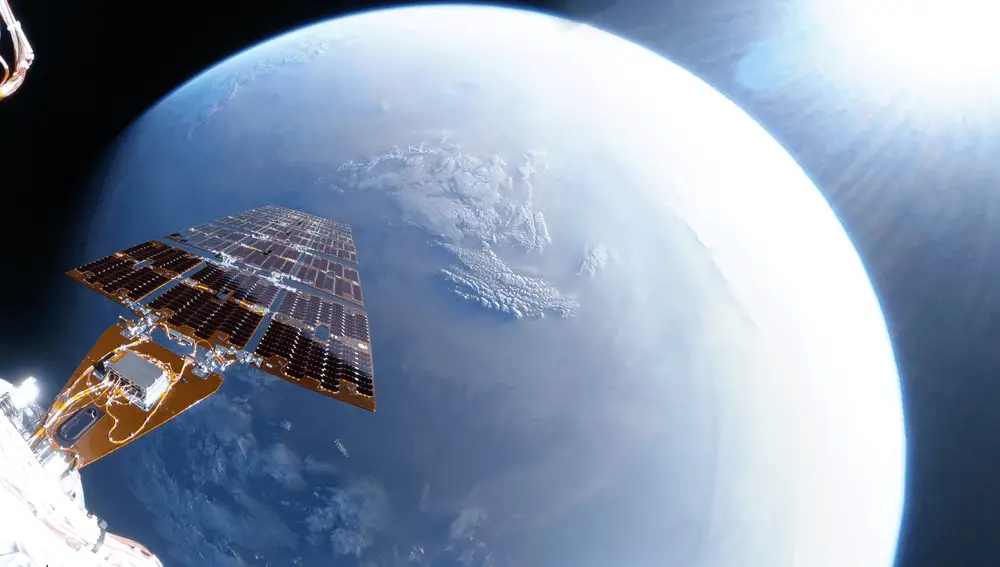
LINK came closer between 12 and 15 kilometers from Swift and re-entered the atmosphere on September 25. Before that end, the company used the ship to test its robotic systems and obtain data for future missions.
Regarding the risks involved in Swift’s re-entry, NASA explains in a statement that ‘some components are expected to survive reentry’ and their landing locations may vary from one hemisphere to another and depend on the time of reentry. Due to the low inclination of Swift’s orbit, the landing sites of surviving fragments are limited to the area between 20.6 degrees south latitude and 20.6 degrees north latitude. The chance that any person on Earth will be harmed is low, about one in 2,100.. NASA and Space Force ‘They will continue to monitor re-entry and update forecasts.’ This risk exceeds about 4.8 times the limit of one in 10,000 set by NASA for uncontrolled reentries.
Dean Sladenaerospace engineer Accu Componentsexplained to Space.com that ‘once Swift descends up to about 120 kilometers, the end usually arrives in a matter of minutes. The air ahead becomes so hot that the satellite begins to glow. Solar panels and antennas are usually the first elements to come off and, At about 78 kilometers, about eight times the altitude at which a commercial airliner flies, the main body fragments. Most of it will melt and vaporize.’
Sladen believes that ‘The components most likely to survive are its six heavy reaction wheels, the flywheels it used to orient itself, along with the telescopes’ strongest parts, such as lenses and mirrors.. Its mask, made up of about 52,000 small lead plates, will almost certainly melt. Only a handful of small charred fragments are expected to reach the surface.nothing that can be recognized as a telescope’.
Regarding the fall zone, he clarifies that ‘this strip is mainly oceanic, although it is also passes through populated areas of Africa, South and Southeast Asia and Latin America‘.