
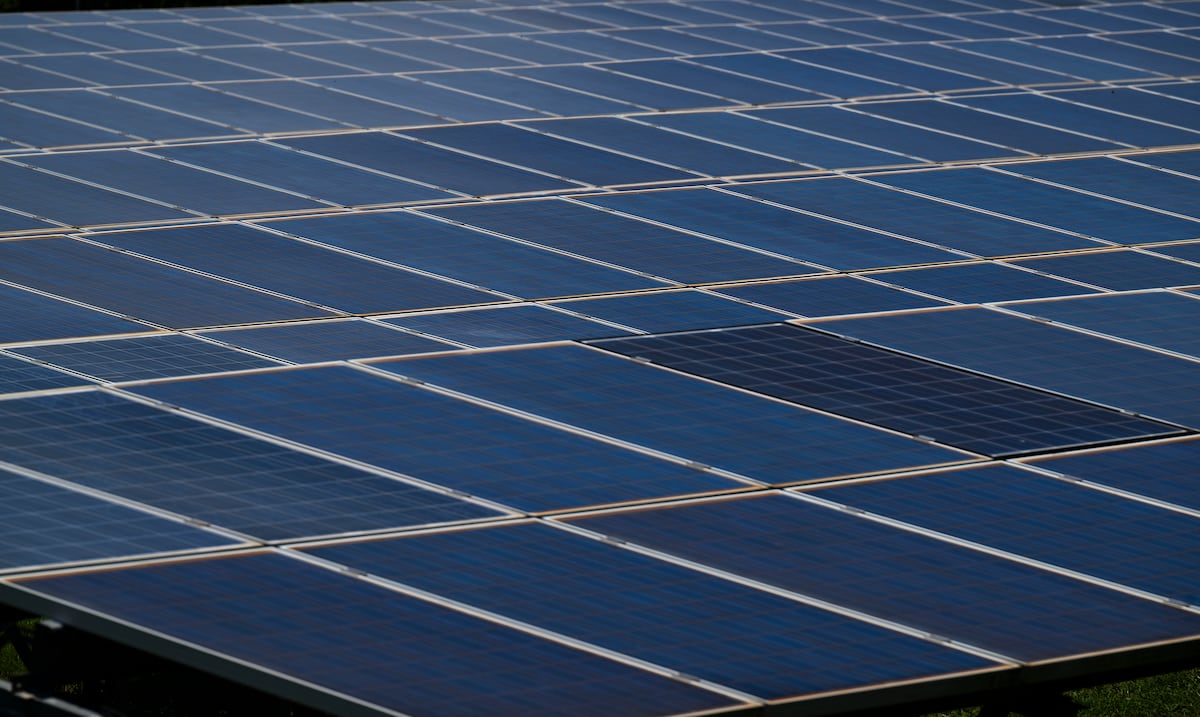
London- The demand for solar and wind energy grew 16% last year, but that increase It was not enough to cover the growing global energy consumptionso fossils also experienced an increase of 1%, according to a study by Energy Institute released on Wednesday.
The statistical review of world energy, which is carried out in collaboration with Kearney and KPMG and reaches its 74th edition, shows that CO2 emissions linked to energy grew by 1 % in 2024, the fourth consecutive record.
The wind energy And solar rose 16%, nine times more than the total energy demand, but this was not enough to counteract the growing global demand, which evidences “a transition defined both by disorder and progress,” according to the report.
The demand for oil In the OECD member countries – the so -called “Club de los Ricos” – remained flat last year, after a slight fall last year, while in non -member countries the consumption of crude oil rose 1%.
The big exception was Chinawhere the demand for oil fell by 2024 by 1.2%, which indicates that it has already reached its peak, according to the authors.
Regarding natural gasits demand bounced 2.5 % after the global fall of the previous year.
In India the demand for coal rose 4% and currently equals the whole of the Europethe American continent and the community of independent states (exsoviet countries) combined.
“These trends underline a harsh reality: while renewable energy scale faster than ever, global demand grows faster,” the authors point out.
“More than replacing fossil fuels, renewables are adding to the general energy” mix “. This pattern, marked by simultaneous growth in clean and global energy, illustrates structural, economic and geopolitical barriers to achieve a really coordinated global energy transition”they add.
For the president of Energy Institute, Andy Brown, the study findings reflect “the complex drawing” of the energy transition, in which electrification stands out, especially in developing economies where access to modern energy is expanding rapidly.
1/10 | They march to demand a model of energy self -sufficiency for the island. A group of citizens convened on Sunday the march of the Sun in Adjuntas.
In statements collected in a statement, Brown recalled that the fossil fuels They still cover 60% of the global demand, which has produced a fourth consecutive year of record emissions.
“All large sources of energy, including nuclear and hydraulic, reached levels of record consumption (for the first time since 2006), a reflection of the growing demand,” said the CEO of the Center for Studies, Nick Wayth.
In a reaction to this report, Kingsmill Bond, director of the Laboratory of Ideas Specialized in Renewables Ember, said that The energy system is “changing rapidly, directed by renewables, electricity and the rise of Chinese electrotechnology”.
“The crude has already touched the roof in China and now we see signs of a global peak in fossil fuels in the electricity system,” he added.