
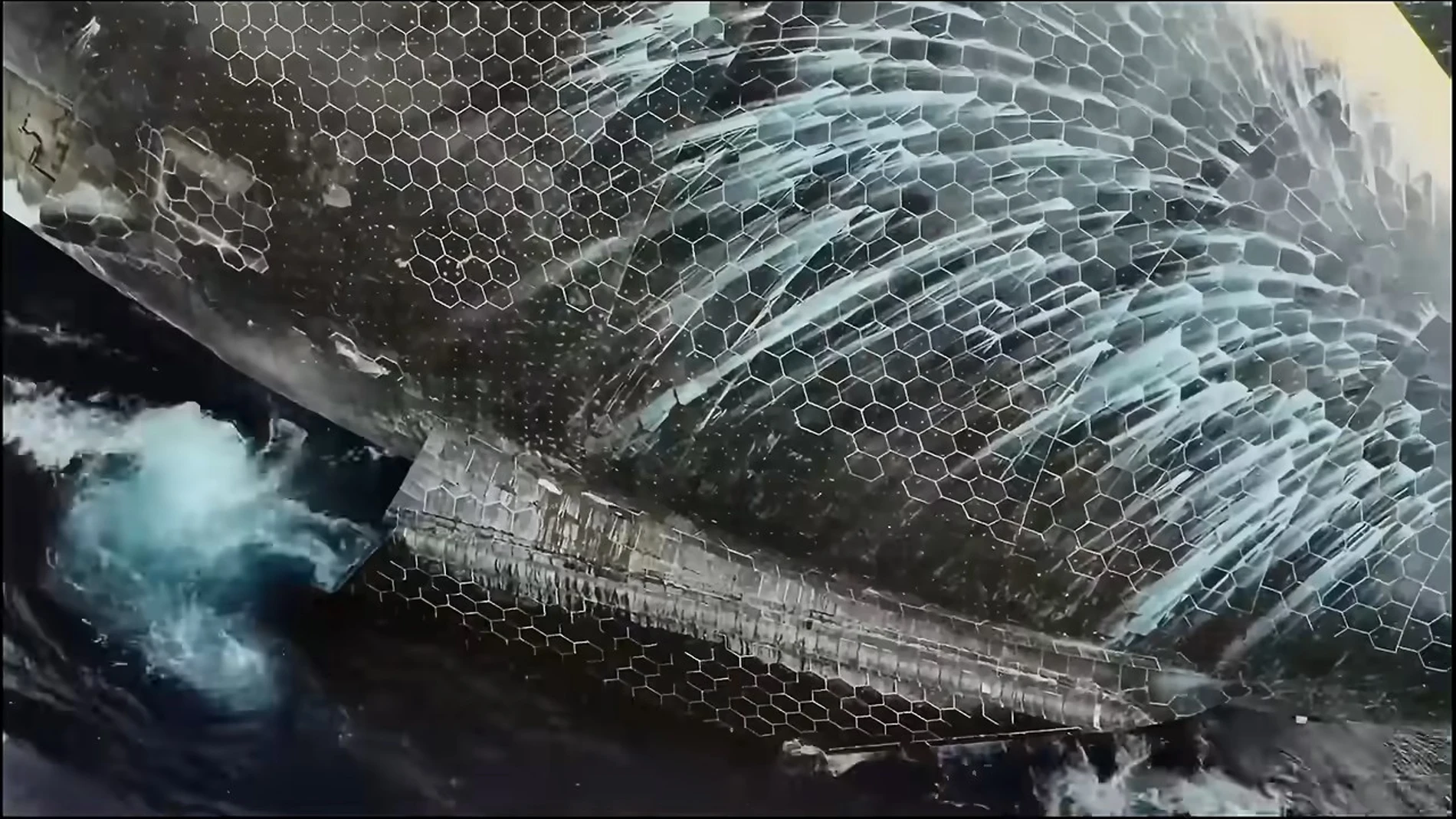
He heat shield continues to be the main obstacle for Starship becomes a completely reusable system and capable of flying with a frequency similar to that of an airplane. The experts Dan Rasky, Charles Camarda and Charles Miller They maintain that SpaceX’s current technology can be used to launch satellites and reduce costs, but not to achieve the rapid reuse required by the project.
The three have presented their conclusions in an article published on LinkedIn, after analyzing the images of Flight 13, which has been echoed by Ars Technica. It is not a peer-reviewed study, but a technical assessment based on your experience. Rasky worked for 38 years in the NASA Ames Center and coinvented the material PICA used in the heat shield of ships Crew Dragon. Camarda was an astronaut and thermal protection specialist. Miller has worked for decades on reusable launcher programs and led NASA’s transition team for the Trump-Vance Administration.
Last Friday, on the aforementioned test flight 13, Starship completed reentry and landed in a controlled manner in the Indian Ocean. Few tiles were lost, but later images showed white marks that appeared to start at the seams, as well as cracked pieces and damaged edges.. The authors believe that dozens or even hundreds may have suffered damage. ‘Starship’s current thermal protection system is a dead end for all missions requiring complete and rapid reusability’Rasky told Ars Technica.
The bottom of the new Starship V3 is covered by 40,000 black ceramic tilesmostly hexagonal, mechanically fixed on a structure of stainless steel. Its function is to isolate the vehicle during reentry at speeds close to Mach 25, about 30,600 km/h. Steel offers an advantage over the aluminum of the space shuttle, the reusable ship of the POT which operated between 1981 and 2011, because Withstands higher temperatures and can resist the loss of some tiles without its structure being immediately compromised.
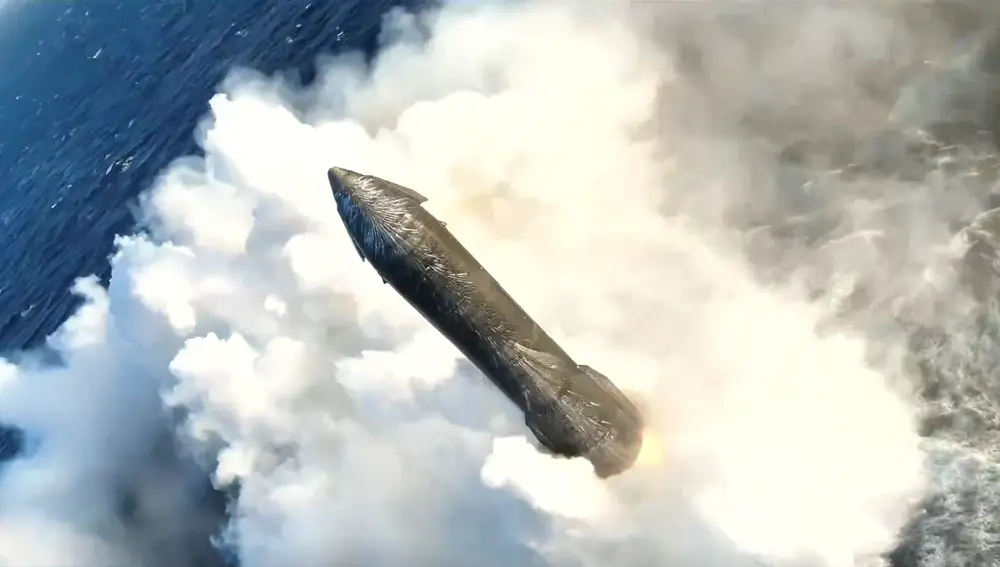
The design has evolved during the testing campaign
The first prototypes did not have a complete shield and the integrated flights progressively incorporated all the ceramic coverage. After the damage to Flight 4when several tiles came loose and the heat burned off part of one of Starship’s forward fins, SpaceX installed stronger parts and added a backing ablative layer. On subsequent missions he deliberately removed some tiles and tried different configurations to study exposed steel, joints and other materials.
NASA’s space shuttle also used thousands of lightweight ceramic tiles to protect its aluminum structure. The system allowed reuse orbitersbut it required the surface to be inspected after each mission and damaged parts to be repaired or replaced. This maintenance burden prevented rapid operations from being achieved and turned each flight into an expensive and slow process..
The authors believe that SpaceX has improved that concept by more resistant materials, standardized shapes and a structure that better withstands heat. They believe that the result could be enough to deploy Starlink V3 and other large constellations. However, They doubt that it will allow hundreds or thousands of low-cost annual launches to transport passengers, supply settlements on the Moon or Mars and build orbital data centers.
SpaceX Starship Heat Shield Comparison Between Flights 10-13.
It’s getting better every time. This is what progress looks like. 🦾 pic.twitter.com/2BzANY9BoL
— Nic Cruz Patane (@niccruzpatane) July 25, 2026
SpaceX is aware of the magnitude of the problem
Elon Musk has repeatedly referred to the reusable heat shield as ‘the biggest problem he has left’ to Starship. ‘If you want to be able to land, refuel propellants and fly again, you cannot carry out a laborious inspection of about 40,000 tiles‘, he noted last February. The company has invested in new compositions, more uniform parts and experiments during flights.
Rasky, Camarda and Miller argue that the solution also demands to recover the public investigation. According to his analysis, the United States has not maintained a substantial investment in new reusable systems for orbital re-entry at Mach 25 for three decades. Much of today’s technology comes from the shuttle, the National Aerospace Plane and the X-33. NASA retains thermal protection programs and capabilities, but the authors call for a basic research initiative dedicated to materials capable of withstanding repeated flights without laborious inspections.