
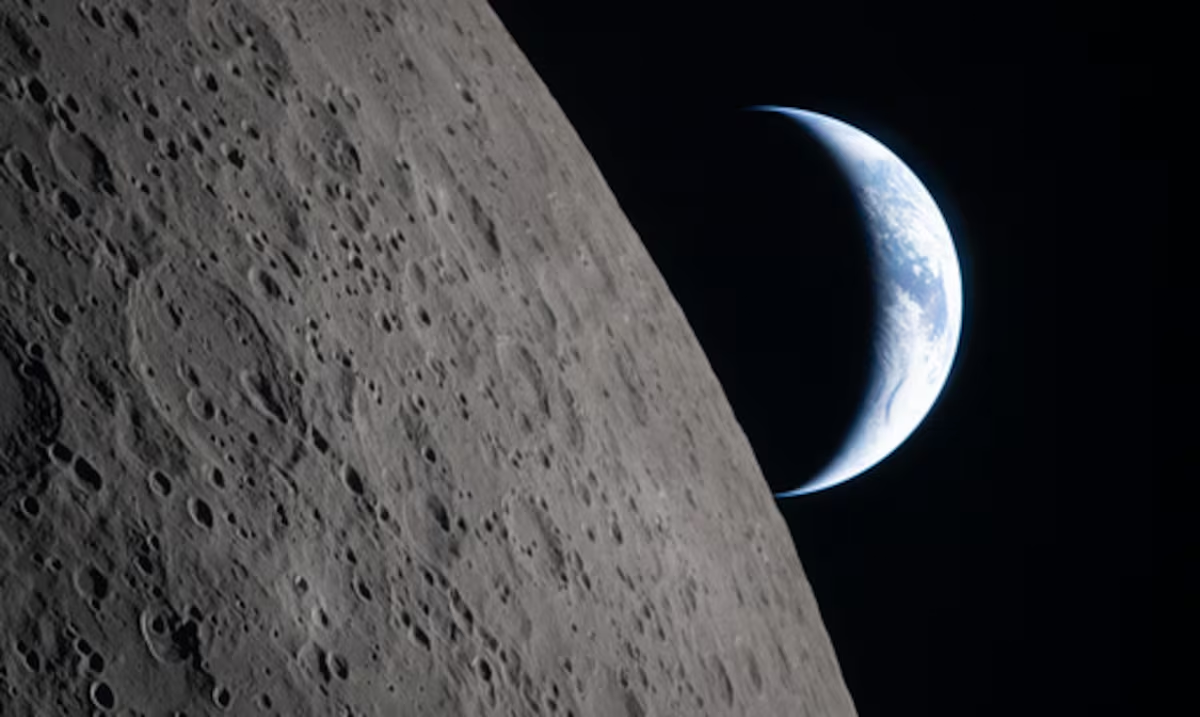
1/8 | NASA’s Artemis II Mission inspires teachers at the Digital Planet EXPO 2026. NASA’s Artemis II Orion manned spacecraft regained contact with Earth this Monday after spending about 40 minutes in absolute silence while flying over the far side of the Moon, a common interruption in this type of mission. – The Associated Press
After the successful return – on April 10 – of the crew of Artemis IIthe international scientific community celebrates the success and result of the mission during the 10 days in which four astronauts were in deep space. This trip not only validated the Orion spacecraft, but turned lunar orbit into a critical laboratory for space biology and geology.
The participation and analysis of the Artemis II Mission of the National Aeronautics and Space Administration (NASA, in English) also resonate strongly in the Caribbeanhighlighting the educational and research potential for present and future generations.
This, precisely, was one of the topics that the scientist and meteorologist Ada Monzónfounder of EcoExploratorio: Puerto Rico Science Museumand the teacher Elizabeth Torres Rodríguezthe first Puerto Rican to be part of the Space Academy for NASA Teachers and Education Affiliate Puerto Rico NASA Space Grant Consortiumdiscussed this Saturday in a keynote conference under the theme “The Science of NASA’s Artemis II Mission”, directed to teachers and educators, in the Digital Planet EXPO 2026in Plaza Las Americas.
“NASA’s Artemis II Mission represents the quantum leap that our ‘Artemis Generation’ needed to see to believe that space is their next field of work. From the EcoExploratorio, we celebrate that the science of this mission, especially the study of radiation and space climate, provides the necessary data so that humanity can inhabit other worlds safely.. It is a moment of pure inspiration for our children and young people interested in space sciences and the field of STEM (science, technology, engineering and mathematics) in Puerto Rico,” said Monzón, in a press release.
For his part, Torres Rodríguez highlighted the importance of the human and technical infrastructure developed for this milestone: “The collection of biometric data and laser communication tests on NASA’s Artemis II Mission are fundamental to the aerospace research curriculum. “This mission demonstrates that collaboration between NASA and academic consortia is vital to prepare future professionals who will design the lunar bases of the future.”.
He stressed that “the first step towards Moon “It doesn’t happen on the launching pad, but on the school desk.”
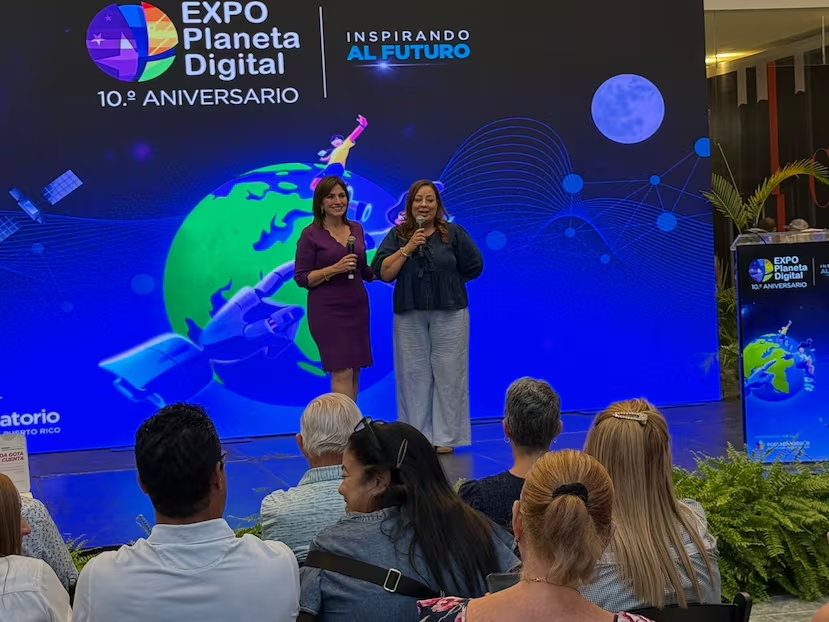
The educational day was aimed at 50 teachers who participated in the workshop offered at the Planeta Digital EXPO. Integrated the Artemis II Mission as a central axis to teach STEM concepts, using audiovisual resources, real data analysis and content developed by Noticentro (WAPA) during the special coverage “I am Artemis II: To the Moon”.
Monzón highlighted how scientific communication plays an essential role in translating complex missions into accessible knowledge for students and the general public.
Meanwhile, participants explored emerging technologies such as 3D printing and augmented reality, as well as immersive experiences within the Digital Planet Geodomea mobile experience that presents the documentary “Inspiring Resilience to the Future”, produced by Monzón, and which integrates the importance of observing the planet from space and exploration to improve the quality of life on Earth.
In addition, educational initiatives developed together with the NASA Johnson Space Center They allowed teachers to get closer to practical activities under the concept of “Laboratory among the Stars”, connecting with applied learning.
Meanwhile, Nelson Ortegaof the Caribbean Astronomy Societyhighlighted the importance of documenting and communicating space exploration effectively, making use of analysis of real images captured during the mission, along with the integration of media coverage. Besides, José Omar Rolónproducer of Noticentro, emphasized how collaboration between scientists, educators and media strengthens public understanding of science and inspires new generations.
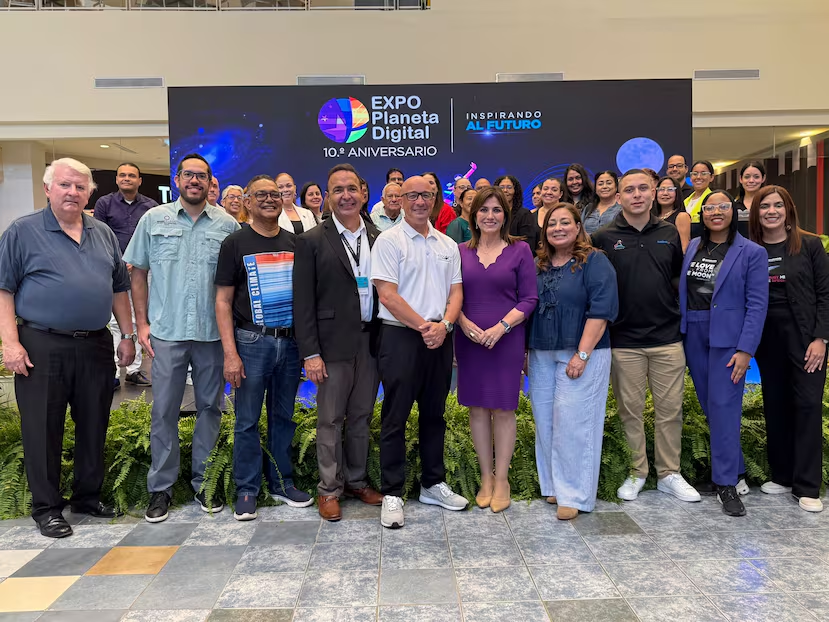
The role of the Puerto Rico NASA Space Grant Consortium, led by Gerardo Morellwas key to highlighting the opportunities that exist for students and educators in Puerto Rico within the NASA ecosystempromoting research, academic training and professional development.
But, beyond space exploration, the educational experience also integrated essential topics for Puerto Rico, connecting science with education, resilience and the future of the country.
Through experts and educators, initiatives were presented that demonstrate how scientific knowledge translates into community action and preparation. In that context, Merry Manso highlighted the development of educational programs and STEM fairs under the Innovative Space Learning Activities Center from EcoExploratorio, a NASA grant that promotes learning about how to live on Earth and beyond, integrating space exploration concepts. Also, he addressed the importance of continuous training through Resilience Institutefocused on training communities and professionals in preparation for natural risks.
Likewise, the climatologist Rafael Mendez Tejeda and the engineer Carl Soderberg analyzed the impact of atmospheric and environmental phenomena in Puerto Rico, highlighting how they affect the infrastructure, health and future planning of the island. They addressed how Scientific knowledge, from space to Earth, is essential to strengthen resilience, decision-making and risk preparedness.
In its tenth edition, EXPO Planeta Digital 2026, with the theme “Inspiring the Future”, culminates tomorrow, Sunday, in the central atrium of Plaza Las Américas, during shopping center hours.
1 / 29 | This was the return of the Orion capsule to Earth. Artemis II mission pilot Victor Glover descends from the recovery helicopter onto a Navy ship in the Pacific off the coast of California. -NASA