
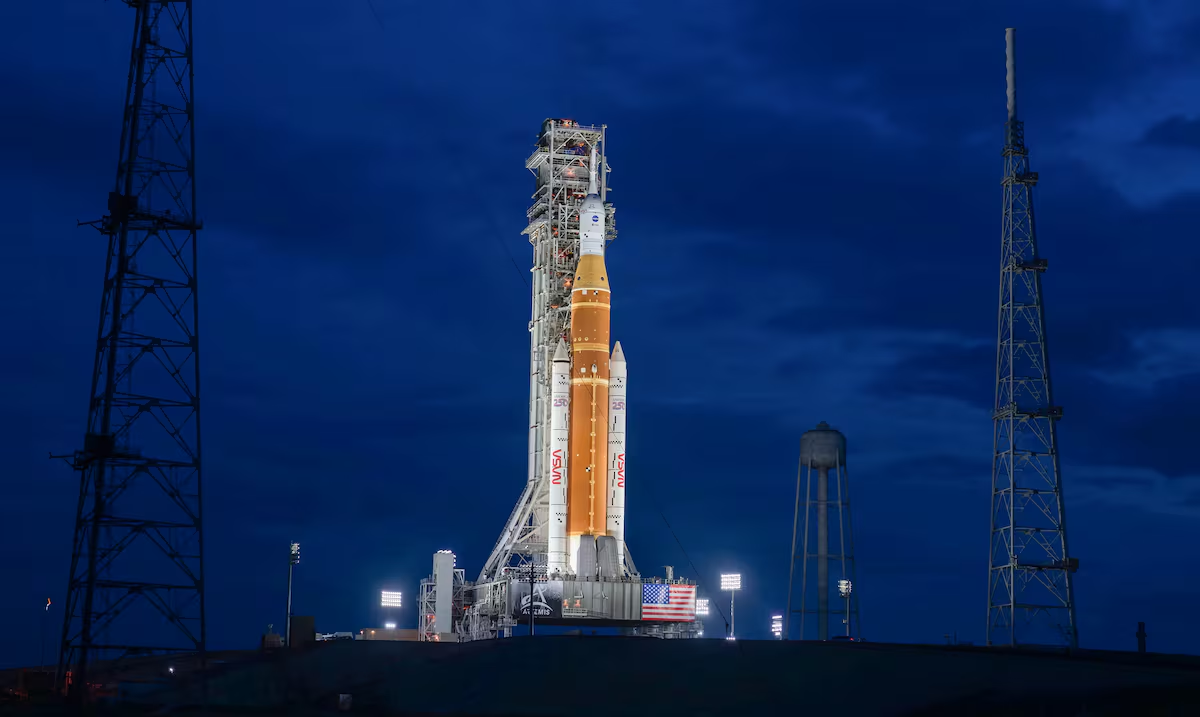
NASA faces at least another month of delay for launch Artemis II around the Moon after the discovery of a new failure in the helium supply that will force the powerful rocket to be dismantled this Wednesday, weather permitting. Space Launch System (SLS) and the Orion spacecraft from the launch pad and return it to the hangar.
The laborious process began today after poor weather conditions at the Kennedy Space Center in central Florida caused it to be postponed on Tuesday.
Artemis II was scheduled to send four astronauts to lunar orbit on March 6, after failures in the first cold test prevented the launch in February.
But the detection of problems in the rocket’s helium supply over the weekend led experts to order its disassembly and transfer to the hangar for inspection.
NASA reported in a statement that it is still preserving the April launch window intact while waiting for the results of the repair tasks to be known.
The journey to the Vehicle Assembly Building (VAB), about 6.4 kilometers, could take up to 12 hours.
Once back in the hangar, teams will immediately begin installing platforms to access the area where disruption to the flow of helium into the rocket was detected.
Helium is used to bleed engines, as well as to pressurize liquid hydrogen and liquid oxygen tanks.
The systems functioned correctly during both general refueling tests conducted in February.
However, during a routine repressurization operation on the night of Saturday, February 21, the team was unable to establish helium flow through the vehicle.
NASA is investigating possible failures, but access and repair of any of these problems can only be done in the VAB.
Artemis II will be the mission in charge of sending the first humans to lunar orbit in more than half a century, although it does not contemplate a lunar landing.
That milestone will fall on Artemis III, currently scheduled for no earlier than 2028, which will mark the return of humans to the lunar surface for the first time since 1972.