
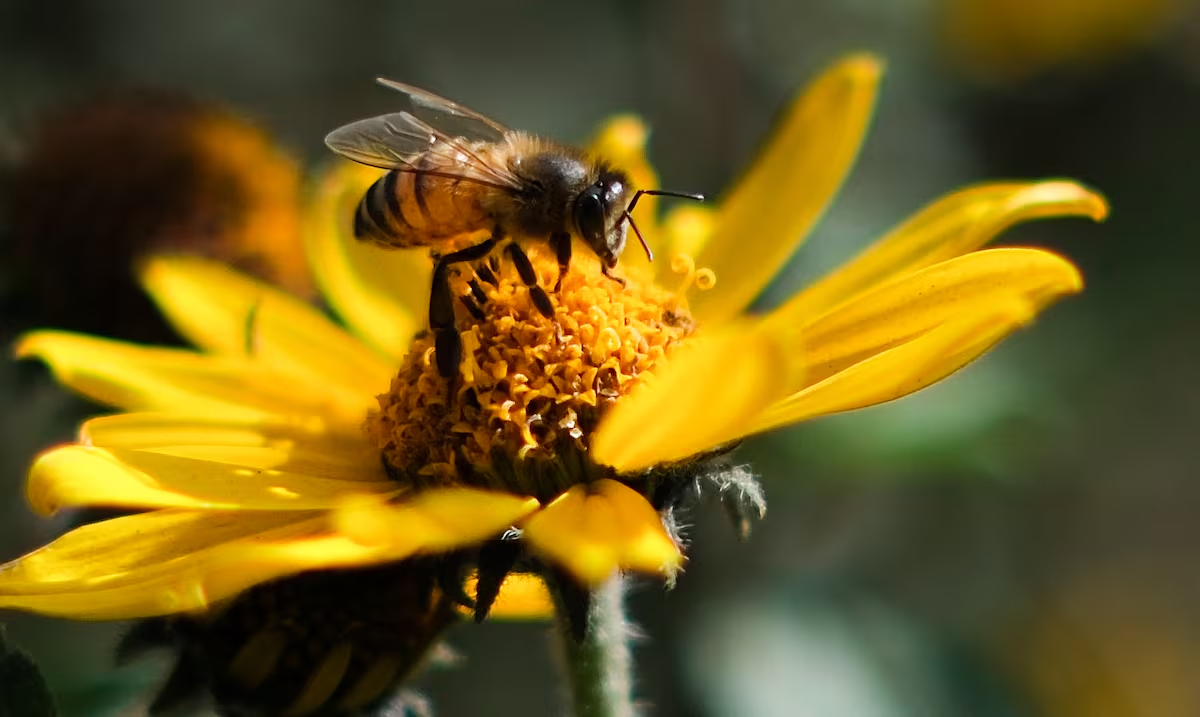
Mexicoone of the main honey producers in the world, launched this Sunday a national campaign to protect bees from a pest that reduces their population and threatens agricultural production.
He National Agri-Food Health, Safety and Quality Service (Senasica) reported in a statement that the strategy seeks to contain varroasis, a disease caused by a mite that causes deformations in bees and reduces their ability to pollinate crops.
Varroasis, “considered the worst disease of this insect worldwide,” the agency indicated, “causes a decrease in births, deformation of wings and abdomen, disorientation, less wax secretion, and a decrease in honey production.”
“In addition, this parasite reduces the ability of bees to forage, that is, to carry out the activity of collecting nectar, pollen, water and propolis from flowers,” he added.
The authority pointed out that bees are key to more than 80% of agricultural production, so their impact directly impacts food security.
As part of the campaign, diagnoses, treatments and training will be carried out for beekeepers to control the disease.
Mexico produces more than 57,000 tons of honey per year, which is exported to 28 countries, Senasica noted.
In addition to production, the country has around one million beehives, which places it as the third largest exporter of the candy in the world, benefiting more than 43,000 families, according to official data.
However, in recent years bees have faced a population crisis due to factors such as climate change, droughts, the use of pesticides and pests such as the varroa mite.
According to the Save The Bees MX platform, in the three years prior to 2018 more than 4 billion bees died in Mexico, in line with a global trend of losses that reach between 50% and 80% in different populations.