
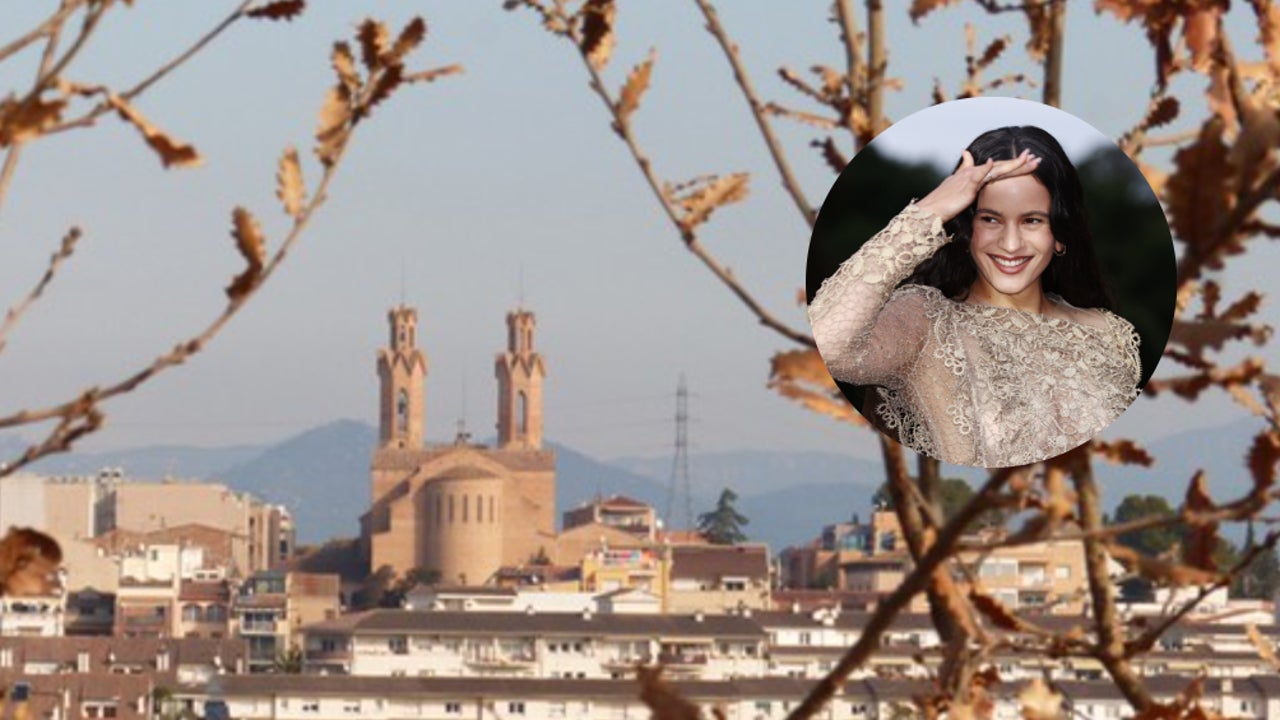
Rosalia has become a global phenomenon within the world of music that has been able to modify the rules of the pop genre and traditional flamenco. Born in 1992 and with its beginnings as a singer in Catalonia, His career has combined the classic with creativity how much defines it.
Urban, electronic or Latin sounds have been combined with flamenco itself, and evidence of this has been their hits on discs such as ‘Los Angeles’ or ‘The Evil Want’. Both his voice and his aesthetics or his artistic capacity have meant that he is one of the most recognized Spanish characters in society, and all this has origin in a small Catalan town in which it was born.
Sant Esteve Sesrovires, the town in which Rosalia was born
The people in question is Sant Esteve Sesrovires, which is located in the Baix Llobrega regiont. Taking a simple look, the first idea that will come to mind will be the A municipality of a small size, especially for its number of inhabitants (around 8,000 citizens).
Speaking more of its characteristics, it is a place with an intimate and very recognizable identity, which is composed of a Urban Center, Masías dispersed throughout the municipality and a landscape that is marked by the presence of the fields, vineyards or industrial polygons.
((H2: GDP and income higher than average)
However, as far as the economic aspect is concerned, the productive weight it has is disproportionate if it is related to its geographical dimensions. Being surrounded by industries and production activities, The Gross Domestic Product per inhabitant is well above the entire Catalan average.
Basically, the economic activity that takes place in Sant Esteve Sesrovires is a lot for the number of citizens. In turn, the average rent per day of people are also much higher, but this time to the national average. According to the Tax Agency, the average income (gross salary) is around 37,000 euros (2022).
What can be seen in Sant Esteve Sesrovires
For all those who visit the municipality in which it was bornRosaliathey can be observed Several interesting claims in which heritage, wine and leisure are combined. For example, one of the buildings that are first come to their residents is The parish church of Sant Esteveas well as other more young people who host all kinds of cultural activities, such as The case of Can Julià.
For its part, The wineries in which wine and cava are worked are those of Ca n’estella or Can Casals. Finally, it should also be noted that the entire municipality maintains a personality based on the mixture between rural and industrial, which can be seen doing a brief Walk through the polygons, its streets or the roads located around the Anoia River.