
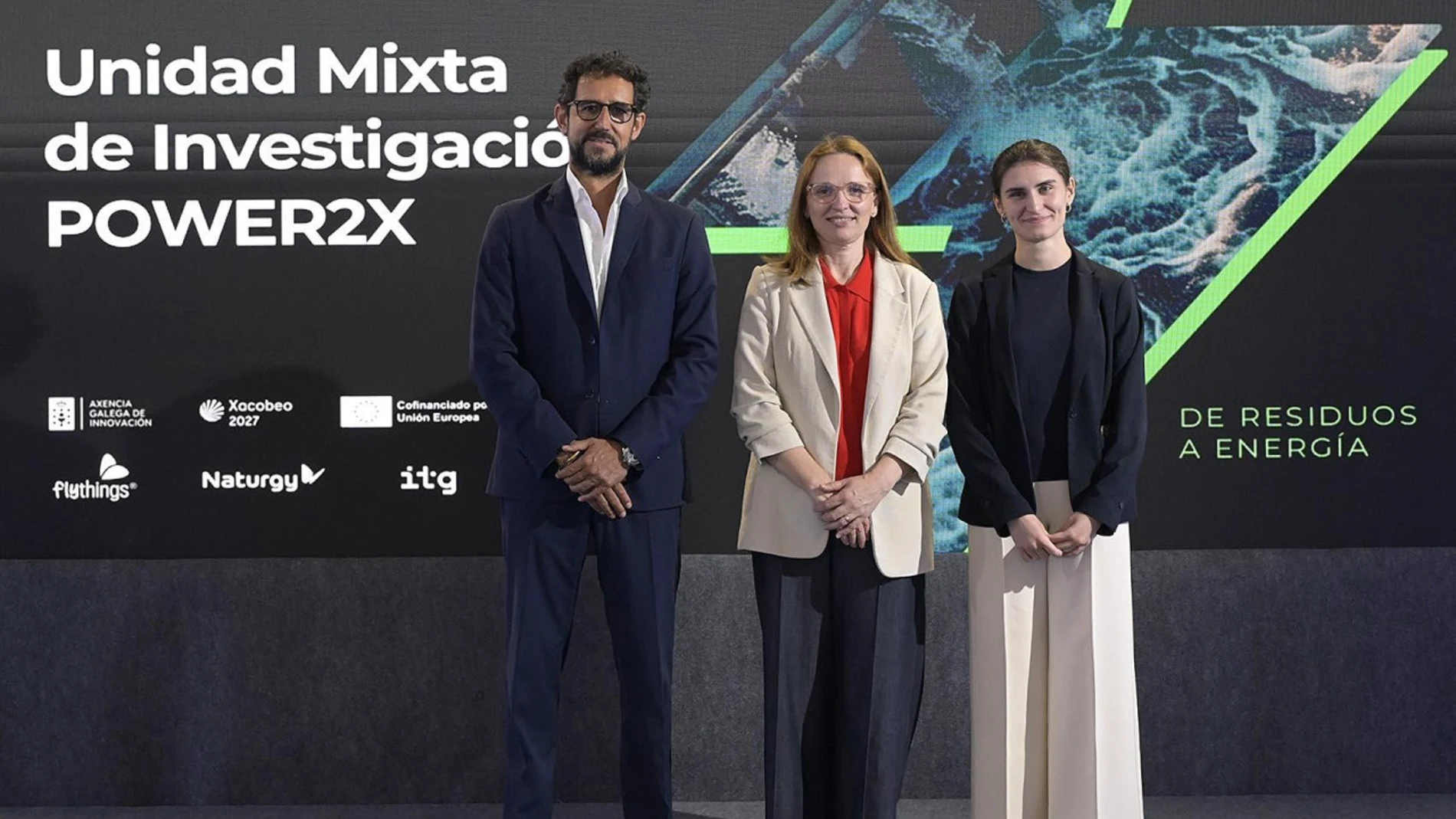
The energy transition advances when we are able to transform challenges into real opportunities. And one of the biggest current challenges is, without a doubt, efficient waste management. The energy company Naturgy has taken another step in this direction with POWER2X, an initiative that demonstrates how innovation can convert organic waste into new sustainable energy vectors.
In collaboration with the ITG technology center and the company Flythings, Naturgy has launched a Joint Research Unit with the objective of develop solutions capable of transforming complex waste—such as sewage sludge or residual biomass—into renewable gases with high added value, such as hydrogen, biomethane or synthesis gas.
More sustainable model
According to the energy company, it is a project that was born with a practical vocation and industrial focus, since it not only seeks to investigate new technologies, but also validate its viability in real conditions. For this, The developments will be tested at the Bens Wastewater Treatment Plant, in A Coruña, an environment that will allow us to verify its effectiveness and its scaling potential. It is not just any laboratory, More than 130,000 cubic meters of wastewater arrive at this plant daily from the more than 400,000 people who live in the metropolitan area of the city.which makes it a real-scale scenario for technologies that aspire to be replicated in other territories.
The interest in converting waste into energy responds to a trend that international organizations have been pointing out for some time as one of the great pending opportunities of the energy transition. The International Energy Agency (IEA) highlights that biogas and biomethane have great potential that is still untapped: They could cover a relevant part of the world’s demand for natural gas, but today less than 5% of the available organic waste is used.
Biomethane is especially attractive because it can take advantage of existing gas infrastructure and help decarbonize industrial uses that are difficult to electrify. In Spain, Sedigas estimates that it could cover around 45% of the national gas demand, although to achieve this it would be necessary to greatly multiply the number of current plants.
Second life for waste
One of the great advances of POWER2X is its ability to address the complexity of certain waste, whose valorization is currently difficult due to factors such as its heterogeneity or its high moisture content. The project will allow exploring new technological routes that facilitate its use in a more efficient and sustainable way.
In addition, the initiative integrates cutting-edge technologies such as gasification, biological methanation or co-electrolysis, along with advanced digital tools. Thanks to the incorporation of artificial intelligence and digital twins, it will be possible to optimize processes, anticipate the behavior of systems and improve energy management in real time.
The impact of this type of solutions goes far beyond the technological field. Projects like POWER2X contribute to moving towards a more circular energy modelin which waste stops being a problem and becomes a resource.
In territories such as Galicia, where a relevant part of the waste – such as sewage sludge – still has to be transported outside for treatment, the development of local alternatives represents a key opportunity to reduce costs, improve efficiency and generate value in the environment.
Naturgy frames the POWER2X Project, in a commitment to applied innovation, collaboration and the development of solutions that combine technology, sustainability and industrial viability. In this case, betting on renewable gases as an essential way to decarbonize sectors such as industry, taking advantage of existing infrastructure and guaranteeing security of supply,