
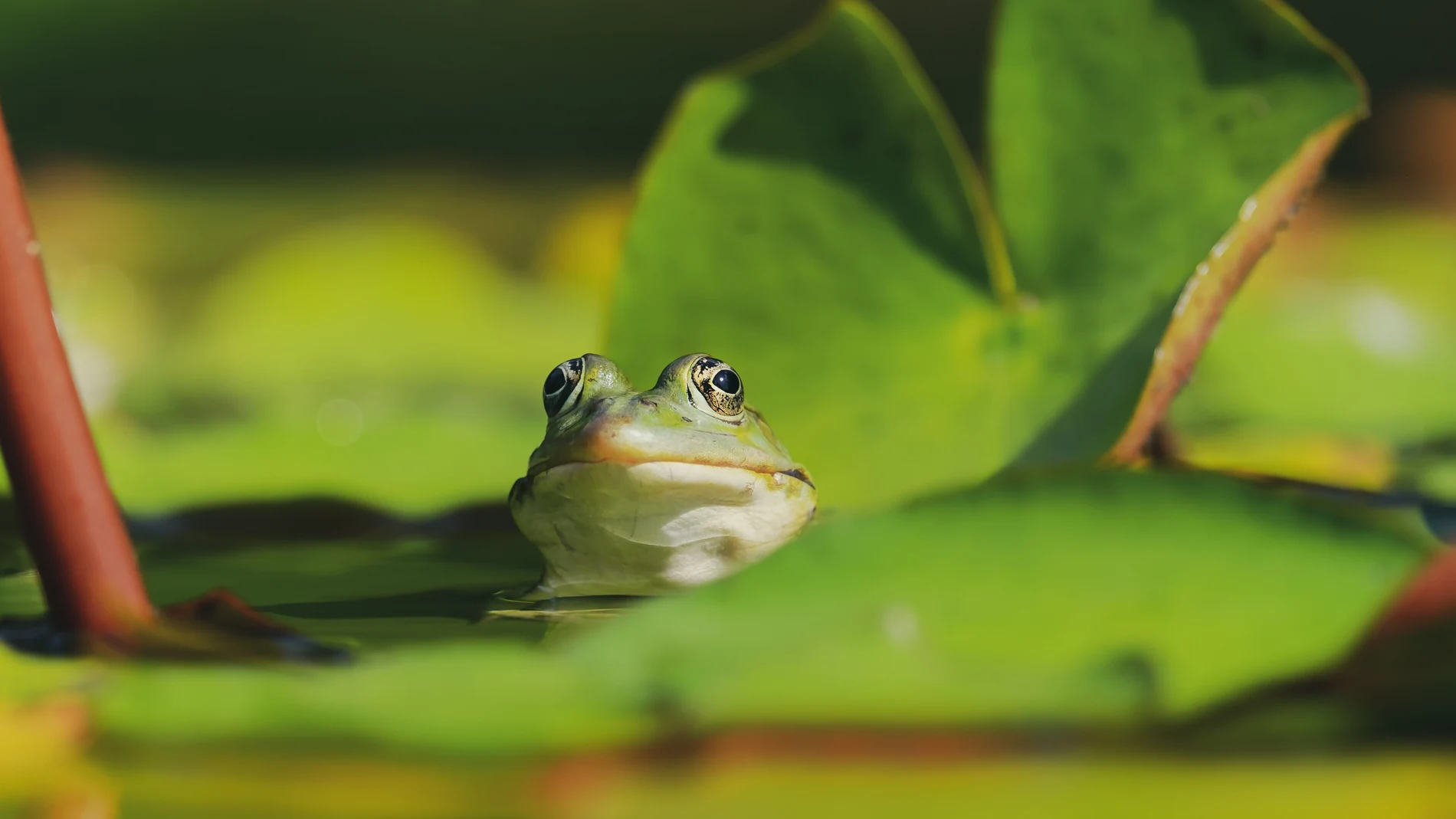
In 2017, Maggie, a teenager from Virginia, United States, had to do a school project at home. The task was not to take care of silkworms or the class pet, but a much more elaborate one: create a small pond and put up a fence in the garden of their house. Since then, and little by little, this homemade space It began to become home to different species.
During the summer of 2017, the young woman decided to take advantage of some of the space in the backyard of her parents’ house and start digging a pond. What started out as just a hole in his garden ended up filling with water and, with it, life. However, it wasn’t all Maggie’s doing; Her parents also decided to help her in this project..
As they explained to National Wildlife magazine, while their daughter was drawing up the plans for what would be their new pond, they took the opportunity to investigate which natural elements would be most suitable to create an attractive habitat for the animals in the area. This is how they allocated 160 dollars in aquatic and terrestrial plants, as well as rocks, to finish creating this little ecosystem.
American toads were the first to appear
Before carrying out the project, only the chirping of a cricket could be heard in his garden. However, within a few weeks of creating the pond, different species of animals began to appear. Turning what was a project for his high school agriculture class into a natural environment that both his family and the animals now enjoy of your environment.
The first to arrive were American toads, a fairly common species in the Shenandoah Valley, where the Johnsons’ house is located. These usually live in terrestrial and humid environments, adapting very easily to gardens with small bodies of stagnant water in which they can reproduce and lay their eggs.
They achieved the Habitat for Wildlife certificate
Although other species such as green frogs or green tree frogs quickly appeared, they also found the pond and its vegetation the ideal habitat to go to every year during the breeding season. Something they achieved thanks to the presence of white water lilies. However, amphibians are not the only ones that decided to live in the garden of young Maggie; also birds and insects.
The Johnsons discovered, thanks to their research, that if they planted species that attracted pollinators, such as eupatoria, pontederia or cephalanthus, they would increase the biodiversity of the area. Thanks to this, specimens of ruby-throated hummingbirds, praying mantises or hummingbird sphinx moths, as well as other species, began to arrive and obtained the title of Certified Wildlife Habitat from the National Wildlife Federation (NWF).
The importance of ponds for the ecosystem
Ponds, although they may seem like simple bodies of stagnant water, hide a wide variety of secrets. Aquatic plants are capable of oxygenating water, creating an ideal habitat for amphibians and, above all, for their eggs. Thanks to the absence of fish, which usually feed on these eggs, different species can thrive.
Amphibians are a key element in maintaining the balance and health of ecosystems, both terrestrial and aquatic. This is because one of its main functions in nature is control insect and mosquito pestswhich can spread dangerous diseases to humans and other animals. In addition, their behavior can warn of environmental problems, such as pollution.
Likewise, the ponds are also a hydration point for both birds and different species of animals and insects. Something essential to avoid fainting due to dehydration due to the high temperatures that have been recorded in recent years. However, they not only generate benefits for animals, but also for humans, as they provide great landscape value and create spaces of tranquility.