
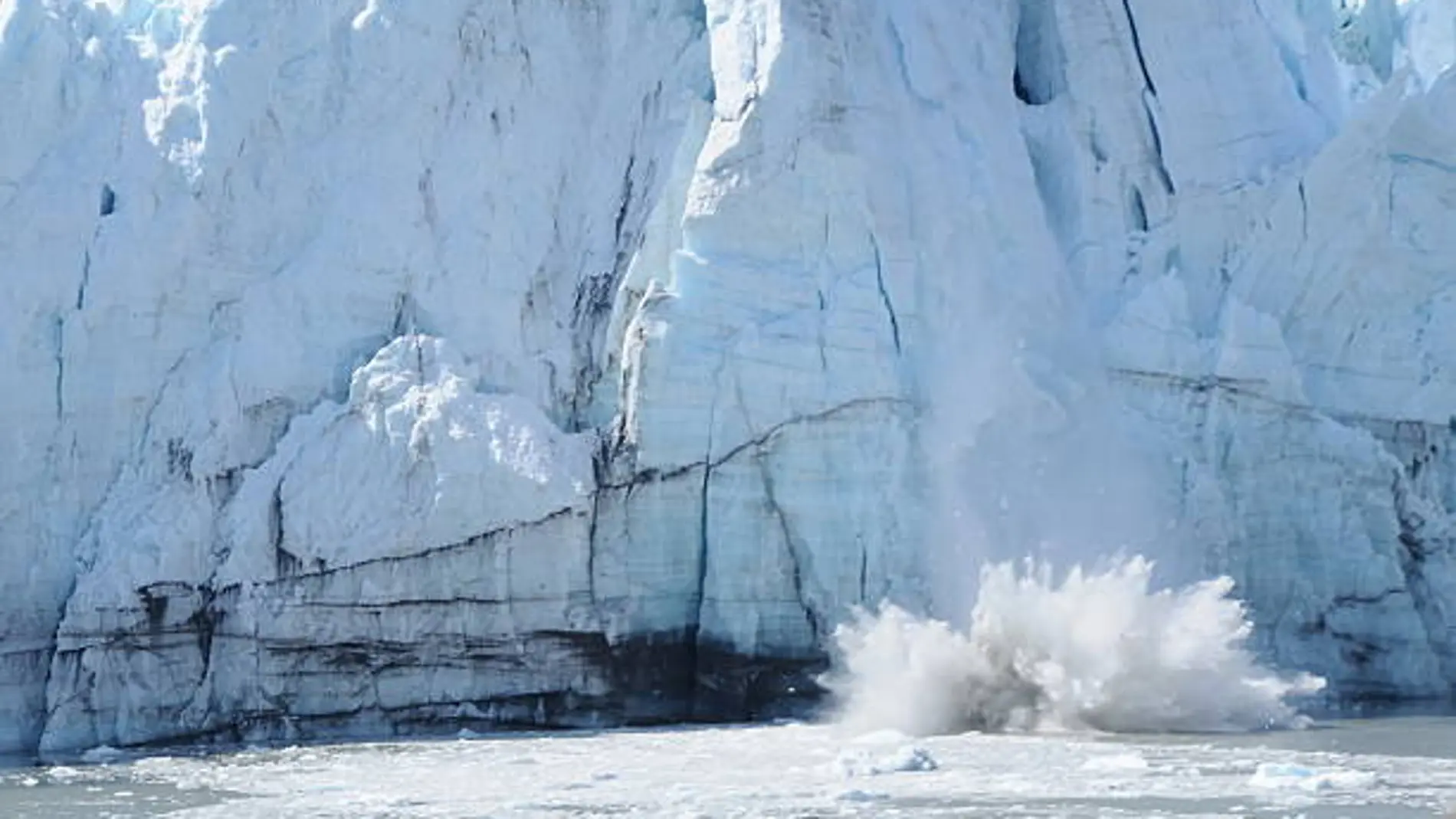
The lack of water has always been a problem in regions with drier climates, therefore, solutions have always been sought to guarantee the supply of this element so essential for life. While in some places, like Salamanca, they chose to build refrigerators in which to store the snow, in others, like in Iowa, They made more drastic decisions.
In 1977, faced with a lack of water for the population and crops of the North American state of Iowa, a group of researchers wanted to test a solution to ensure that states with drier climates had sufficient supplies of fresh water: moving a block of ice weighing more than one ton coming from a glacier more than 10,000 years old in Alaska. A state from which the symbol flower of Iceland also originates.
This journey took place during the First International Conference on Iceberg Utilization, in which researchers wanted to discover if icebergs could be used to supply water to those states suffering from a shortage. According to the initial hypothesis, the transfer of large blocks of ice could become a solution to populations that were in areas with drier climates.
The transfer showed the complications of this project
The selected block came from the Portage Glacier, located near Anchorage, and weighed about 2,500 pounds (approximately 1,133 kilograms). To get it out of the sea, the team had divers and a helicopter. However, to transport him they had to use a plane that picked him up in Alaska and sent him to Minneapolis. The final stretch, to the city of Ames, Iowa, It was carried out thanks to a refrigerated truck.
A transfer revealed some of the problems that this solution entailed. First of all, due to its size, The trip cost approximately $8,500.that is, approximately 7,411 euros. In addition, the high cost was also due to the need to keep the ice block constantly refrigerated. Complications that caused this solution to not go ahead.
Likewise, when it arrived in the city, the researchers proceeded to analyze the integrity of the ice block; They discovered that, despite their efforts, it had melted slightly. Therefore they also presented problems regarding insulation and stability. Factors that were decisive when presenting the results of the trip at the conference.
Saudi Arabia, one of those interested in the project
One of the main interested parties in this project was Saudi Arabia, which, due to its climate, had difficulties in supplying fresh water to its population and depended on desalination systems, high energy consumption and a large financial investment. For this reason, they saw the transfer of ice blocks from the polar regions as a possible source of water.
The results of this experiment were presented at the conference, bringing together 200 scientists, engineers, businessmen and political representatives from 18 countries. However, despite their high expectations, the difficulties encountered during the trip and its high costs demonstrated that It was not a viable solution. for the problem of water scarcity.
The experiment was registered by Iowa State University, becoming the most expensive block of ice in the world and helping to determine the viability of this type of transfer to solve water scarcity and desertification.