
The interception of the ballistic and hypersonic missiles released yesterday by Iran has not only been carried out by the air defense systems of Israel. As reported by the US Department of DefenseUS military forces located in the Mediterranean They coordinated with the Israelis during the missile attack launched by Iran against Israel to intercept them.
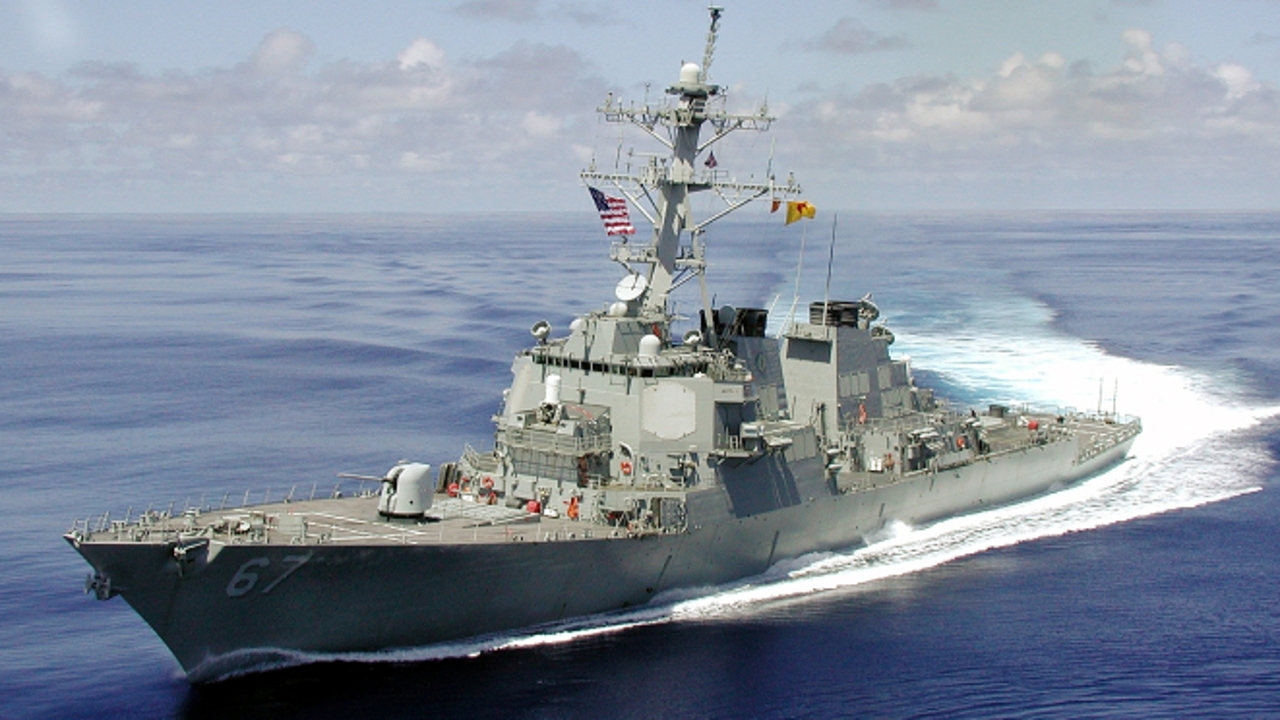
In a press conference held yesterday, Pentagon press secretary Maj. Gen. Pat Ryderexplained that US Navy destroyers deployed in the region, including the USS Bulkeley and the USS Coleparticipated in the anti-missile defense operation. These ships They launched a dozen interceptors to neutralize the threatproviding key support to the Israel Defense Forces (IDF). General Ryder has not divulged specific details about the type of interceptor munition used, despite being asked whether the Navy used missiles RIM-161 Standard Missile 3 (SM-3)a standard defense against ballistic missiles.
However, this defense It was used by the United States, also in support of Israel, during the missile attacks that Iran carried out last Aprilaccording to The War Zone. It was then the first time that American ships used their SM-3 anti-missile interceptors.
Destroyers equipped with the Aegis Combat System
Both USS Bulkeley and USS Cole are class destroyers. Arleigh Burke and are equipped with the Aegis Combat System that integrates powerful radar suites. Among them, the multifunction radar AN/SPY-1D provides the ability to detection, tracking and discrimination of incoming ballistic threats. These destroyers employ the Ballistic Missile Defense (BMD) configuration of the Aegis system to intercept ballistic missiles.
US destroyers in the eastern Mediterranean Sea took down multiple missiles launched by Iran at Israel on Tuesday night, US defense officials said.
At the moment, those there include the USS Arleigh Burke, USS Cole, and USS Bulkeley. Additional destroyers are in the Red Sea.
— Dan Lamothe (@DanLamothe) October 1, 2024
RIM-161 Standard Missile 3 (SM-3)
The SM-3 is a key component of the Aegis BMD system, designed to engage short- to medium-range ballistic missiles during their midcourse phase, outside the Earth’s atmosphere. The missile uses a direct impact kinetic warhead and precise guidance and propulsion systems to achieve successful interception. Its flight path allows it to engage targets at distances of several hundred kilometers and provides a defensive shield against various missile threats.
The propulsion and guidance systems of the SM-3 are designed to high maneuverability and precisionnecessary to counter ballistic missiles. The missile’s two-stage design comprises a solid fuel booster for initial propulsion and a second stage equipped with a thrust vectoring control systemwhich improves its ability to adjust flight paths during interception. Besidesthe SM-3’s active radar sensor provides terminal guidance —in the final phase of flight, the missile’s guidance system takes control to adjust its trajectory—, which allows precise impact and minimizes the risk of collateral damage.
Each SM-3 missile, manufactured by Raytheon and Aerojethas a length of 6.55 meters and a diameter of 1.57. It weighs 1,500 kilograms and offers an effective range of 1,200 kilometers with maximum speeds of Mach 13.2 (16,300 km/h). In addition to countering intercontinental ballistic missiles (ICBM) and intermediate range missiles (IRBM), they can also be used against satellites in low Earth orbit and the cost of each one is around 12 million dollars.