
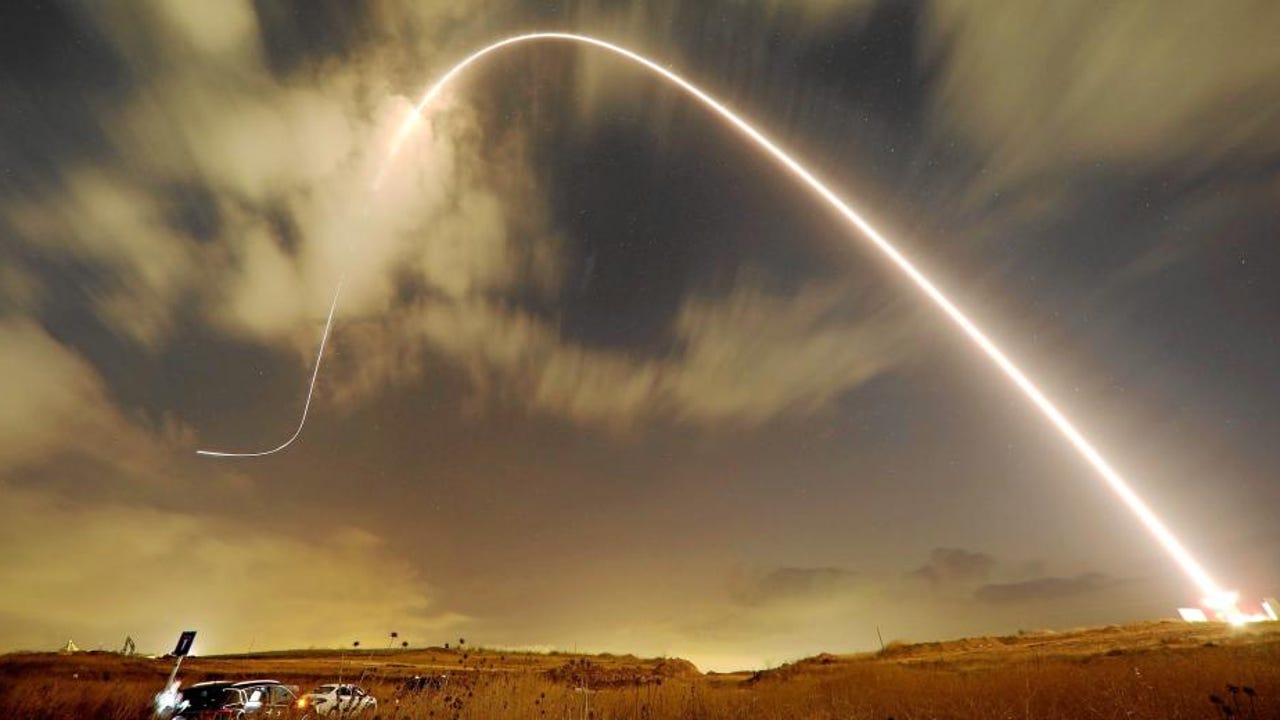
The technology behind the iron dome, Israel’s defense system, is very complex. And highly effective according to their recent (and past) Tests: a set of missiles and drones (about 800) have tried to exceed it recently. The success rate that indicates is 90%. But the key question is how many simultaneous missiles could break that effectiveness?
Let’s go for steps. Basically, Iron Dome is formed by a concentric rings system that It extends from 4 to 70 km away and 10 km high, although the goal is to expand it to 250 km. Technology is based on three fundamental steps. The first is the use of radars to detect any possible threat. The second is the use of complex algorithms that allow identifying and predicting the trajectory of missiles, drones and rockets that approach the cities protected by the dome. And finally there are the interceptor missiles, responsible for preventing the threat from reaching destination.
Although it is spoken in singular, the reality is that Israel has 10 iron dome systems deployed throughout the country. Each of these batteries can defend up to 155 square kilometers and are strategically located around cities and populated areas.
A single battery includes three to four pitchers, and each can house up to 20 interceptors. This is what determines the defense capacity of the system. For example, in 2023 Hizbulah affirmed having launched around 5,000 rockets against Israel in about 20 minutes. The figures of the Israeli army spoke of 2,200. Although it is this last option, we are talking about a system that, in the best case, discarding missiles that fail, those that fall in unpopulated areas or in the sea, allows to intercept more than 1,000 simultaneous attacks … something that implies having many other interceptor missiles.
Given this, the reality is that there is no specific number. It is necessary to understand that the Iron Dome is not a single interceptor, but a radar system, battle management and launch.
While it has a high interception rate, it is not 100 % effective, and The exact number of successful interceptions depends on several factors, such as the type of projectiles, the density of the attack and the ability of the system to trace and prioritize objectives.
It should also be noted that The system is constantly updated and its capabilities are permanently evolving… Like the threats he faces.
That said, there is no specific number of threats that guarantee the saturation of the system, what is clear is that It is not perfect and has undoubtedly been scheduled to cancel the threats from highest to lowerbut many of the latter can directly affect their abilities.