
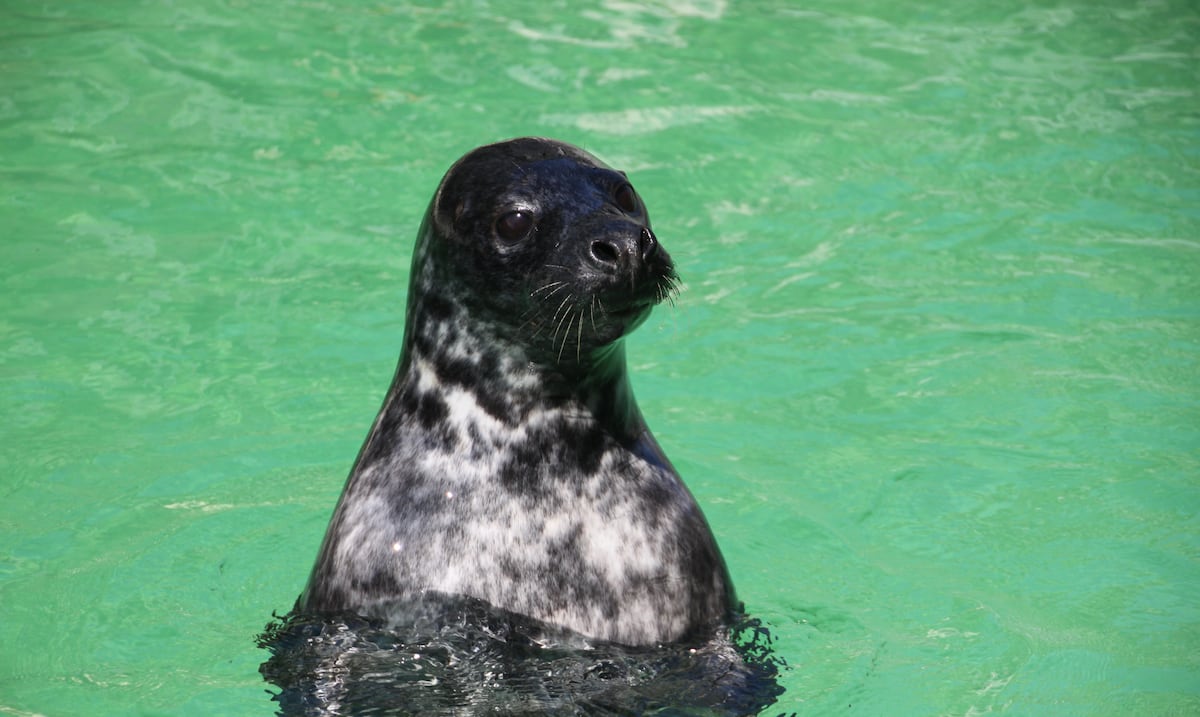
The seals are some mammals Marine who survive prolonged dives because they are able to perceive the level of oxygen they have in the blood and, thanks to this, they plan the immersion time and return to the surface before drowning due to the lack of oxygen.
This is the main conclusion of a study led by Marino Biologist Chris McKnight, from the Scottish University of St. Andrews (United Kingdom), after submitting a group of senses to several immersion tests. The research results have been published in the journal Science.
During evolution, Marine mammals have adapted to survive the aquatic environment, from thermoregulation, to withstand pressure on the depths, oxygen management to dive without drowning.
It is believed that mammals and birds are unable to cognitively perceive the oxygen that circulates through their blood, but it is known that most do detect when they have high levels of carbon dioxide (CO2), a mechanism that they interpret as the low oxygen signal that impells them to look for air.
In spite of everything, these animals always run the risk of drowning.
But McKight believes that the ability to perceive oxygen is a mechanism that should have been strongly selected in the evolution of these species.
To determine if marine mammals are also able to perceive and respond directly to fluctuating oxygen levels, McKnight and their equipment They did a study with gray seals (Halichoerus grypus) captured in freedom to examine how the variations in inhaled oxygen and CO2 levels influenced their diving time.
In the tests, the scientists exposed diving seals to inhaled gas mixtures that were experimentally altered to affect the circulating levels of oxygen and CO2.
The authors discovered that the duration of the immersion was strongly correlated with blood oxygen levels, but was not affected by CO2 levels or blood pH.
Even when they were exposed to CO2 concentrations two hundred times higher than those of the ambient air, the duration of the dives did not change.
However, The alteration of oxygen levels, which doubled or reduced by half, significantly affected while the seals remained submerged.
For the authors, these results provide convincing evidence that gray seals have the cognitive ability to perceive oxygen levels, which allows them to regulate the duration of their dives.
And, given the broad convergent evolution of adaptations related to diving between marine mammals, there are probable that there are similar mechanisms of perception of oxygen in other species, they suggest.
However, in a related perspective, Lucy Hawkes, from the University of Exeter (United Kingdom), and Jessica Kendall-Bar, from the University of California (United States) comment that Natural selection could not have changed the physiology of all animals in the same way, so it cannot be affirmed with certainty that all marine mammals have this capacity.
The text cites humans as an example, whose evolutionary selection has made, compared to the inhabitants of the lowlands, the Tibetans and the Andean have a respiratory capacity adapted to the great altitude.
And in the same way, populations such as Japan’s loves, Haenyeo de Korea or Bajau de Indonesia, have developed physiological adaptations that allow them to contain their breathing and dive for long immersions.
For Hawkes and Kendall-Bar, more studies are needed to determine what are the mechanisms involved in the perception in the circulating blood of marine mammals.
They also suggest that future studies could investigate (with neuroimaging techniques) How animals discern the composition of gases to evaluate and locate the brain levels of oxygen in the blood, information that could contribute to improving the conservation of animals and even benefiting human medicine and health.