
When we think of the Moon, we think of a world without an atmosphere, without liquid water, exposed to vacuum, extreme temperatures and radiation capable of destroying organic molecules. It seems difficult to imagine a place less suitable for life. However, a new study by NASA scientists has just introduced a surprising nuance: Some terrestrial microorganisms could survive in certain areas of the lunar south pole.
It doesn’t mean they found bacteria living on the Moon. Nor that our satellite is habitable. The study, published in Science Advancesit is a simulation that combines maps of temperature, relief and lunar illumination with information obtained from previous experiments on the resistance of different microorganisms to heat and, especially, ultraviolet radiation.
The result is maps of possible survival niches that can range from the bottom of a crater to a surface no larger than the footprint of an astronaut’s boot. The analysis, led by Heather Graha, biochemist at NASA focused on five microorganisms associated with humans or space environments: bacteria Bacillus subtilis, Staphylococcus aureus and Deinococcus radioduransand mushrooms Aspergillus niger and several species of Fusarium. Some of them have already demonstrated surprising resilience during their exposure to the space environment, including the outside of the International Space Station.
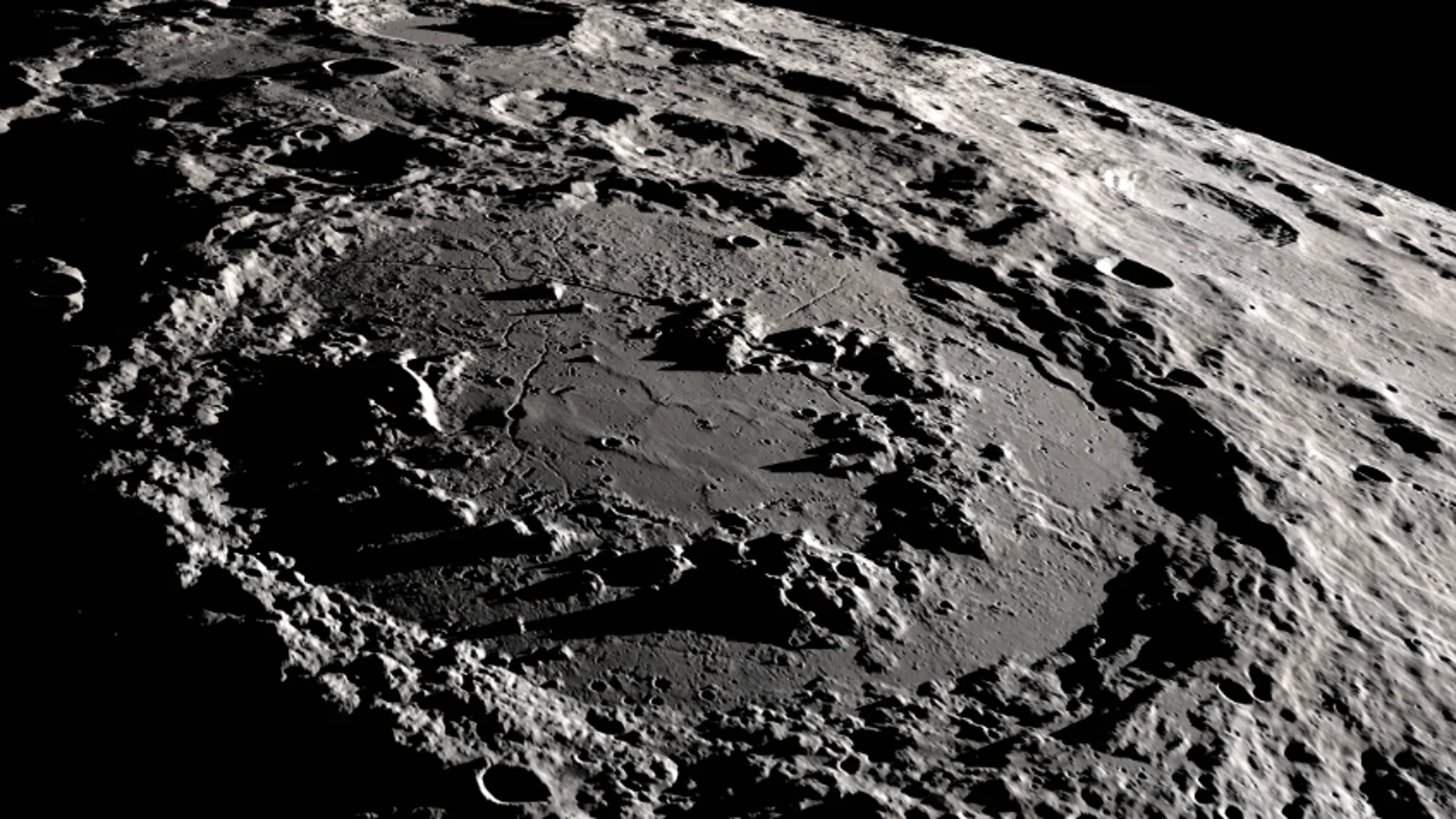
Graham’s team analyzed three regions near the lunar south pole: Nobile Rim, Connecting Ridge and De Gerlache Rim. To rebuild your environmental conditions used temperature and elevation data obtained by the Lunar Reconnaissance Orbiter probe and models capable of calculating how solar radiation reaches each point on the surface.
And here the peculiarity of the south pole appears. Due to the low tilt of the Moon’s axis, the Sun remains very low above the horizon in the polar regions. Mountains, crater rims, and even small terrain irregularities can block its light. The result is a landscape of extreme contrasts: Next to areas illuminated for long periods, there are depressions immersed in shadows that can remain extremely cold and receive much less ultraviolet radiation.. Precisely those shadows could become microscopic refuges.
Among the five organisms studied, the most resistant was Aspergillus nigera very common fungus in terrestrial environments such as bathrooms and ventilation systems. His Particular resistance to ultraviolet radiation led models to predict that it could remain viable even in some locations that receive some amount of sunlight. In permanently shaded areas, other microorganisms would also find conditions compatible with temporary survival.
The important word is precisely “survive.” The study does not say that these microorganisms can grow and reproduce on the Moon, but… In a statement linked to the study, NASA points out that it is inevitable that astronauts and even probes and rovers carry microbes with them: Humans have, on average, one million bacteria living in just two square centimeters of our skin.
“We need to understand what was there before us, because when we go to Mars to look for signs of life beyond our planet, we will want to make sure that it is not something that we brought with us – says Graham in the statement -. When we think about the Moon, we don’t usually think about biology, but the Moon is a place where a cell can survive, so Our first exploration of these sites should pay special attention to the microorganisms that reach the Moon and strive to characterize lunar chemistry before our visits change what we find.”
That statement slightly changes the way we look at the lunar landscape. Not because it makes the Moon a habitable world, but because it forces us to consider that a terrestrial cell might not disappear immediately after arriving there. This has an unexpected consequence: The first living beings we find on the Moon and even on Mars could be our own.
Each astronaut carries with him an enormous amount of microorganisms. Even with sterilization and contamination control protocols, it is impossible to completely eliminate the human microbiota. Some microorganisms can escape from habitats or space suits. The question is how long they can remain viable once exposed to the lunar environment.
If in the future we find an organic molecule, a chemical signature or even some indication related to biological processes in a lunar region explored by humans, we will have to determine if it really came from the Moon or if we brought it with us. Biological contamination can complicate the interpretation of samples and, above all, make it more difficult to distinguish a truly extraterrestrial signal from a terrestrial footprint.