
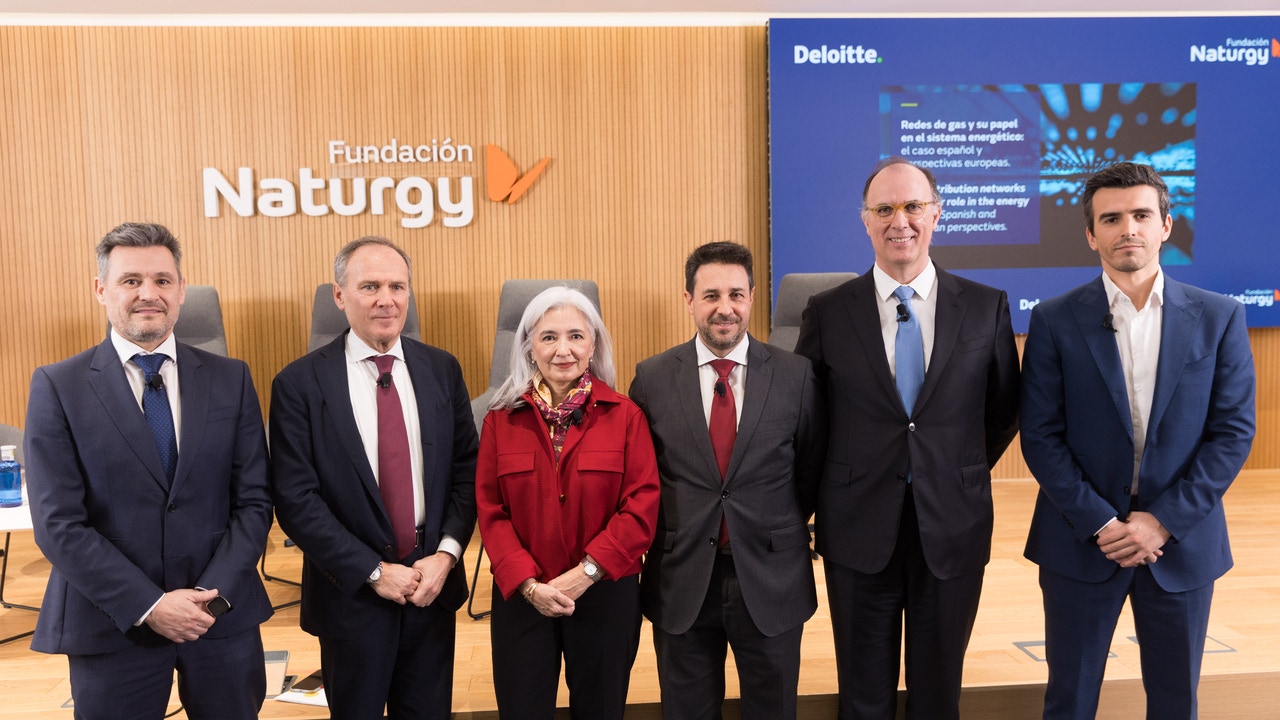
The gas distribution network in Spain faces the transition towards a decarbonized energy system, reinforcing its position as critical infrastructure. This is the conclusion of the report “The role of the gas distribution network in the Spanish energy system”, prepared by Deloitte and presented by the Naturgy Foundation in Madrid, which highlights the contribution of these networks to security of supply, competitiveness and territorial cohesion.
With more than 96,000 kilometers deployed and nearly 8 million supply points, the network directly supplies 20.4 million people and offers potential access to another 6.5 million. This capillarity allows us to serve both large urban and industrial areas and thousands of municipalities with high thermal demand. In fact, 85% of Spanish municipalities have medium or high heating needs.
The report identifies four strategic attributes of these infrastructures: capillarity, resilience, biomethane integration and digitalization. In a context of growing electrification and greater penetration of renewables, gas networks provide firmness and flexibility to manage the seasonality of thermal consumption, which in Spanish homes can multiply by up to 17 between the summer and the peaks of the winter season.
This response capacity is strategically key in episodes of intense cold, when the network, sized to cover peaks and with intrinsic storage, guarantees the comfort of millions of citizens. In parallel, gas has reinforced its backup function in the electrical system in situations of stress, with significant increases in generation in recent critical moments.
Decarbonize without replacing infrastructure
The study places biomethane as one of the most immediate and efficient ways to reduce emissions in thermal uses and in industrial sectors that are difficult to electrify. Its main advantage is full compatibility with existing infrastructure: it can be injected into current networks and used in boilers and equipment without the need for technological replacements, which introduces a decarbonization option without additional costs for homes and industries.
Spain has a high production potential associated with livestock, agricultural and urban waste. Between 80% and 90% of this activity is located close to the distribution network, which makes this infrastructure the most efficient platform to transport renewable gas.
To manage this new scenario, the system must adapt to bidirectional flows through reverse flow stations, capable of transferring locally produced biomethane to areas of greater consumption. In Europe, neighboring countries such as France already have dozens of operational facilities of this type. In Spain, Nedgia (the distributor of the Naturgy group) has developed its first reverse flow plant in Capellades (Barcelona), technically validating this growing model.
Digitalization and European vision
The transformation of the network also involves advanced digitalization. The report points to the incorporation of sensors, SCADA systems, chromatographs, telemetry, smart meters and digital twins to monitor pressures, flows and gas quality in real time, optimize operation and facilitate the integration of renewable gases.
Along these lines, the Ministry for the Ecological Transition and the Demographic Challenge is working on the progressive deployment of smart meters, with the aim of improving efficiency, reducing losses and increasing transparency for consumers.
During the presentation of the report, business representatives such as Raúl Suárez, CEO of Nedgia; Paolo Gallo, CEO of Italgas; and Gabriel Sousa, CEO of Floene, agreed that the European energy transition must simultaneously address decarbonization, security of supply and affordability.
Gallo defended an integrated system in which “electrons and renewable molecules work together”, underlining that gas networks are not a vestige of the past, but a strategic asset to accelerate decarbonization in a resilient and profitable way. In this vision, biomethane and, in the medium term, hydrogen, emerge as complementary vectors in an increasingly complex and diversified energy system.