
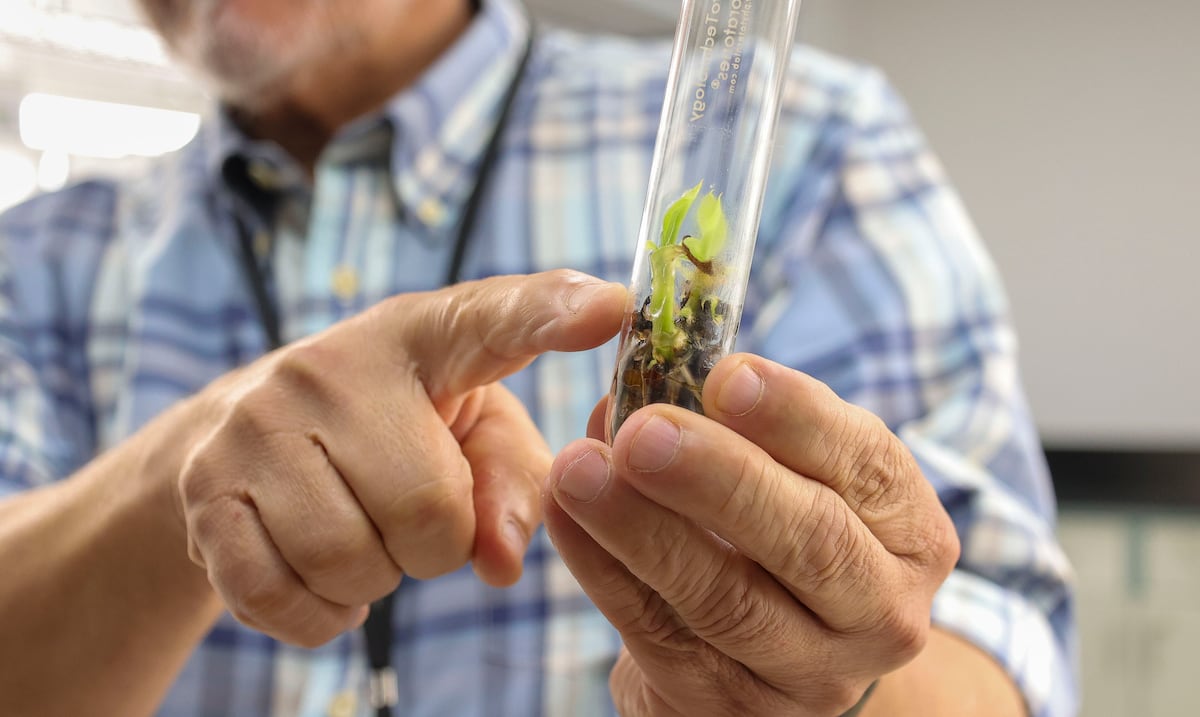
Barranquitas – Since the newly opened Center for Food Security and Sustainable Agriculturethe Interamerican University of Puerto Ricoin this municipality, will expand its seed micropropagation project banana and cocoawhich will multiply the supply for local farmers, who, in turn, will become familiar with climate-smart practices.
With larger laboratory spaces and equipment, the Center will enhance the project’s efforts AgroEvolution Puerto Ricoin which students, together with their teachers, take advantage of the biotechnology to accelerate plant cultivation, ensure seeds in better condition and promote agricultural practices that conserve water and soil.
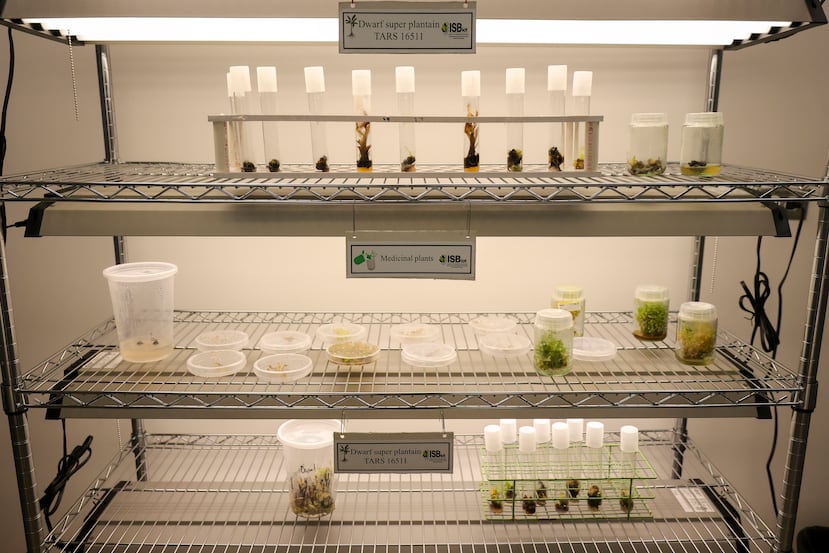
The seed micropropagation technique – adopted from countries such as Belgium, India and Costa Rica– consists of taking plant tissue and placing it in a controlled culture medium in the laboratory. In the case of cocoa, the tissue is extracted from the flower, while, in the banana, the seed is used. This biotechnological process allows the germination of hundreds of seedlings from a single tissue, optimizing the production process. In addition, it accelerates harvest time by approximately two months, allowing farmers to have more productive cycles per year.
After the passage of Hurricane MariaIn 2017, local farmers lost about 80% of their banana crops. The seeds grown from the small, old laboratory of the barranquiteño enclosure They supported restoration in the area and, with the new Center, the seed supply will be extended throughout the archipelago.
“Here, there are one, two, three, four, five rooms. It means that we can easily increase 10, 20, 30, 40 times more than what we produced there (old facility). “This will allow us to supply more farmers in Puerto Rico.”stated the rector of the campus, Juan A. Negrón Berríosin an interview with The New Dayfrom the corridors of the Center.
The growth rooms will allow the growth of 15,000 to 20,000 plants, grown in test tubes and bioreactors, which function as incubators for microorganisms. With freezers reaching -20, -80 and -145 degrees Celsius, seeds can be kept for six months, 12 months and several years, respectively.
In addition to seed micropropagation, The Center will be dedicated to carrying out chemical, physical and molecular testing of soils and water to identify strategies that accelerate healthy crops of bananas, cocoa, coffee, medicinal plants and other agricultural products.. The preparation for farmers receive and conserve the seeds will consist of a cycle of workshops focused on agroecology, sustainability and business plans.
“Right now, This type of laboratory, we would say environmental agricultural, does not exist in Puerto Rico, this would be the first. And obviously, in addition to all that, here we will provide services to farmers and students, both undergraduates and graduate students, will work,” said Negrón Berríos.
After food security
According to the rector, the purpose of the Center is to combat food insecurity in Puerto Rico, through supplying local farms with local seeds grown in the laboratory without genetic modification.
“Puerto Rico being a country that has to wait for these products to come from abroad and through the most expensive carrier, which is the United States (Merchant) Navy, there is no doubt that we are creating the perfect storm so that, from the health point of view, let’s harm the people,” he exemplified.
More than 85% of the agricultural products consumed in Puerto Rico come from abroad. Although the archipelago is rich in fertile land for agriculture, dependence on imported products threatens the food safety of the inhabitantswhich can be aggravated by the arrival of natural disasters.
The increase in the cost of importing agricultural products is reflected in the sales price for consumers, which can make some foods inaccessible to people with limited economic resources. That’s why, The Center seeks to promote the cultivation of local agricultural products to strengthen the economy and promote a more nutritious diet in Puerto Rican homes..
“Climate smart”
With the use of high technology to seek precision in agriculture and conservation of the environmentthe Center also aspires for the future of the agricultural industry in Puerto Rico to be “climate smart,” Negrón Berríos defined.
Some traditional agricultural practices – such as excessive use of pesticides, improper discharge of crop waste and manure, and deforestation – lead to soil degradation, pollution of water bodies, and loss of biodiversity. These actions contribute to climate change by releasing stored carbon and affecting the health of ecosystems.
This climate-smart agriculture approach not only seeks to increase productivity, but also reduce greenhouse gas emissions. greenhouse gases and improve the resilience of crops to extreme events – such as droughts either floods–, which are increasing due to climate change.
From AgroEvolución Puerto Rico, they urge farmers who benefit from the micropropagation of seeds to adopt sustainable practices that conserve soil and water. Among these practices are the identification of specific areas of the land where it is really necessary to apply pesticides and fertilizers, and the increase in the use of natural compost, thus reducing the environmental impact.