
A secretly embroidered flag occupies the center of Mariana Pineda. It mixes the political commitment of a persecuted woman and her feelings towards a man who participates in the liberal cause. Federico García Lorca brings together both motifs in a few words from the protagonist. “On the flag of freedom I embroidered the greatest love of my life”.
The premiere this Friday, September 25, of The black ballthe film by Javier Calvo and Javier Ambrossi inspired by an unfinished project of the writer, invites you to recover your theater. Persecution and the difficulties of living according to one’s desires run through different works by Lorca, although each one responds to a different context.
In Mariana Pineda, that context is the absolutist Spain of Fernando VII. The phrase belongs to a work premiered in 1927, years before the Civil War and the poet’s murder. Its relationship with political repression stems from the story of the woman after whom it is named.
The woman who inspired Lorca
Mariana Pineda was a liberal from Granada executed on May 26, 1831, when she was 26 years. She had helped people persecuted by absolutism and was arrested after the police found a flag linked to the liberal cause in her house.
Lorca turned his story into a drama in which historical facts coexist with elements of legend and fiction. The protagonist embroiders for Don Pedro de Sotomayor, a conspirator with whom she is in love. When she is captured, she refuses to betray and waits for a rescue that never comes.
The play premiered at the Goya Theater in Barcelona with Margarita Xirgu as the protagonist. Salvador Dalí was in charge of the sets and costumes. The story of that persecuted woman thus reached the stage almost a century after her execution.
What does the flag of freedom mean?
In Mariana’s words, love remains united to a life-threatening choice. The flag allows this union to be expressed because it is, at the same time, an object made with her hands and evidence used against her.
The phrase can be read as a declaration of commitment. What the protagonist has embroidered has a intimate valuebut it also represents a cause that the authorities pursue. The political conflict enters their house and conditions their future.
The love component adds another difficulty. Mariana trusts a man whose help does not arrive and she must face her destiny without the rescue she expected. Lorca builds a tragedy around that wait about the loyalty, abandonment and the exercise of power.
From that reading, freedom ceases to be an abstract word. Defending it requires concrete decisions and exposes those who do so to punishment. That is the meaning that the flag acquires within the history of Mariana.
From the persecution in his theater to the murder of the writer
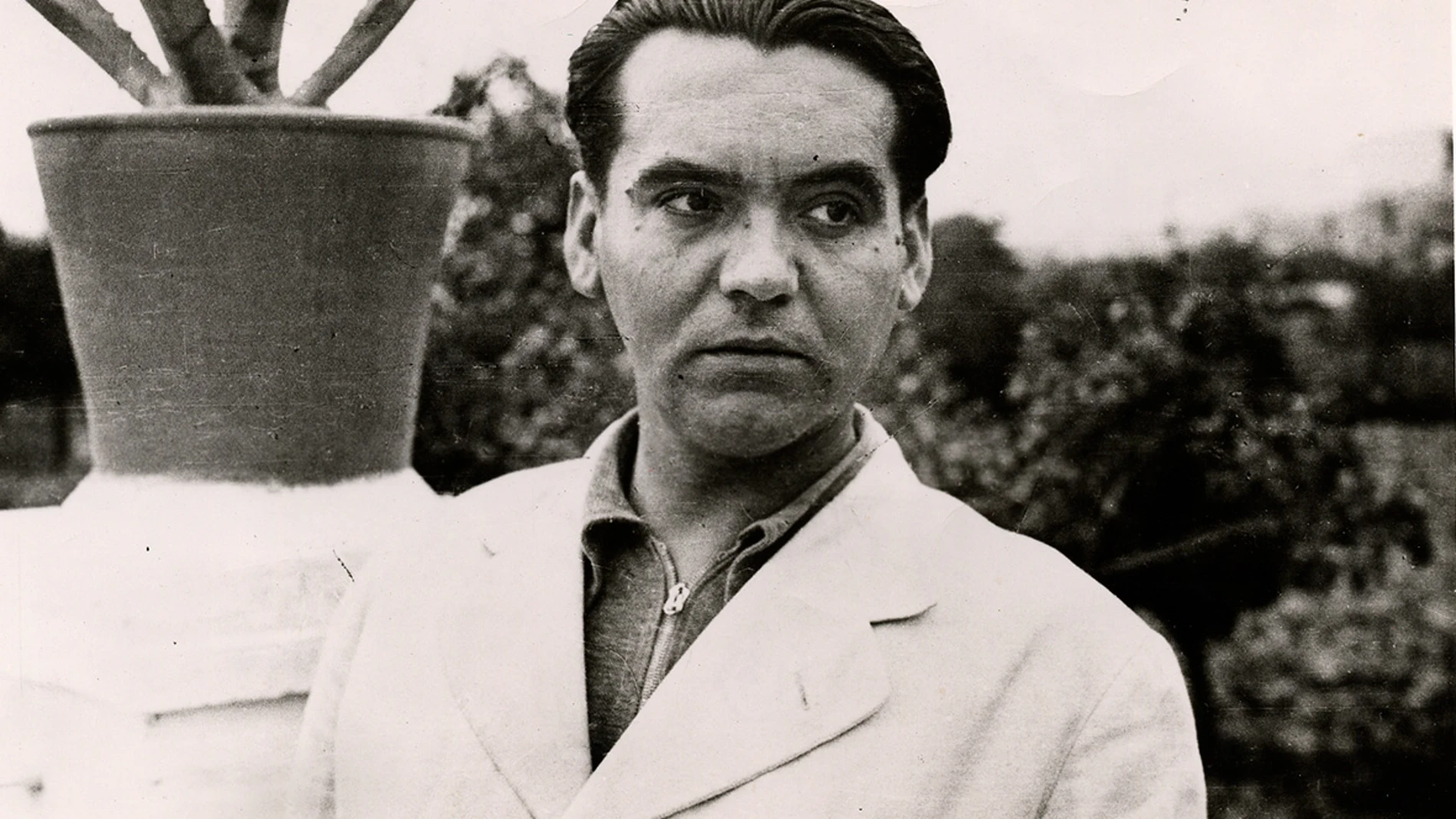
Years later, Lorca himself would be a victim of the repression unleashed by the rebels in Granada. He was arrested in August 1936 and killed at the beginning of the Civil War. This year they meet 90 years since his death.
Her fate adds a painful resonance to the current reading of Mariana Pineda. The play had brought to the stage the life of a woman punished for her involvement with a political cause. Its author would also end up being a victim of violence and persecution, at another time in Spanish history.
“The black ball” recovers an unfinished project
The Javis film takes its title from a work that Lorca left unfinished. From this material, it interweaves the lives of three men at different times, connected by sexuality, desire, pain and inheritance.
The cast includes Guitarricadelafuente, Miguel Bernardeau, Carlos González, Milo Quifes, Lola Dueñas, Penélope Cruz and Glenn Close. Its arrival in theaters brings the public another part of the writer’s universe, with homosexuality and experiences of discrimination among its central issues.
The premiere also allows us to return to the Mariana that Lorca wrote years before. A woman for whom that flag held a collective cause and something deeply personal, to the point of not being able to explain her freedom without talking about her love.