
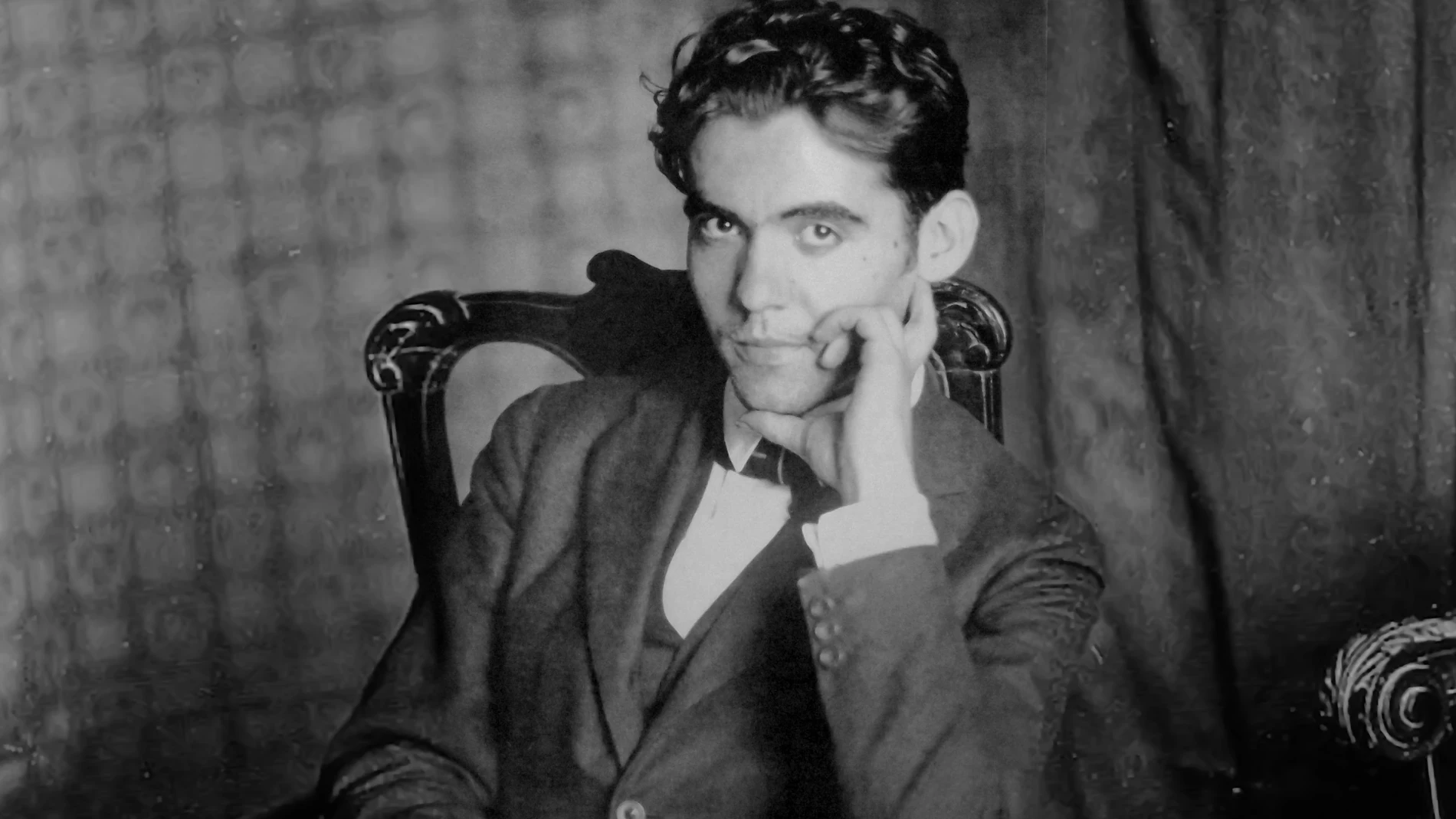
Federico García Lorca He understood the theater as a place where a society could look at itself, discuss its customs and listen to stories that barely found space outside the stage. This way of understanding creation allows us to return to one of his reflections on culture coinciding with the premiere, this Friday, September 25, from “The Black Ball”the new film by Javier Calvo and Javier Ambrossi.
The film takes its title from a unfinished work of Lorca and intertwines the lives of three men from different times. Its arrival in theaters offers an opportunity to recover the words of an author who defended the relationship between theater and the lives of those who sat down to see it.
“A people that does not help and does not promote its theater, if it is not dead, is dying”held in his Talk about theaterfrom 1935. The phrase is part of an intervention linked to a special representation of Barrenwith Margarita Xirgu, before professionals from the theater world.
What did Lorca mean with this phrase?
His reflection raised a shared responsibility. Society had to support theater and creators had to attend to the conflicts, experiences and environment of their spectators. For Lorca, a scene unrelated to all this lost its meaning.
In that intervention he also questioned whether artistic decisions were subject only to commercial interests. He was concerned that actors and authors had less and less room to take risks or propose demanding works.
His defense of the theater included the possibility of discuss moral norms and showing feelings that were uncomfortable. The freedom to create was linked to that ability to bring to the stage matters that a part of the public perhaps preferred not to look at.
The theater that Lorca brought to the towns
This commitment also had a practical expression in The Barrackthe university group that he led together with Eduardo Ugarte. The company began its tours in 1932, during the Second Republic, to bring classical Spanish theater to towns with little cultural activity.
The performances allowed people far from the theater circuits to get to know those works. Taking the montages from one place to another expanded access to a culture that, otherwise, many viewers would hardly have been able to enjoy.
“The black ball” recovers its legacy
More than nine decades after that talk, Javier Calvo and Javier Ambrossi They return to the Lorca universe from the cinema. According to the official synopsis, The black ball It connects its protagonists through sexuality, desire, pain and inheritance, with the writer’s unfinished theatrical project as part of that link.
The cast brings together Guitarricadelafuente, Miguel Bernardeau, Carlos González, Milo Quifes and Lola Dueñasnext to Penelope Cruz and Glenn Close. Guitarricadelafuente and Quifes make their debut as actors in this production.
The premiere allows us to get closer to a facet of Lorca that goes beyond his best-known verses. He was also a man of the theater concerned about who could access the works, what stories were told and what freedom their authors had to do so. “The black ball” Now it opens another way of entry to that legacy from the movie theaters.