
The network has become a space as useful as dangerous, where a simple click It can trigger a chain of consequences difficult to foresee. Enter a seemingly harmless web page, download an attached file or access a link received by mail or direct message can be enough for a virus to infiltrate a device without leaving a visible trace. From that moment, the attacker can have access to personal data, saved passwords, confidential documents or even the complete control of the equipment. One of the most serious risks is the theft of bank information, which can lead to unauthorized, emptying account or fraudulent card transfers.
In many cases, victims do not discover the gap until days or weeks later, when damages are already considerable and difficult to reverse. These types of attacks, increasingly frequent, show how vulnerable a common user can be against threats that act rapidly, precision and a notable capacity to go unnoticed. In this sense, the progress of new technologies, especially artificial intelligence, has contributed to sophisticate the methods used by cybercriminals, which now have more powerful tools to carry out their attacks. AI allows to generate fraudulent emails with natural language, simulate voices, create false identities on social networks or develop malware Able to evade traditional detection systems.
This technological evolution, far from being just an advantage for innovation, has also opened a new playing field for digital crime. As the tools are perfected, difficulties in protecting and distinguishing between real and manipulated also increase. Companies and institutions are increasingly investing in cybersecurity, but the average user remains the weakest link in the chain. The trust with which we sail on the Internet can become against us, and the feeling of immediacy offered by the digital environment also means that the danger is always one click of distance, as is the case of captchas, also known as human verifications.
The fake captchas: a current danger
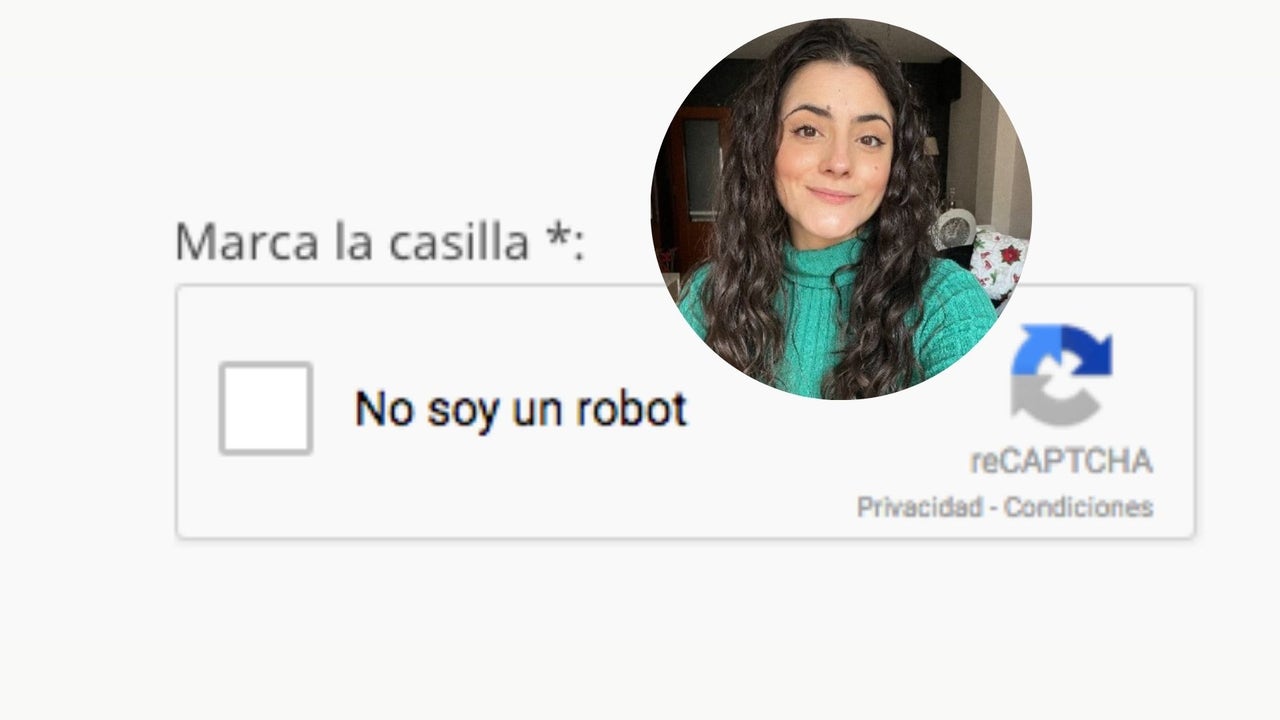
María Aperiar, an expert in cybersecurity that has been announced on social networks with her informative videos about the new inventions in cybercrime, alert to the popularization of this new fraud method. While something as apparently innocent as the “famous verification Antibots“It can generate a certain feeling of stability and confidence on a website, since a priori seeks to combat, precisely, digital dangers. It is essential to take into account a series of tips as a result of a bad praxis that is being carried out.”False captchas are being used to infect our devices in seconds“, warns the specialist about one of the practices that are booming within the network.
In this way, there are certain hooks that act as a link for cybercrime, so, it is always important to consider this kind of factors. “The modus operandi is as follows: You enter a web page that is apparently normal, and you get a captcha that you have to solve. You solve it, but instead of validating what you are doing is executing a malware”, He indicates about the functioning of these corruption systems. Therefore, these models demand a double verification. At this time you have to begin to doubt the doubt of a possible fraud, because the consequences can be catastrophic with your fingerprint.
How to know if it is a corrupted captcha?
In order to identify this kind of methods, which the criminals use to attract the user’s interest, provided that a few steps to follow, it is likely to be a scam. “It is very important that we never follow the instructions that it puts us when something similar to this comes out,” he says in relation to an image that he adds in which one can see how the system re -ask the Internet user to check that it is not a robot. Among the guidelines established by a process with which you have access to the interior of the computer is available to have a free way. “What we are really doing is download that virus“He concludes.