
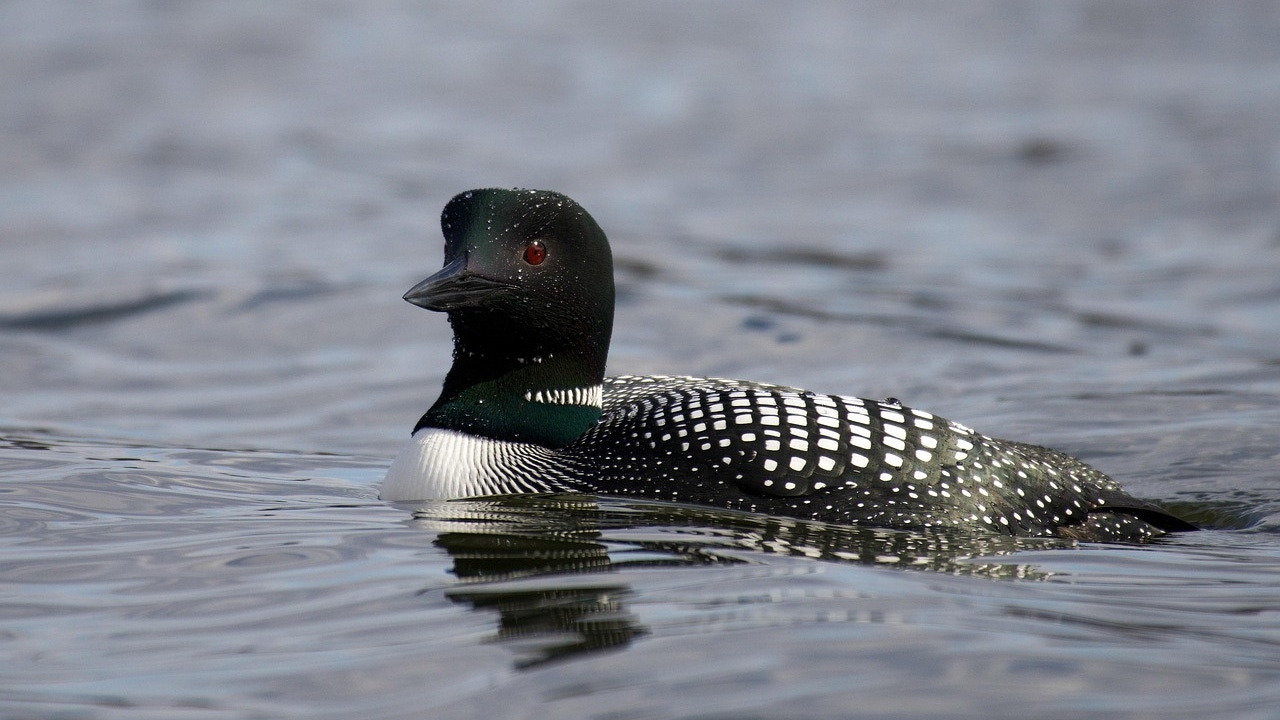
As they have recorded conservatists of Maine Audubon, Maine’s oldest wildlife conservation organization, the number of large loon specimens recorded has increased by 13% compared to the last 10 years.
Maine, home of the largest loon population on the East Coast of the United States, has experienced an increase in specimens in its lakes and ponds, reaching 3174 adults and 568 chicks. a fact determinant for the conservation of the species, which, despite its latent endangered, it is not included in the US Endangered Species Act.
What type of bird is the loon?
This kind of diving water birdcharacterized by black and white plumage, began to suffer a decrease of the number of copies due high levels of mercury in blood fruit of the coal industry. After the closure of the last coal plant in the State, the loons began to suffer from the lead intake from fishing gear.
After prohibit the use of said gear and the implementation of laws that regulate the speed of boats to avoid the destruction of nests, conservatists began to record a “growth in the number of chicks“. However, they did not want to be optimistic, ensuring that “several years will pass more before we know if this is a real upward trend or just two really good years.”
In what other states are there loons?
Despite Maine is the state with greatest number of copies of large loon, reaching the number of around 27,000 adults, there are other States in which the bird is also present.
Minnesota is located in second place among the States with the largest number of loons, with a stable population of nearly 12,000 adult specimens. Likewise, they can also be found in New Hampshire and Michigan, where they are also considered a vulnerable species.
Outside the United States, the greater loon can be found in Europe and Asiaspecifically in boreal forests and the tundra. In Europe. According to the ‘Red List of Birds’ published in 2021, it is estimated that there are around 5,700 and 7,200 specimens, with a stable trend.
However, in Spain is considered a ‘near threatened’ birdaccording to the ‘Red Book of Birds of Spain’, published in 2021. It can be found mainly in the Cantabrian and Galician coastand occasionally on the Mediterranean coast, off the Balearic Islands, as well as in Huelva and Cádiz